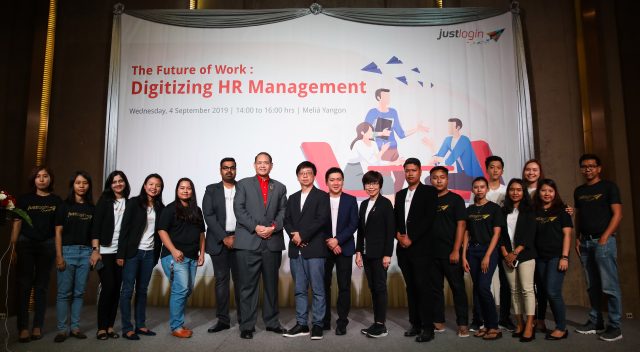
Singapore’s top cloud-based Human Resources (HR) Software, JustLogin,
has come to Myanmar to assist companies with automation of HR functions.
JustLogin has provided HR Solutions for 20 years, and it has been used by a
number of Myanmar companies for close to two years. “We look forward to
expanding our services in Myanmar,” said JustLogin CEO Kwa Kim Chiong in his
speech at the event held on September 4. “JustLogin makes HR management easy to
use, so managers and HR professionals can avoid messy paperwork and increase
their productivity, which allows them to devote more time and effort to
employee welfare and the direction of their business. By providing an HR
solution that is scalable and comprehensive yet easy to use, setup, and
maintain, we believe that we can be a great asset to Myanmar businesses
regardless of their size or industry.”
“JustLogin is a one stop solution for all the HR functions we need,”
said Jody Cheong, HR Executive at JustLogin customer Kotobuki. To serve its
clients’ needs, JustLogin offers a fully integrated system of software modules,
including JustPayroll, JustLeave, JustClock, JustExpense, JustBenefit and
JustPeople. The software performs regular backups to cloud-based servers so
that up-to-date information is always available. It is also highly secure, with
regular software updates and ISO27001-certified encryption on all servers to
ensure the safety of sensitive business and employee information.
Smartphones and mobile internet have spread rapidly in Southeast Asia,
and nowhere faster than Myanmar, where 33 million people – 66 percent of the
population – are now mobile internet users. This newly connected populace
creates a receptive environment for convenient mobile apps as well as
accelerating the development of SMEs and the country’s journey towards the
digital economy. “Many SMEs do not have the financial resources and manpower to
set up a system and team to manage the basic HR functions, so we are able to
provide an affordable and effective solution with cloud that enables them to
operate,” added by JustLogin Marketing Manager, Kwa Yi Ting.
Interview with Peter Tyroller
Member of the Board of Managememt, Robert Bosch GmbH
Please introduce yourself as well as Bosch Company to our readers.
Mingalarbar. I am Peter
Tyroller, and I’m a member of the Board of Management of Robert Bosch GmbH
since 2006. I am responsible for Bosch’s activities in Asia Pacific including
Australia, China, India, Japan, ASEAN countries, and South Korea. Myanmar is
under the ASEAN cluster.
How did you end up at your current position?
I have been with Bosch
for more than 27 years. I joined the company in 1992 as Director of the Airbags
Systems Units and Managing Director of United Airbag systems GmbH. Over the
years, I’ve held leadership positions for different business divisions and
subsidiaries. In 2003, I was the President of the Gasoline Systems Division;
and in 2006, I became a member of the Board of Management of Robert Bosch GmbH.
Interview with Nocolas Delange Managing Director of Yever
When was your first visit to Myanmar and how has the country changed since then?
…
My first time in Myanmar was in 2010, just before the
elections, and I will remember all my life, my first vision of Myanmar. I was
traveling from Kunming, discovering the Burma Road to Mandalay. When I arrived
at the border, in Ruili, I was watching the Myanmar side, and the contrast with
China was mesmerizing: the buffalo carts, the darkness, finally, it was time
for me to enter and discover your fabulous country.
In 2010, I couldn’t buy a sim card: I was too poor and
could not afford to spend thousands of dollars to get one. In Yangon, it was
convenient to drive because, at that time, there was no traffic. It was not
possible to withdraw money from ATM, and I had to exchange my dollars in
unofficial money changers. It was just 9 years ago; this is fascinating to see
how fast the country changed.
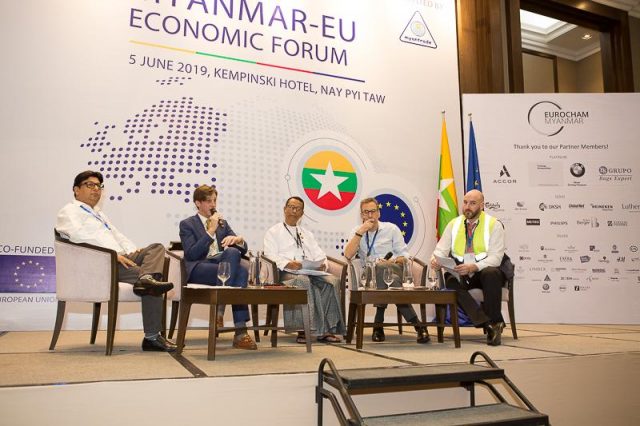
Co-chair of EuroCham Anti-illicit Trade Advocacy Group Senior Associate at Luther Law Firm
Please tell us more about your organization.
Luther is a German law firm that has been active in South-East Asia for the last 20 years. We opened our first office in Myanmar shortly after the country’s political opening. Officially established in 2013, Luther has meanwhile grown to a team of more than 50 professionals, including German, French and Myanmar lawyers as well as corporate secretaries, accountants and tax advisors providing legal, tax and regulatory advice as well as corporate services. I joined the team about five years ago and mostly work on corporate compliance, commercial law and employment law matters.
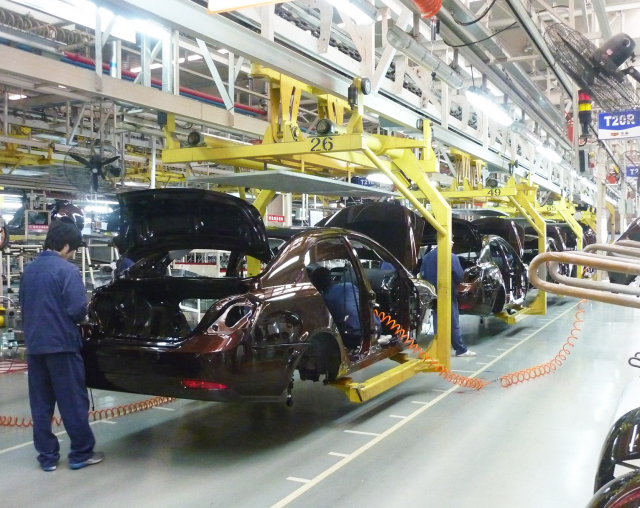
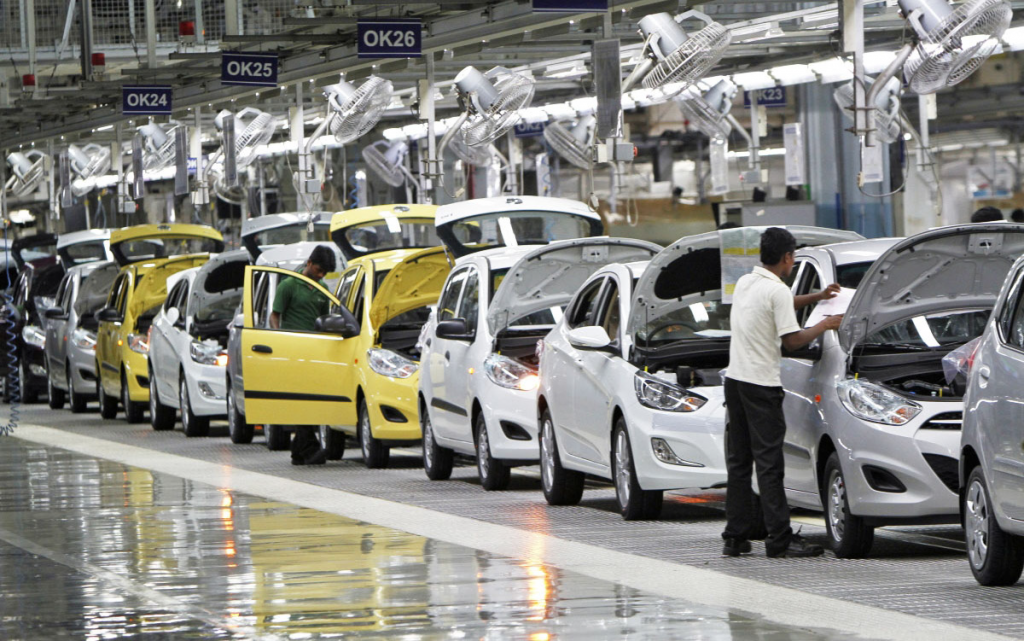
Since the rapid growth of automobile after
the market opening in 2011, Myanmar has been encouraging the development of
automobile assembly industry, allowing auto manufacturers to import products
that are essential to make vehicles in the country, according to reports.
Automotive industry is comprised of a wide
range of companies and organizations that involved in the design, development,
manufacturing, marketing, and selling of motor vehicles. It is said to be one
of the world’s largest economic sectors by revenue and Myanmar’s automotive
industry is set to grow.
In 2018 November, the Ministry of Industry
launched a new automotive policy for 2019, which aimed to support the transport
and auto-related business through sustainable development and more foreign
direct investments.
Under the new policy, it is stated that
only the vehicles with left-hand drive can be imported for the purposes of road
safety and to suit the country’s traffic route direction, according to an
announcement of the Supervisory Committee for Motor Vehicles Importation.
Control measures on imports of used right-hand drive vehicles, which dominated
the market, will would also be implemented.
So, the new policy is expected to drive
further growth in domestic automotive manufacturing and auto-related businesses
along the supply chain, such as machinery and parts manufacturing, supply of
raw materials, after-sales services, parts distribution and insurance and
financing services providers. It will also generate many employment
opportunities, Yi Yi Kyaw, the general manager of No.1 Heavy Industrial
Enterprise under the Ministry of Industry said.
International motor companies such as
British brand Jaguar Land Rover and Roll Royce started entering in Myanmar as
the country continues to open its doors to foreign investment. In addition to
factors such as the relaxing of foreign investment rules and the passing of the
new foreign investment law, the landscape of the automobile industry is
experiencing a major overhaul.
According to Myanmar Times, the number of
vehicles used in Myanmar had spiked since the authorities liberalized vehicle
imports in 2012. Now, automakers estimate that the number of vehicles used in
Myanmar will exceed two million in 2020, more than doubling from 721,324 in
2016, or 15 units per 1000 people. More than half the number of vehicles is in
Yangon. In 2011, there were only 365,000 vehicles on the road.
According to the statement of British Chamber of Commerce, 90% of used vehicles are imported from Japan and the number of new international branded vehicles on the road is increasing due to the ease of purchase from local automotive authorized dealers
Automobile Market
The majority of car sales centers in
Myanmar are owned by locals, though 100% foreign investment is allowed in the
auto industry. Among the total of over 100 sales centers in Yangon, more than
90% are owned by Myanmar nationals.
With less than 100,000 passenger cars and
30,000 commercial vehicles sold in Myanmar in a year, on average, it would be
quite a challenging for the the industry to experience a ban on Yangon
licenses, unstable car import policies and tax regulations, along with
increasing office and land rental fees. Limited resources may also hinder the
growth of Myanmar’s automotive industry.
According to market survey in 2018, it was
reported that most of the local people could not buy brand-new car due to high
prices. So, some people opt for an installment plan in the automobile market
while many still buy second-hand cars. But now in 2019, the sales figures may
be better compared to the previous year.
Challenges
Even though Myanmar has potential for a
boom in its automotive industry, it may take more than five years to enjoy
tangible benefits in reality, according to Soe Tun, president of Myanmar Automobile
Manufacturers and Distributors Association and managing director of Farmer Auto
Trading.
In 2016, the Yangon Regional Government, in
an effort to tackle the serious traffic congestion in Yangon, stopped issuing
Yangon license in order to reduce the pace of additional numbers of vehicles on
the road. In order to import a car to be driven in Yangon, you must have an
existing Yangon license. However, they do issue licensees for locally
manufactured and assembled vehicles.
So, it has been about three years since the
authorities prohibited the issuing of licenses to vehicles registered in Yangon
region. Currently, discussions are underway to relax this restriction. There
are expectations that the regional government would re-allow the import of cars
for its residents. Potential buyers have been waiting for the announcement.
Additionally, as the number of vehicles on
the road grows, it is expected that the demand for vehicle spare parts would be
rising. According to the statement of British Chamber of Commerce, 90% of used
vehicles are imported from Japan and the number of new international branded
vehicles on the road is increasing due to the ease of purchase from local
automotive authorized dealers. This will support the market for international
vehicle spare parts which is expected to grow in the coming year, allowing the
growth of parts production manufacturers.
Future
According to the EuroCham Myanmar’s White
Book 2019, Yangon is the market hub for automotive brands. Therefore, the
competent government bodies were advised to address the issues related to the
registration of imported vehicles in the city. Restrictive measures on imports,
which may not be in line with the World Trade Organization (WTO), are making
European brands—worldwide leaders in the automotive sector—more reluctant to
invest in Myanmar. Finally, the future of the automotive industry in Myanmar
should be properly discussed by involving all parties, including local
associations, non-government organizations and chambers of commerce.
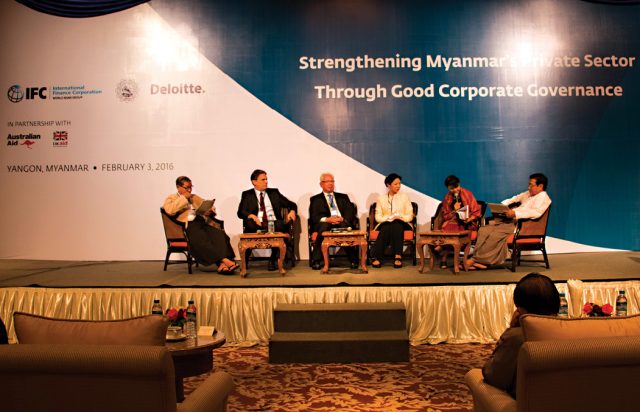
Corporate governance requires that
business enterprises should take lead in solving environmental issues. It is
their responsibility to check the consequences of their actions and also to protect
environment and its resources. “It is important for Myanmar companies to
improve their corporate governance practices whether they are seeking to expand
their business, foster stronger ties with international partners, or develop a
smooth succession plan” said U Maung Maung Win, chair of Securities and
Exchange Commission of Myanmar, earlier this year. A sincere commitment by the top
management of the business to cultivate, maintain and develop work culture for
environmental protection and pollution prevention is needed.
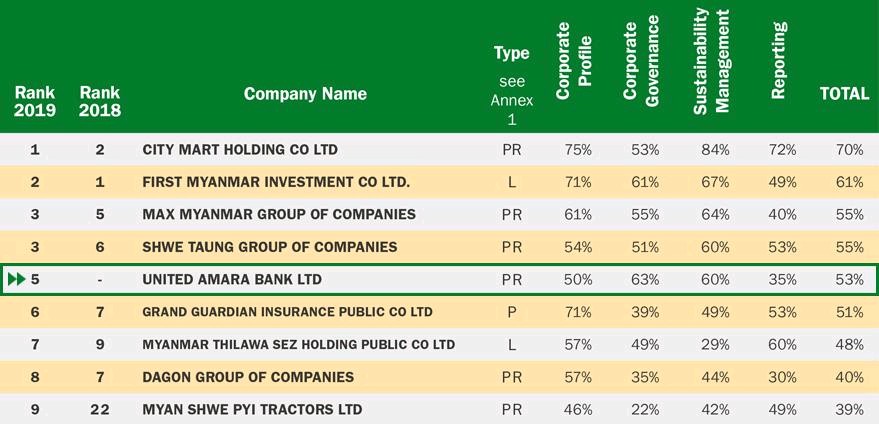
Shwe Taung Group with a business portfolio covering
six core sectors – building materials, distribution, engineering and
construction, infrastructure investment, lifestyle, and real estate has reportedly
made an impactful and sustainable contribution towards preserving the environment and promoting people’s role as
active and responsible citizens. Activities such as developing
clear-cut policies and programmes for purchasing good quality raw material,
using latest technology, using scientific techniques of disposal and waste
management could be done. Further, attempts could be made to develop the skills
of the employees for the purpose of pollution control.
Banking
sector
Efficient corporate governance is needed
in banking sector as well because it is a major
contributing factor for the financial stability of Myanmar banking industry. It
involves regulatory and market mechanisms; the roles and relationships between
a company’s management, its board, its shareholders, and other stakeholders;
and the goals for which the corporation is governed.
In 2003
in Myanmar, a banking crisis had occurred due to liquidity shortage, the main
reason of which was ineffective corporate governance. Studies reveal
that if companies boost their corporate governance practices they will become
sustainable in Myanmar and regional markets. Practices such as risk management
and anti-corruption controls are areas where Myanmar companies need to address
in order to access finance from international sources as well as from domestic
banks, observers say. This is increasingly relevant for Myanmar banks as
greater controls are put on non-performing loans by the local banking sector.
After several years of rapid expansion and
double-digit credit growth, Myanmar’s banking sector underwent several
necessary reforms in 2017 and 2018. The
Myanmar Corporate Governance Scorecard 2018 published by the International
Finance Corporation (IFC), the Securities and Exchange Commission of Myanmar,
the Yangon Stock Exchange and the Directorate of Company Investment and Company
Administration (DICA) is the first report of its kind in the country that
assesses the performance of 24 companies in the country.
IFC says that banks could require their
client to have clear and transparent financial reporting and adopt the rules on
approval and disclosure of related party transactions, in large part to reduce
their own credit risk. This could be achieved by good corporate governance
which is an important consideration for local banks as well as foreign banks
operating in Myanmar to provide access to finance to Myanmar companies.
To experience the financial sector as
transparent and inclusive a program titled ‘Banking and Financial System
Development’ was started in 2017 whose objective was that small and
medium-sized enterprises have comprehensive access to banking services. Also
the aim was to achieve greater transparency while ensuring that demand-based
financial services are available to SMEs. The program after two years achieved
desired results. Good corporate governance not only
ensures corporate success and economic growth, it also lowers the capital cost.
Myanmar Insider presented the results of second quarterly economic
survey and the resulting index to public this month. The objective is to
provide information on business environment in Myanmar for all stakeholders,
especially the government, the investors and the business community.
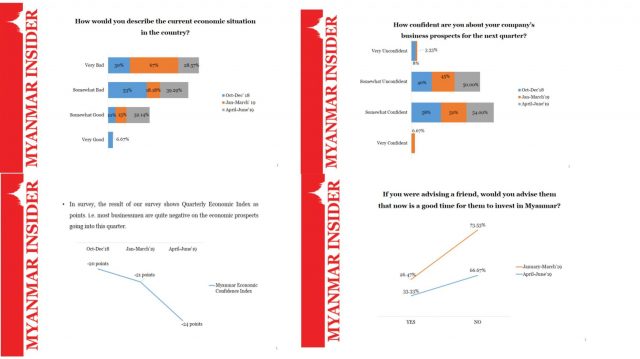
The current economic situation in the country is still bad or very bad, with more than 66% of the respondents saying the economy is in the bad or very bad territory in present. However, the economic situation is slightly decreased compared to the previous quarter, comparing the survey results. It also somehow validates our respondents’ forecast in the previous quarter survey which clearly highlighted the fact that most of our respondents expect the economy to get worse in Q2 of 2019. On the other hand, the results remain the same like the previous quarter though it slightly decreased even though the respondents are not the same.
For the forecast of the next quarter, business leaders are getting less optimistic as more than 60% expect that the business environment to get a little worse in Q3 of 2019.
For confidence level on business prospects, 54% of respondents answered they are ‘somewhat confident’ in current survey even though there is no respondents who answered ‘confident’ to their business. This general negative sentiment has affected confidence at company level where 50% of respondents are feeling somewhat unconfident to their individual’s business.
In terms of business opportunities, some business leaders mostly recommend that more minor opportunities will come to their businesses.
In terms of making more investments, the results are becoming more decreased compared to the previous quarter, the majority of the respondents being unsure whether to make additional investments.
For key economic indicators, Myanmar Insider asked the respondents to give their forecasts on economic growth, inflation and exchange rate. Majority of the respondents are expecting the economy, inflation and exchange rate to get worse. For inflation, the respondents in this quarter expects to get worse i.e., business people are expecting higher inflation in the coming quarter. The exchange rate are fared better in this survey as the respondents believed Kyats had reached an oversold level.
Based on the survey, the economic confidence index for the present quarter is negative 24 points, a little worse than the previous quarter of negative 21 points.
Though Myanmar’s current business situation is not good, most business leaders are expecting their business to be profitable in the current quarter.
In the final question of recommending Myanmar as a destination for investment at present to their friends, the number of people saying “Yes” has also improved even though 67% of respondents still do not believe that now is not the time to invest in Myanmar.
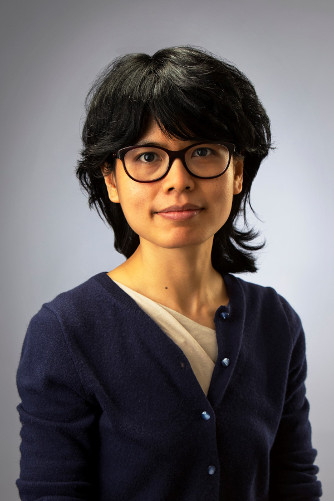
Professor Yimon Aye, École Polytechnique Fédérale de Lausanne (EPFL)
For outstanding research in biological chemistry of unusual merit and independence of thought and originality.
Professor Yimon
Aye is the recipient of the 2020 Eli Lilly Award in Biological Chemistry. Her
receipt of this award reflects the broad ramifications of her multifaceted
research program on both chemistry and biology. Science in the Aye lab seeks to
understand various non-canonical cellular communication processes. The Aye lab
is most well-known for studies into electrophile signaling, a nuanced
communication mode whereby chemically-reactive molecules directly modify select
target proteins, leading to alteration of their function. Her lab is also
well-known for investigations into nucleotide signaling pathways regulated by
ligand-stimulated changes in protein–protein associations that are of
importance in genome operation.
The work from the Aye lab is thus slowly bringing both eclectic forms of cellular communication into focus. She has pioneered the ingenious use of photocaged electrophiles (REX technologies) to bypass many of the limitations associated with the use of reactive electrophiles in cells and, unusually, whole organisms. The initial application of REX technologies was to studying individual-protein-specific electrophile signaling. This work introduced several new concepts into the chemical biology canon, including breaking the tether, and pseudo-intramolecular transfer.
Professor Yimon Aye
Thus, her method, T-REX, allowed essentially native, electrophile-modified states of electrophile-sensor proteins to be generated on demand in cells and model organisms. For the first time, their specific signaling functions could be assayed and identified. Her work established that, even at low ligand-occupancy, electrophile signaling can rewire cellular decision-making processes. A change in protocol, but not the caging strategy, further allowed global assaying of electrophile sensing in specific organelles, or tissues. This approach has unearthed novel electrophile sensors that have been assessed by T-REX. Through a united team effort, the Aye lab is striving to develop novel interventions, and to better understanding of current drugs through active collaborations with industrial scientists.
In parallel, Aye
also uses biochemistry/cell biology/genetics to uncover novel roles of one of
the most ancient enzymes, ribonucleotide reductase (RNR). This enzyme is
intrinsically tied to growth and life itself, as it is the source of
nucleotide-pools essential for genome operation. However, RNR has also had
unexpected behaviors in that it is a known suppressor of growth, particularly
in tumors, where it is proposed to be a tumor suppressor. The Aye lab recently
uncovered a signaling axis involving the large subunit of RNR as a direct
inhibitor of a protein that promotes genome replication, ZRANB3. Further
studies are starting to uncover how this axis plays a role in tumor formation
and prevention, and how to control this pathway.
Yimon Aye was born and raised in Burma.
She moved to the UK to study for sixth form (high school) and then read
chemistry at Oxford University, UK (2004). She moved to Harvard University,
USA, achieving a Ph.D. in organic chemistry under the supervision of Professor
Dave Evans (2009). She then moved to Massachusetts Institute of Technology to
research the cellular and biochemical regulatory mechanisms of the enzyme
ribonucleotide reductase (RNR) with Professor JoAnne Stubbe. In her independent
career at Cornell University that began in mid-2012, she set out to understand
the detailed mechanisms of electrophile signaling. This impetus culminated in
the development of “REX” technologies (T-REX™ delivery and G-REX™ profiling).
In a parallel research program distinct from redox-dependent cell signaling,
she studies proteins/pathways involved in mammalian genome maintenance and
nucleotide signaling, including the mechanisms of anticancer agents in clinical
use. As of August 2018, she is leading the Laboratory of Electrophiles And
Genome Operation (LEAGO) at ISIC, EPFL (Switzerland) as a tenured associate
professor.
The Aye Lab deploys a unique blend of
chemical methodology, biotechnology, and mechanistic oncology and exploits
cultured cells, worms, and fish as experimental models. Her independent early
contributions to science have been recognized by: Beckman Young Investigator
(2014); NSF CAREER (2014); NIH Director’s New Innovator (2014); Sloan
Fellowship (2016); American Chemical Society CRT Young Investigator (2016);
American Chemical Society WCC Rising Star Chemist (2016); International
Chemical Biology Society Rising Star Chemical Biologist (2016); and Office of
Naval Research Young Investigator (2017) Awards.
(Stated on Recipients/ACS Division of
Biological Chemistry website)
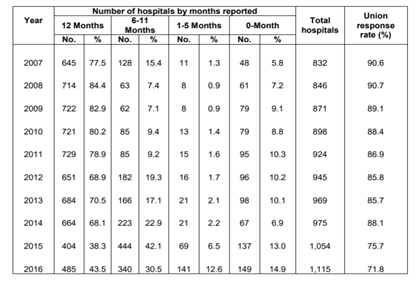
Healthcare sector plays an important role in developing the nation. In Myanmar, the NLD-government has been setting priorities through the annual budget allocations for each of the sectors. According to a recent report by MOPF Executive Budget Proposal, the ministry of health and sports was not in the list of five most spending ministries in 2019-20 Fiscal year based on the percentage of total expenditure although the government allocated 4.5% of the 2018-19 budgets to health care. Nevertheless, the number of hospitals have increased over time according to the Hospital Statistics Report 2014-16 by Ministry of Health and Sports.
…
According to Oxford Business Group, rising health care costs, ageing populations and changing lifestyles in emerging economies are stoking demand for medical technology (med tech) solutions.
This entails not just smart
devices that remotely monitor and transmit biometric data, but any instance of
technology that helps to deliver health services. These initiatives are
happening everywhere, but there are significant differences in the speed and
scale of med tech adoption across emerging markets.
UBS Investment Bank estimates
that the emerging market health care sector will grow 6.3% annually over the
next decade – double the speed of developed markets – as governments make up
for historic underinvestment. Emerging markets routinely spend less than 10% of
GDP on health care, contrasted with close to 15% spent by developed countries, but
are working to reduce the deficit. Ageing populations are a catalyst, and the
UN estimates that by 2030, the 65-and-over demographic in emerging markets will
rise to 15% of the population, up from 10%.
There are two main bodies
that operate health care operations in Myanmar: the MoH, which manages the
country’s entire health sector and the Department of Public Health (DoPH), a subset of the MoH, which acts as the regulatory body for providers. Besides
DoPH, there are six other departments of medical services. However, the private sector and the NGOs play important roles in overall health care sector, working together with
Myanmar Medical Association (MMA).
Even with all this stated underinvestment and decreasing spending percentages, there are more than 1,100 hospitals in Myanmar. But there is a question about the quality of health care service they deliver. When it comes to the quality, the medical technology and the advancement of the equipment or the machineries cannot be left out of the topic. Myanmar is still in developing phase; the technologies cannot be as advanced as the most developed countries. However, there are a number of international hospitals with international standard equipment.
PUBLIC HOSPITALS
PRIVATE HOSPITALS
● 500-bed Specialty Hospital, Yangon ● Defence Services General Hospital (1000-bed) ● Defence Services Orthopaedic Hospital (500-Bed) ● Defence Services Obstetric, Gynaecological and Paediatric Hospital ● East Yangon General Hospital ● Insein General Hospital ● New Yangon General Hospital ● No.2 Military Hospital (500-bed) ● North Okkalapa General Hospital ● South Okkalapa Maternal and Child Hospital ● Thingangyun Sanpya Hospital ● Universities Hospital[1] ● Waibargi Hospital ● West Yangon General Hospital ● Yangon Central Women’s Hospital ● Yangon Children’s Hospital ● Yangon ENT Hospital ● Yangon General Hospital ● Yangon Orthopaedic Hospital ● Yangon Workers’ Hospital ● Yangon Mental Health Hospital ● Yankin Children’s Hospital
● Academy Hospital ● Ar Yu International Hospital ● Asia Royal Hospital ● Aung Yadana Hospital ● Bahosi Hospital ● Chan Myae Mitta ● East West Parami ● Grand Hantha International Hospital ● Green Cross Hospital ● Guru Nanak Hospital ● Hla Tun Hospice Cancer Foundation ● Jivitadana Sangha Hospital (for Buddhist clergy)]] ● Kan Thar Yar International Specialist Hospital ● Kwe Kabaw Hospital ● Lumbini Hospital ● Mahar Myaing Hospital ● MMCW ● Muslim Free Dispensary & Medical Relief Society ● Mya Parami Hospital ● Myint Myat Taw Win ● OSC Hospital ● Panglong Hospital ● Parami General Hospital ● Pun Hlaing International Hospital
The table shows some of the famous public and private hospitals in Yangon.
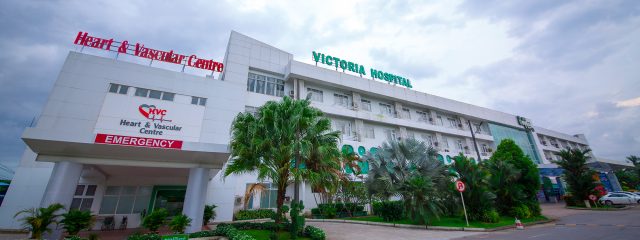
Hospitals such as Grand
Hantha International Hospital, Victoria Hospital, Pun Hlaing Silom Hospital,
ArYu International Hospital and many other private hospitals have a good reputation and trust from the
patients because of the technology and service they provide despite their
higher fees than that of public hospitals.
A regular patient who used to
do medical check up once
or twice a year in Bangkok said, “I am satisfied with ArYu hospital’s service
and the quality they provide. The prices are a lot cheaper than that of medical
check-up in Bangkok. And, the hospital has almost the same check-up packages
and the price are affordable”. If people can get the quality healthcare
in Myanmar without having to go out of the country, their lives will become a
lot less troublesome.
Lately, there are many
healthcare websites and free counselling applications that are available for
Myanmar people, for example, KoeKoeTech, Klenic Software, Telenor Mobile Health
App, MayMay and HMIS etc. A person can also reach out to experienced doctors
who are available on social media, mostly Facebook pages, to consult healthcare
needs. Getting access to medical advice is getting easier these days.
Klenic Software is a
cloud-based web platform where doctors and health clinics can store and
retrieve a patient’s information and medical history at the click of a button.
Klenic helps health practitioners digitize medical records and queue
management. Since the hospitals in Myanmar have been using manual record
keeping with books, which can get lost and misplaced easily, this kind of
hospital management technology can improve the record system which in turn
leads to improving the quality of healthcare sector in Myanmar. There are other
ways through which advancement in digital technology can be used to improve the
quality of lives.
Despite
making numerous campaign promises, a vast majority of them have not come into
fruition for the NLD government, even after nearly four years of being in
charge. Nor are they likely to be realised in the foreseeable future. As Lee
Kuan Yew put it wisely, “people tend to select politicians based on how good
they look on TV (or how good they talk). The result has always been poor for
the voters”.
One
of quoted phrases mentioned by Aung San Suu Kyi has been the one she said at
the forum for Myanmar citizens working or staying in Singapore. There, she
said, in response to a question, “we (her government)are not just catching up
with Singapore in 20 years, we would overtake Singapore in 20 years”. That was
four or five years ago. The economic reality on the ground cannot be further
from this. At the current rate that the economy is growing and based on the way
that the government is managing the economy, Myanmar will be no where near Singapore
in 20 years time. A more plausible aim would have been to try and catch up with
Vietnam.
Myanmar
Insider’s editorial staff were in Vietnam in September and we observed the
economic development first hand in the city of Saigon (Ho Chi Min City).
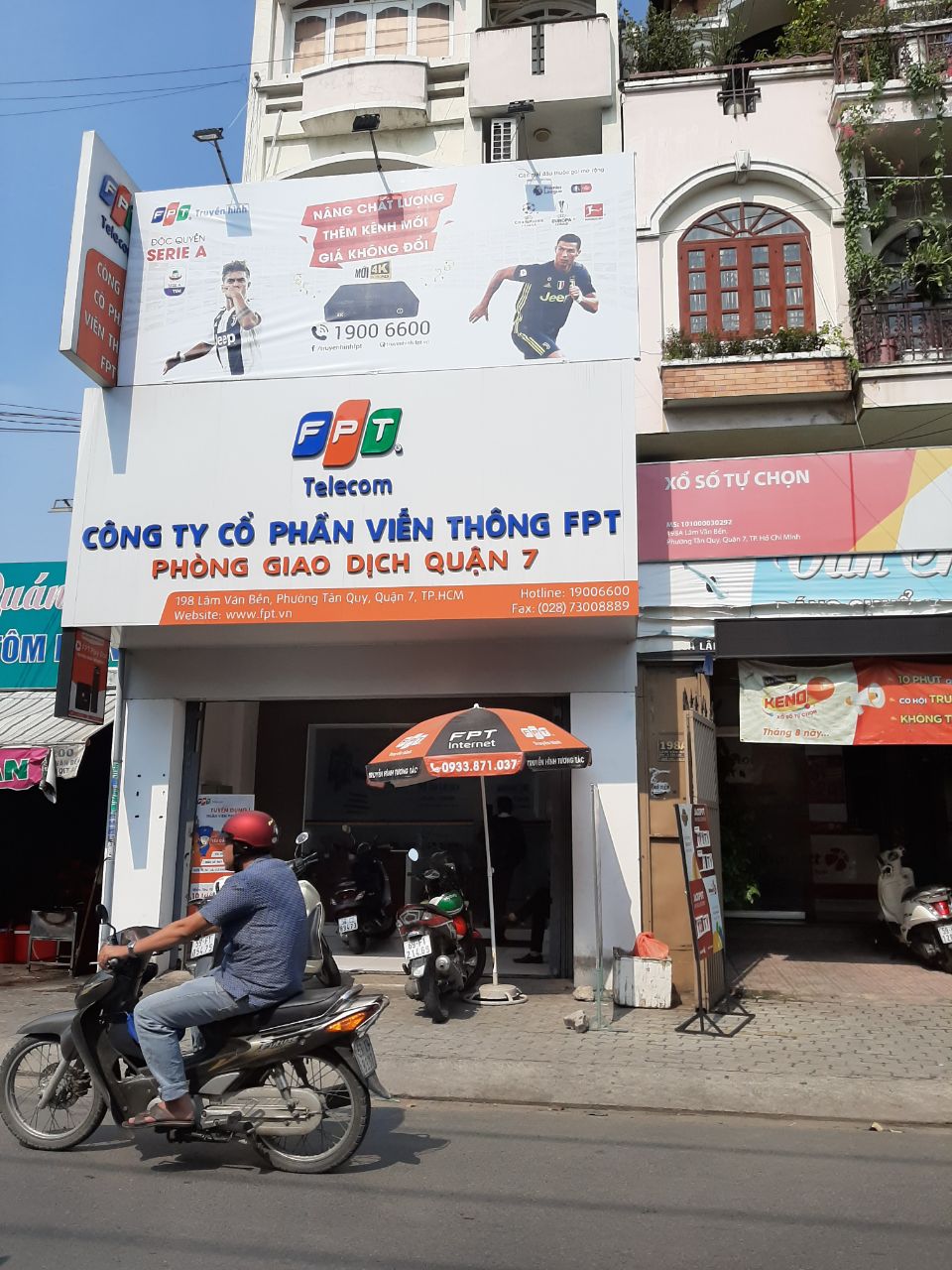
Because of significant investments by large Vietnamese companies in Myanmar
(Hagl, Viettel, FPT, etc.), Vietnam airline carry regular passengers to and fro
the two countries. Of course, there are Vietnamese professionals and SMEs
venturing out into Myanmar, too. Based on a recent Asean survey, Vietnam has
been one of the top three countries making outbound investments in other ASEAN
countries.
…
There
are daily flights between Saigon and Yangon. The flight is very affordable,
~$200+ for an economy class return ticket. There is also a reciprocal visa free
entry between the two countries. The flight takes around two and a half hours.
The current Saigon airport (SGN) does not seem to be much bigger than the new
Yangon International Airport, although the plan to build the new much bigger
Saigon airport has already started.
Vietnam’s
currency, Dong, probably bears the largest denomination among ASEAN countries.
1 million Dong is equivalent to about 66,000 Kyats (as of September 2019). Dong
exchange is available at the money changer next to the Thai embassy in
ManawHari Road, Ahlone township, in Yangon. It is advisable to exchange some
Dong before you fly to Vietnam.
The
immigration is worse off than Myanmar’s. The queues were extremely long. We
have waited nearly half an hour in the queue. The current queuing time at
Myanmar immigration is less than five minutes on average. May be due to coming
out of a communist era, we did not notice any smile or any small talk
forthcoming from any of the Vietnamese immigration officers.
We
had arranged for airport pick up service by the hotel. We promptly found our
concierge and followed him. A hotel car picked us up a couple of minutes later.
The concierge was reasonably well spoken. He talked about having internet
connection in the car as well as availability drinks. None was offered by the
driver. The driver did not speak to us at all, along the way to the hotel.
The architecture in Saigon was a combination of French, modern and Chinese styles. The roads are wide and reasonably clean
One outstanding difference you notice immediately is the presence of a large number of commuters on motor bikes, which are absent in Yangon.
On
Day 2, we visited the most popular attraction in Saigon, the Cu Chi Tunnels.
Vietnamese work hard. They are generally more hard working than the Myanmar or
Thai. The tour guide tried her best to make sure we were happy so that she
would eventually get a bigger tip. Cu Chi tunnels are about one and a half hour
drive from Saigon. It was a good eye-opener to experience what would have been
like during the Vietnam war time. There was also a shooting range, where one
can actually fire weapons used during the war. You just have to buy the
bullets.
In
the evening, we took a tour of the night scene of Saigon. The guide brought us
to many local food stores, roadside eating and sightseeing across town. One
thing we noticed was that there were no flies or mosquitos on the road side
places we visited at night or during the day. In terms of cleanliness, Vietnam
is way ahead of Myanmar. We also toured the city and the new suburbs being
developed. The city skyline at night is dominated by a single 81 storey
Landmark 81, developed by Vietnam’s largest conglomerate, Vin group. The new
suburbs has many new offices, commercial and residential spaces, yet most of
them are unoccupied at present. May be a case of supply and economic
development mis-match, just like the present Yangon’s property market. Most of
the roads are good, without potholes or bumps, yet we experienced flooded
streets in the suburbs. Officially southern Vietnam has two seasons, rainy and
hot. The tour guide told us, unofficially, hot and hotter seasons.
We
had a series of business meetings and visits lined up Day 3. One thing Myanmar
is a little bit ahead is the English language proficiency level of average man
on the street. We got lost along the way in the morning in a taxi and there is
no way to communicate with the taxi driver. Traffic significantly slowed down
in the morning rush hour, due to thousands of workers heading to work on their
bikes. Traffic rules were loosely followed, we observed. Food was significantly
cheaper in Vietnam than in Myanmar. In Myanmar if you head to an
air-conditioned restaurant, you ended up paying close to Singapore prices. In
Vietnam, prices are a lot lower, even the ones charged by the hotels. Even
movie tickets were cheaper in Vietnam.
Another
challenge in Vietnam, especially during the rush hours is crossing the roads.
As mentioned prior, the bikes seldom follow traffic rules. They do not stop for
pedestrians, they drive on the platforms, they are everywhere. One has to be
courageous enough to weave through this tsunami of bikes, just to get to the
other side of the road. We do not notice any policeman in sight either. Yangon
was right in not allowing motor bikes in the city.
The
car models used are quite the same as Myanmar. Taxis are slightly more
up-market, with significantly cleaner interior.
Vietnam
8 years ago would be just like Myanmar. Vietnam, however, has kept up its
momentum of growth, FDI, infrastructure development and innovation, to reach
current levels of economic development. Myanmar has lost its growth momentum
from 2016 till now and with every year passed by, it becomes more difficult to
catch up. The refocus on the FDI and tax amnesty might help, yet the dream of
catching up even with Vietnam (not Singapore), would remain just a dream for
many years to come, at the current rate of economic growth and with the current
team of so-called ‘experts’ managing the economy.