Interview with Gary Journeaux CEO of Competitive Pest Services
Please introduce yourself and your background to our readers.
Hi, I’m Gary Journeaux, dual citizen of Britain and Australia, married with two children, and most of the year am based in Myanmar with short visits to Australia every few months. Having lived in Myanmar for the past six years, and after purchasing an apartment here last year and our children now going to school, I consider Myanmar my home.
My parents were originally from Glasgow, Scotland, and emigrated to Sydney Australia, just before I was born. I was born and raised in Manly, which is a beautiful beachside suburb in Sydney. As an adult, I moved to Bondi, Sydney, which is famous around the world. I started my career in advertising, working in London and Sydney. For the past sixteen years, I have been working in pest control.
A walk down Inya Road, Yangon often displays a pleasant spectacle, black robed, hat-clad young graduates posing for photographs outside Yangon University. It is a time for celebration of a big event, a bigger achievement and seemingly the threshold of a great work life, where these students will apply the knowledge they have acquired. The young graduates are naïve, with rosy dreams and visions of a great career soon seeing jobs become a distant dream – the list of applications grows longer in as much as the rejections. The reason – employers want skills that are not being taught at colleges and universities. The result – we find graduates in physics and geology working as waitresses and shop assistants.
The world over, fresh graduates are recruited since they bring in a fresh perspective and enthusiasm, and can be trained as per the company’s requirements, but the training requires a certain level of knowledge and understanding, prior exposure to a work culture, communication, interpersonal and digital skills.
Employability is a global concern too with specialists in education finding innovative ways to raise the standard of students to make them ‘work ready’. This is a bigger worry in developing nations where scores of educational institutions, many of dubious standards mushroom, and churn out graduates and successful diploma holders, whose skills, knowledge levels and capability do not meet the basic workplace threshold.
Myanmar is no different and in the last 8 years, Yangon at least has seen dozens of colleges, academies and institutions of higher education have come up, offering international degrees and diplomas at a big cost. But do they deliver what they promise? Do the certificated hold value, and get jobs for the passing out students, who can deliver and meet job requirements? The answer is disappointing.
Myanmar growth stems from the opening up of the economy, and international organizations have opened offices here. The desire to hire qualified locals often backfires when human resource officers find a vast gap between the education the youth have received, and the job requirements in their organization.
It is this conflict and classical gap between employability and education that explains the low employment rate of the youth in Myanmar, which has 55% of its population under 30 years of age, and 17% of these are neither studying nor employed, as quoted in the Myanmar Times from a survey conducted by the government and the International Labor Organization. It is unfortunate that 26% of the unemployed youth hold university degrees, implying that they are unemployable – lacking in skills required at the workplace.
Requirements for Employability
Employability refers to the skills and capability required in an individual to get a job. A few basic skills include pleasant attitude, etiquette, and demeanor, interpersonal skills, ability to communicate, knowledge and competence to handle the role assigned. Additionally, the ability to adapt, learn fast, deliver desirable outcomes help people retain their jobs, or else it becomes frustrating for both employer and employee.
At present, the first level of requirements by employers in Myanmar are English language skills and being digitally savvy, followed by the capability to communicate and job specific specialized knowledge. This is stated multitude of times by foreign employers and recruiters. In an interview with Myanmar Insider last month, Christopher Loh, CEO of uab bank, stated, “our biggest challenge is human capital….we need banking talent with the right competencies combined with experience……”.
The students’ dilemma and needs
Students passing out of college and university themselves find that though they are applying for jobs linked to their subject, their academic knowledge is not oriented towards a career where this can be applied. Lacking practical skills, no one to mentor and train, they end up leaving jobs even if they find them, because they are unable to perform. Many end up with jobs that do not match their qualifications, a challenge reported in the ILO report on Youth Employment Situation in Myanmar.
Students remain confused when they close their books and wonder how their learning will fit into the workplace. For instance, it is one thing to know the definitions of monetary policy, inflation, price mechanism etc in economics, but quite another to see how these actually work in the real world with numerous other forces in play.
Fresh graduates have been found to require 6 months to two years to reach a level of contributing adequately to an industry, but with diligence and drive. Many have been found to leave much before they reach that level. It is unfortunate that even after a plum degree from a reputed institute, their workplace experience turns out this way.
Earning money is a basic need and after investing so much time, effort and money into acquiring a degree, it is only natural to expect that the job will compensate them sufficiently. Big cities warrant higher earnings to meet higher living expenses.
Those who can afford it, choose to study abroad, but majority of them have to pursue college education in Myanmar. Lack of access to latest education methods, they follow the age old system with hopes of finding jobs. Some are motivated to join additional short courses, improve English skills and undergo trainings.
Ideally, on-the-job-training is what they need, or a mentoring program where current employees mentor new recruits. This hand holding helps fresh graduates gain confidence at the workplace.
Employers’ frustrations
The biggest frustration for employers is the gap they find between their perception and expectation of competencies they need in their organizations and the ones the prospective employees have received through education.
The number of professional organizations and multinationals has been on the increase in Myanmar, and while the workplace, the work environment and talent pool has seen a radical transformation in the last five years, it has yet to meet international standards. The gap between expectations and what is available, makes employers either wait till the right candidate appears, or compromise on recruitment.
Finding the right talent of qualified individuals who will deliver as per the requirements of the job, is the biggest challenge and worry for companies. Investment in building human capital, through the right training has become an urgent need.
At the other end of the spectrum, retaining talent has also become a big concern with job hopping quite common and poaching of talent as well. Many companies, especially in tourism and hospitality industry invest a lot in training employees and upgrading their skills, which becomes a waste since many of them leave.
Many employers only consider people with experience. So where would fresh graduates go?
Measures to bridge the gap
Educators in Myanmar are well aware of the gap between degrees and employment, the missing hard and soft skills, the lack of creativity and the ability to apply technical skills in the workplace. This warrants an overhauling of the education system, incorporating vocational skills, opening career centers that work closely with industries and provide inputs on industry requirements and how to bridge the gap. Radically changing the current education system is of special interest to State Counsellor Daw Aung San Suu Kyi. The National Education Strategy 2016-21 details changes that will provide ‘quality, equitable and relevant education’ that will equip students with ‘new knowledge, competencies, creativity and critical thinking skills’. Besides changes in university and college curricula, the government has set up 372 TVETs (technical, vocational education and training centers) linked to specific ministries and private organizations that now complement academic learning. The TVETs are playing a significant role in creating a skilled and competent, employable workforce.
Changes in the system of education apart, what is helping is the setting up of training institutes in collaboration with foreign countries. The Mandalay Institute of Information Technology (MIIT) set up in collaboration between the governments of Myanmar and India has been providing high quality education in the fields of engineering and computer science. The SMVTI (Singapore Myanmar Vocational Training Institute) is a joint venture between the governments of Singapore and Myanmar and imparts vocational training to adult learners in the fields of tourism, engineering, hospitality and many basic services. The Center for Vocational Training (CVT) is a Swiss Institute that offers vocational training through apprenticeship to disadvantaged children who have fallen out of the education stream, besides three-year courses based on the Swiss education model. Numerous other institutes like AKI and the upcoming Japan-Myanmar Aung San Vocational Training Institute hold promise of better opportunities for the job seeking youth.
Setting up of a larger network of ‘institutes of skill development’, focusing on STEM fields (science, technology, engineering and mathematics), a practice followed in Singapore and Vietnam, creating regular short term vocational training opportunities and mentoring in organizations, will serve both employers and employees well. Training linked to the agricultural sector will help productivity and efficiency in this field as well.
It is not just in Myanmar, but many countries are introducing vocational training as an integral part of college education. Vocational training does not churn out large numbers due to personalized attention that is essential, but works well in small groups. It also focuses only on the requisite skills and provides hands-on experience. The practical opposed to the theoretical takes the lead, besides problem-solving and application.
The centuries old system of education where we learn more about the past than the present, where information is seemingly more important than applicable knowledge, where critical thinking faculties never really develop, needs to be discarded, and replaced by present theories and practices, while simultaneously involving industry specialists along with academicians to formulate educational policies so that what is learnt through education, makes students employable and ready to deliver.
Interview with Tomasz Schwarz Country Manager of Beiersdorf Myanmar
Country Manager of Beiersdorf Myanmar
Please introduce yourself and Beiersdorf to our readers.
I am Tomasz Schwarz from Poland. I am responsible for the Beiersdorf Myanmar and I am very happy to be in Yangon. I have been working with Beiersdorf for more than 20 years. And Beiersdorf is the producer of famous brands NIVEA and Hansaplast. They have been in Myanmar for more than 20 years.
When was your first trip to Myanmar and how has it changed since then?
I am very new to Myanmar, arriving just in July (last year). I feel very good here. Yangon is a green city and without motorbikes running in the streets. People are very friendly and humble. I would love to learn about Myanmar culture during my time here.
It is becoming increasingly easy to have your meals delivered to your home. It only takes a few clicks. But it’s not a new concept. It is now possible to have your meals delivered from your favourite restaurant without the restaurant even having a delivery man. You just need internet access via your mobile, desktop or tablet and in a few clicks you can have anything delivered. This is called “Food Delivery Service”. Over the years, food delivery service has taken into Myanmar as well as the living styles in Yangon are changing.
In this penetration, the food industry has evolved into transformative space, combining with food delivery services which offer greater convenience and high demand of consumers .
The growth of the Myanmar’s food delivery service market is supported by people’s increasingly busy lifestyles and rising incomes, along with deepening smartphone and internet penetration. In accordance with the research, Yangon Door2Door, Food2U, Deliverink, Hi-So Mall, food panda and other delivery services such as Grab Food have come in to Myanmar food delivery market.
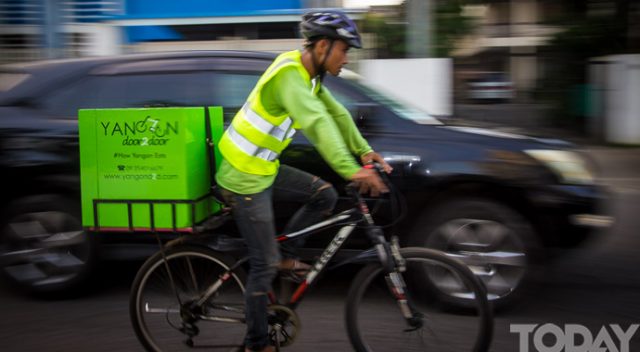
Among them, Yangon Door2Door is one of the food delivery services which is the premier online food ordering and delivery service which was started since 2013 earlier than many food deliveries. The process is like, Yangon Door2Door picks up the completed order from the restaurant, and delivers the items to the customers through bicycles or by cars on an as-needed basic for larger orders .
Shady Ramadan, CEO and founder of Yangon Door2Door said “At our first journey, people told our delivery service with a bicycle is not going to happen. But we have always been trying to say that we can do this and we always need to keep the best services in the market so that this is where we are now as the first food delivery service in Myanmar.”
Customer experience is essential
Customers want to be able to order as fast as possible, having real-time support. They want a smooth customer experience.
For example, customers in the UK can order from local restaurants through delivered with a simple text message. Difficulty resides in simplicity: the idea of making purchases as simple as possible requires the delivery companies to know a lot of information about the customers, which is still difficult to do without an appropriate platform.
As the first journey of all food delivery services, there are always “must-need” ways to get customer’s belief.
“Customers want the the food in time so,we have to bring them the food in time. This is kind of strategy to get customer’s beliefs. Everyone in this food delivery service have to be linked because as customers, it is unacceptable to be late and to make excuses. So, we push all the time as much as we can so that customers won’t be disappointed,” said Shady .
As one of the loyal customers of Yangon Door2Door, Lwin Moe Aung who is currently working in Irrawaddy English Edition says “I am the type of person who never puts effort in preparing for three meals. So for me, using food delivery service can give me greater convenience , saving-time with fair delivery fees.”
The reason why choosing Yangon Door2Door among other food delivery services is “ I don’t need to wait more than 30 mins to get my order. So I love when Yangon Door2Door brings my order as fast as they can .” he added.
The Growing Food Delivery Market In Global and Myanmar
According to the global research, the global food ordering and the delivery market is growing rapidly in most countries, with an overall annual growth rate estimated at just 3.5 percent for the next five years.
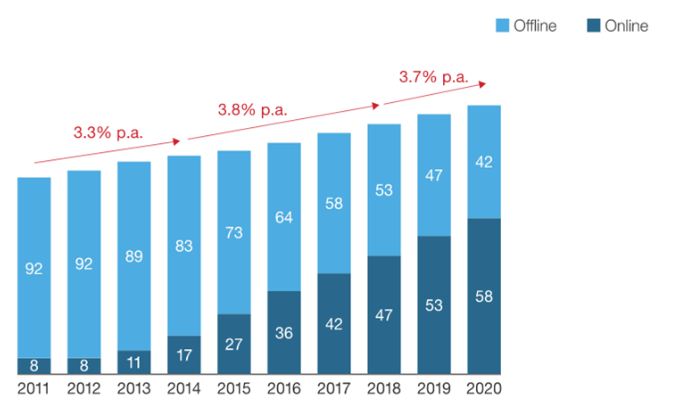
Currently, out of the total traditional food ordering market, 47% is offline while 53% is conducted online. This figure is expected to flip in the next couple of years. Overall, this sector is growing at an annual rate of 3.7%, but interestingly, online food ordering and the delivery sector was expected to grow at 15-20% in 2019.
The food delivery industry is expected to have a market volume of $146,654million by 2022. The largest segment of the food delivery market is restaurant-to-consumer delivery with a market volume of $58,008 million by 2020.
There has been tremendous growth in the online food delivery sector in the past few years and is expected to grow at a rapid pace in the coming few years.
The process of growing food delivery service in Myanmar and other countries is totally different. Unlike other countries, Myanmar is very different, just an opening up country which is very much ethics influencing in terms of developing. It is also in early stages of a lot of changes taking place.
Among many delivery services, Yangon Door2Door is the first food delivery business in Myanmar. Shady Ramadan also mentioned “The idea why we started this service is that Myanmar people are goot at IT but they don’t know where to and how to find a platform. So I put strategies in marketing, branding with new concept of delivering with bicycles and it works finally.”
Challenges Faced by Food Delivery Services
According to the global food delivery companies, though the online food delivery market offers immense commercial potential, it also presents some major challenges. One of the challenges global food delivery companies are facing is that inconsistent food quality.
It is a challenging task to maintain the quality of food being delivered until it reaches at the customers’ door-step. There is no comparison of the quality food delivered on tables in the restaurant with the food delivered in a box in the name of instant home delivery. Food is always prone to quality lapse irrespective of the measures taken in packaging to provide first class food delivery to the customers. There’s a major probability of pizza becoming cold, curry might spill, noodles turn sticky while sandwiches get moist. The customers equate the quality of food served in restaurants to the quality of delivery.
Ramadan also said “In the beginning, I faced a lot of challenges like hiring people and messengers training and finding restaurants for partnership deals. It is not easy to get people who will give you your food in time and in a manner, in a nice way, hygienically following the rules. But we have always been trying to find solutions.”
Another challenge for food delivery services like Yangon Door2Door is finding vendors and a reliable partnership that can guarantee Yangon Door2Door access to the goods. With hard work, 500 restaurants and vendors have reportedly patnered with Yangon Door2Door.
Despite a rapid increase in user bases as awareness of the delivery services has grown, most of the customers are young people. According to the Frontier’s Article of “Pedal Power Recipe for Business Success”, nearly half of Yangon Door2Door’s users are aged between 25 and 34 and most of Deliverink’s users are between 26 and 38.
Ramadan believes that city planning could benefit his business, his customers and the environment, and he urged policymakers to create safer, more bike-friendly streets and promote awareness about transit alternatives.
“We will always keep expanding in doing good services , adding more services and trying to make the services more interesting for people. And then, we always think about how to help our customers save more time rather than sitting in a traffic, for an hour with bicycle service.” said Ramadan.
Domesticated livestock have played a pivotal role in the development of human civilizations around the world and continues to be an integral part of human culture, society, and the local and global economy. The history of agriculture is the history of humans breeding seeds and animals to produce traits we want in our crops and livestock.Domestic livestock has contributed to the rise of human societies and civilizations by increasing the amount of food and nutrition available to people in four ways: by providing sources of meat, milk, and fertilizer and by pulling plows. Throughout history livestock have also provided leather, wool, other raw materials, and transport. The availability and husbandry of domesticated plants and animals enabled prehistoric peoples to produce and store sufficient food supplies to develop large, dense societies that did not have to wander in search of food.An efficient and prosperous animal agriculture historically has been the mark of a strong, well-developed nation.
Agriculture permits a nation to store large quantities of grains and other foodstuffs in concentrated form to be utilized to raise animals for human consumption during such emergencies as war or natural calamity. Furthermore, meat has long been known for its high nutritive value, producing stronger, healthier people.
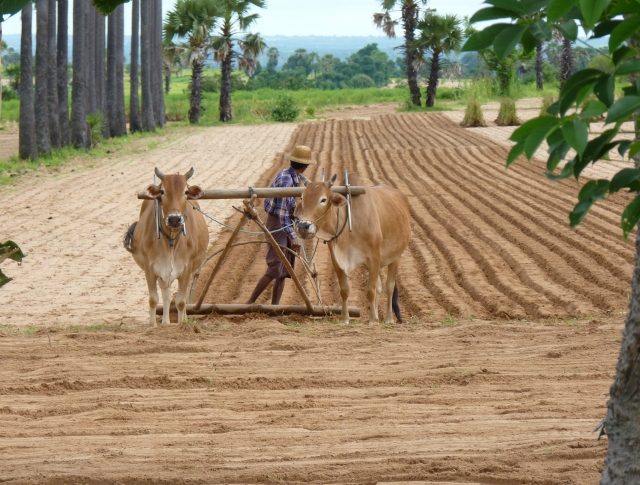
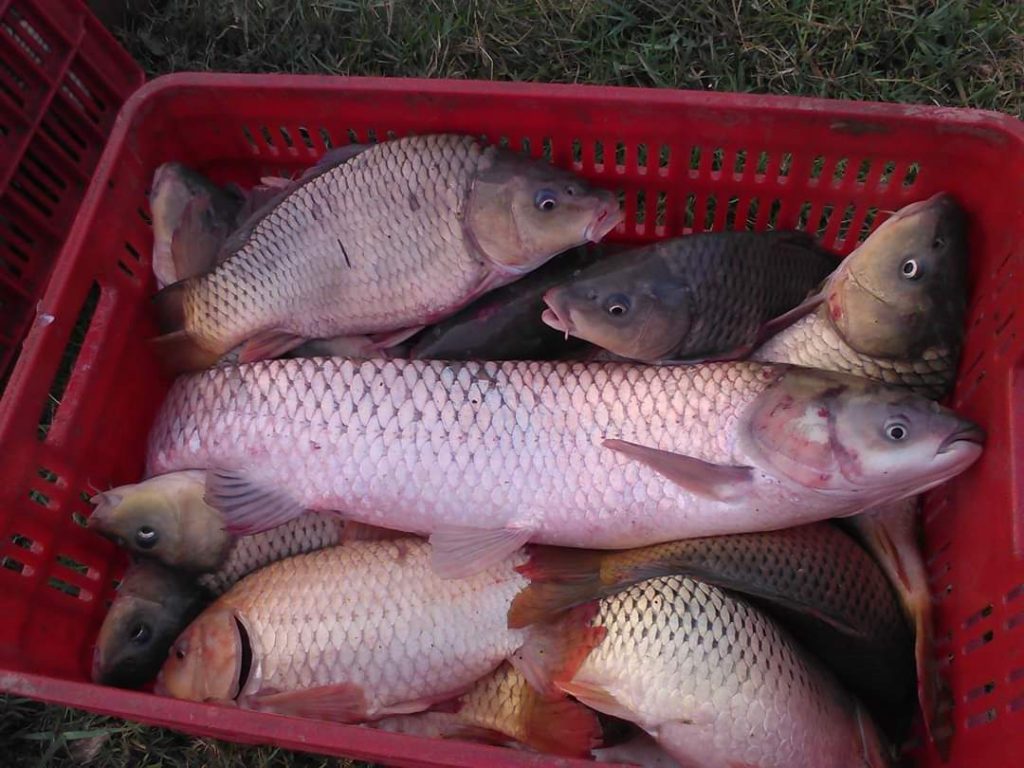
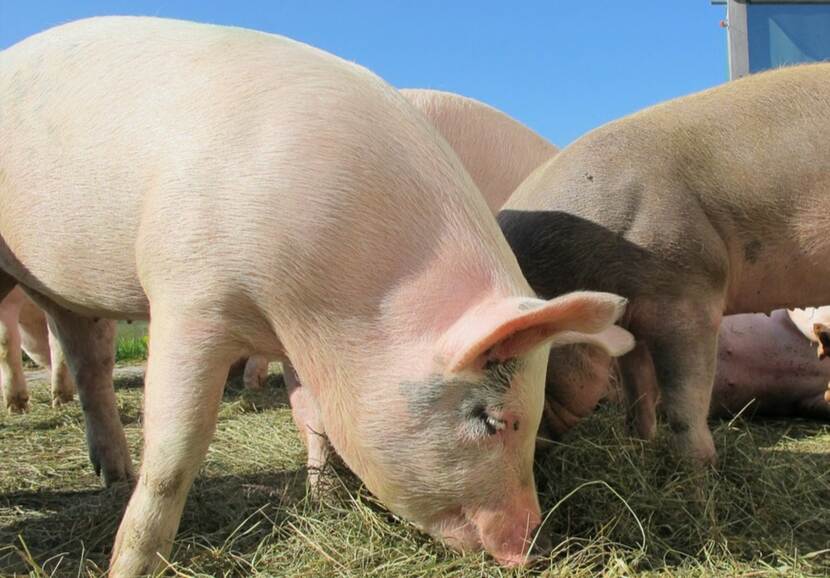
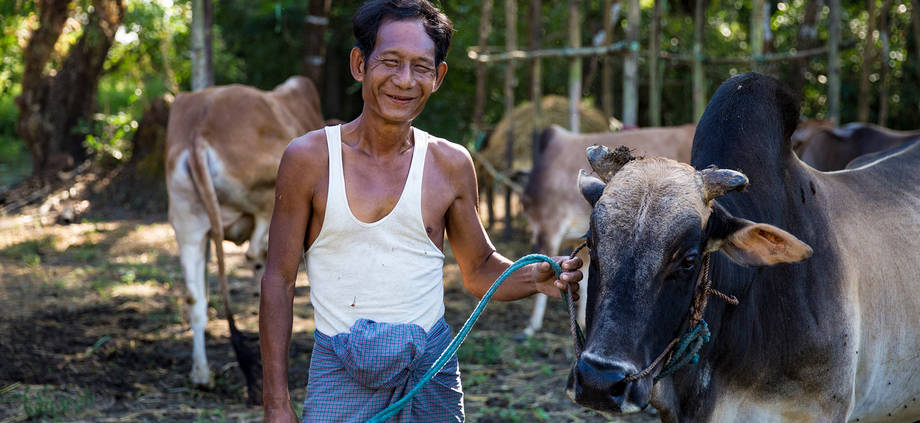
Farmers in Myanmar raise livestock for both food and labour purposes. This includes cattle, water buffalo, goats, sheep, oxen, chickens, and pigs. Oxen and water buffalo are used as draft animals throughout the country, while most cattle are raised in the dryer northern regions. In his Pulitzer-prize winning book Guns, Germs, and Steel, Jared Diamond describes agriculture generated the ample, dependable food supply needed to develop specialized, stratified societies, political organization, writing, and technology. Diamond argues that through close coexistence with domestic animals, people in these societies acquired some immunity to epidemic diseases that devastated other populations. His examples include the Spanish conquest of the Inca and other Native American populations, and the near extermination of the Aboriginal peoples of Australia and other regions by British and other European settlers.
Immediate demand of Myanmar live cattle export to China, Malaysia, and Thailand markets is currently a large priority for many local economies. At the same time new domestic markets for value-added beef products are also developing.
Myanmar’s economy is heavily based on agriculture, and cattle are used throughout the country for draft, particularly by farmers. Livestock products contribute 17% to kilocalorie consumption and 33% to protein consumption globally, but there are large differences between rich and poor countries. Cattle make up the largest livestock group worldwide. Cattle are sometimes used as draft animals, particularly in small-scale farming and in less developed regions.
According to recent estimates Myanmar has 9.7 million cattle and 2.1 million buffaloes. The proportion of cows used for dairy purpose constitutes only 10% of the total population. At present the number of artificial inseminations (AI) done range from 70,000 to 80,000 per year. An isotopic technique is being used to breed more productive dairy cows. Switching to the use of artificial semen to fertilize cows has allowed many small scale farmers and breeders to sell their bulls and save 600,000 Kyats ($500) a month in fodder costs as a result. It has also freed up space in their small farmsteads for more cows. Having invested their savings in additional cows, they have now moved from subsistence farming to building small businesses. Milk is one of the most complete and oldest known animal foods. Cows were milked as early as 9000 BCE. Hippocrates, the Greek physician, recommended milk as a medicine in the 5th century BCE. Sanskrit writings from ancient India refer to milk as one of the most essential human foods.
Myanmar’s national economy is also rapidly developing, and there is great potential to increase food security and food quality in cattle and other livestock industries.
Demand from China for Myanmar cattle is on the rise. According to the official statistics, more than $260 million in revenues have recorded since breeders were allowed to export cattle. “If a bilateral agreement between the Myanmar and China is signed and a barter system can be adopted, there will be mutual benefits on both sides,” Khin Maung Lwin, assistant secretary of the Ministry of Commerce (MOC), told media earlier last year. China has stated that it intends to buy cattle from a so-called disease-free zone at the border.
“We cannot create a disease-free zone now, so we have created an area to conduct disease control. We are planning to export [cattle] from this disease-control zone after vaccinating the animals,” said Dr Kyaw Htin, deputy chair of Myanmar Livestock Federation.
The MOC collects taxes of 2% per cattle traded. However, although about 700,000 head of cattle is exported every year, only about 300,000 are trade via legal routes due to the lack of legal avenues, said Dr Kyaw Htin.
According to a report filed in July 2019, Kangrui Agriculture & Livestock Development Company is the first Chinese outfit to invest in cattle breeding in Myanmar. Thant Sin Lwin, acting director general of Directorate of Investment and Company Administration (DICA) said that the cattle will be bred domestically and exported to China. It has been noted that from December 2017 to April 2019, Myanmar exported around 500,000 cattle.
Seeing the growing livestock production in Myanmar a mega-business event GRILIVESTOCK MYANMAR 2019 was held in December 2019. It featured the latest products covering Livestock Breeding Equipment, Feed Supply and Machines, Animal Health Products, and many other categories. Wirat Wongpornpakdee, President ofMyanmar CP Livestock commented that the poultry industry in Myanmar was going on the right track, with annual growth in local meat consumption spurring the need to expand the country’s broiler and layer production, along with increased demand for feed and feed additive products.
In line with this trend, CP Myanmar has launched plans over the past year to expand their feed production, improve existing feed distribution infrastructure, and set up their first meat processing facility in the country.
The Agrobusiness Forum in Nay Pyi Taw on December 12 2019 was first edition of EuroCham Myanmar’s signature event on advocacy. With the common objective of promoting sustainability, inclusivity, productivity and competitiveness in the agriculture sector, EuroCham Myanmar (EuroCham), the International Labour Organization (ILO) and the Organisation for Economic Co-operation and Development (OECD) are collaborating in convening the Agrobusiness Forum 2019, focused on promoting good agricultural practices and responsible supply chain management among agrobusinesses operating in Myanmar.
The Forum provided a platform for agrobusiness representatives and Myanmar policy makers to openly discuss challenges and opportunities in implementing good agricultural practices and promoting responsible supply chains with a focus on trade and finance, labour rights and decent work, land issues, technologies, food safety and the environment in Myanmar’s agricultural sector.
The Agrobusiness Forum 2019 was opened with a keynote address from His Excellency Dr. Aung Thu, Union Minister for Agriculture, Livestock and Irrigation of Myanmar His Excellency began his keynote by highlighting the considerable role agriculture plays as both an economic contributor and as a source of employment in the country. “Our ministry will closely collaborate together hand in hand with stakeholders to achieve our common goal of the development of the agriculture sector in our country.” Said Dr. Aung Thu.
Piyamal Pichaiwongse, Deputy Liaison Officer for the International Labour Organisation, highlighted the dynamism and opportunity in Myanmar’s agriculture sector during the scene setting address. Central to this development is the relationship, as Pichaiwongse elaborated, between producer and consumer, and both play key roles in transmitting information as to what expectations are and what benefits can be delivered. These include food safety, food security, socially responsible labour standards and environmental sustainability, complying with these standards inherently leads to greater market access.
After that, Co-Chair of the EuroCham Agrobusiness Advocacy Group, Esther Wintraeken, introduced the plenary session as a moderator, consisting of Kang Chengrui from East West Seeds talking on Import and Export Practices, Calvin Zan from De Heus sharing experiences on Land Issues. The panel also was made up of Karina Ufert, from AgriRS, elaborating on Access to Finance, and Hyacinthe Cloarec from Metro Wholesale Myanmar and Erwin Sikma from Impact Terra elaborating on Food Safety and Technology in Agriculture respectively. Following the scene setting address, discussions contextualised Agriculture in Myanmar through the lens of a growing need to adhere to international standards in terms of trade and finance, labour rights and decent work, land issues, technologies, food safety and environment. The roundtable sessions touched upon cooperation between government and the private sector, in regard to understanding the underlying problem and what are tangible solutions.
More than 240 participants attended, including policy makers from the Government of Myanmar, business representatives active in Myanmar’s agriculture sector, employers and employee organisations, international and civil society organisations (WFP, Grow Asia, UNODC, UNOPS, ICCO…). With the common objective of promoting sustainability, inclusivity, productivity and competitiveness in the agriculture sector, EuroCham Myanmar (EuroCham), the International Labour Organization (ILO) and the Organisation for Economic Co-operation and Development (OECD) collaborated in convening the Agrobusiness Forum 2019, focused on promoting good agricultural practices and responsible supply chain management among agrobusinesses operating in Myanmar.
Interview with YoungSeok Ham Managing Director of Samsung Myanmar
Managing Director of Samsung Myanmar
Please introduce yourself and Samsung Myanmar to our readers.
I am YoungSeok Ham, Managaing Director of Samsung Myanmar.
How did you end up at the current position?
I started my career in global strategic marketing department at Samsung Headquarters in 1998. Later, I reached to different levels of positions and worked in other international markets including Southeast Asia and Middle East. In 2017, I came here to Myanmar to lead the business operations and team members so that we are bringing world’s best technology and services to our customers in Myanmar and introduce them to the long history of our brand at the same time.
In this article, I am going to examine the role of Myanmar government in the further development of e-commerce and how it can actively cooperate with the private sector, to help achieve the country’s much needed economic growth. Since the first article that I wrote at the beginning of the year, some changes have taken place in the world of e-commerce. Yet, it may not be fast enough, judging on an e-commerce speed.
The government formed Digital Economy Development Committee (DEDC) in 2017 under the patronage of the Vice President (2), headed by the octogenarian U Soe Win, Minister of Planning and Finance. Internationally, Myanmar government has also been one of the signatories to a joint statement issued in 2016 December to support the development of e-commerce globally.
The government, with the assistance of UN and WTO, has set fourteen goals to achieve in digital economy development of Myanmar. DEDC was further sub-divided into five sub-committees: Supervisory, digital trade and e-commerce development, SME & Priority Sectors Digital Transformation, Digital Infrastructure & Cyber Security Development and Innovation & Digital Technology Improvement sub committees.
Digital trade and e-commerce development subcommittee (DTECD), headed by Deputy Minister of Commerce would be the most appropriate committee to encourage the cooperation between private and public sectors to accomplish at least five of the fourteen goals, from SME adoption of digitalization to the use of digital transformation across business sectors.
In terms of working with private sectors, DTECD plans to regularly meet with representatives from Digital Economy Association (DEA) and E-Commerce Association of Myanmar (ECAM). The former is an organization, under UMFCCI, covering everything affected by the digital economy, from retail to e-government to technology to logistics to financial services. The latter, formed slightly earlier, focuses primarily on those directly involved in e-commerce, i.e., marketplace, online shops, e-commerce logistics, etc.
Global donor organizations have also sent out development teams to assist in this transformation. These include representatives from UNCTAD, WTO, EU, US, etc. E-commerce development has been moving in the right direction. All have met the representatives of the above associations during the last quarter of this year, to explore areas of cooperation between the private sector representatives and themselves.
In fact, the DTECD sub committee held its first meeting with the private sector on November 27, 2019. Based on the latest survey, employment figures by those directly involved in e-commerce alone exceeds 10,000 at present and this is expected to multiply significantly in the near future, as the digital economy grows. The meeting focus on regulations, the way forward, cooperation between government agencies and the establishment of a trust mark.
E-commerce players and ECAM members are, in general, against hard regulations as it would lead to higher operating costs, especially via taxation. Unless taxes can be applied fairly to other cross border sellers, regional and global operators of e-commerce, it would lead to job losses as sellers shift their operations to border towns such as Muse or Myawaddy, in order to avoid registration and taxes. Regulations would also work against innovation and further development in e-commerce. Alibaba would not have been what it is today, if China imposes hard regulations so early.
In terms of payment systems, digital payments systems in Myanmar are one too many. We have the leader Wave Money, closely followed by KBZ pay and there are at least ten others licensed operators. Plus at least five more in the application pipeline expected to be in operation, before the end of the first quarter of 2020. Yet the key to success in digital payments is being the one and clear cut early mover like, WeChat pay or having a large user base, like, Alipay.
Having an excellent payment app or operation alone is insufficient to entice any user into digital world. Furthermore, if one looks at the payment leaders in Myanmar, the digital money or payment is not really digital (i.e., via app). Almost all transactions are being made through agents; the end users are not using the app to transfer. They are afraid of something going wrong and having no one to come to their assistance. Not to lose heart, with even 85% cash on delivery (COD) payment rate for e-commerce transactions, Myanmar is not that far behind that of Vietnam (73%) in 2019.
In the view of the government and correctly so, e-commerce is a multi agency issue. Trade to customs to taxes to economy to payments, they are handled by different ministry jurisdictions within the government. That is why the coordinating role of DTECD sub committee is important; the parties involved needs to be fully aware of the role of everyone and their respective positions, especially the feedback from the private sector.
The government position has been not to force the regulations down to the e-commerce players at present. At least for the time being, a soft registration is the preferred approach. One solution being considered is the to acknowledge genuine e-commerce merchants and platforms via a Trust mark, just like those that exist in Hong Kong or Singapore.
Within the month of December, further discussion and opinion gathering meetings would be held between donor organizations and stakeholders, with the aim of coming up with a e-commerce strategy or policy recommendations in relation to marketplace policy, payment systems, logistics, infrastructure, cross border trade, cyber security, etc.
In fact, these global organizations can do more than just gather opinions, provide trainings or write recommendations. They can go down to the ground together with real e-commerce players and support the on boarding of merchants, producers and sellers across Myanmar, thereby directly assisting in the income uplifting of rural population; for example, by learning how to go onto and sell via an e-commerce marketplace or sell online on his own, a pipe (smoke) maker from Belu Islands (Mon State) can increase his revenues immediately, by selling directly to everyone across Myanmar and possibly around the world. Multiply this with number of rural producers across the country. How can anything be more effective than this in terms of development!
The second thing that e-commerce associations and donors might consider doing together might be to get real data from outside of Yangon and Mandalay areas. Right now, all e-commerce surveys, whether conducted by Myanmar Insider, MCU or MMRD, focus only on Yangon and Mandalay. Only by having real data from rural areas, can we determine the exact digital development needs and design the assistance projects accordingly.
Interview with Ekayi Maw Koo Chief Executive Officer of AustCham Myanmar
CEO of AustCham Myanmar
Please introduce about yourself and AustCham background.
When I returned to Myanmar, I was not keen to join a company or one entity. Since I have a Myanmar background, I wanted to do something that I felt would contribute to Myanmar’s development. I wanted to help not just one entity but many people or many organizations. And when this opportunity came up as CEO of AustCham Myanmar, I thought this is a great way to combine my Myanmar and Australian background with my business and finance background, in an area I feel quite comfortable in. It made perfect sense to take up this role as CEO in facilitating shared economic prosperity for both Australian and Myanmar companies, as well as advocating with the government, capacity building and networking.
A chance conversation on how the food industry has changed since we moved to Yangon seven years ago got me thinking, and the clock went back to October 2012, when I set foot in Myanmar for the first time. Musty restaurants, and plastic-furnished teas shops, fishy foods and constricting choices, fried savories served cold and oil rich curries, was all I came across in my first days here. From the foodies’ paradise, Bangkok, this was going to be tough for sure. Thankfully, my own culinary skills made up for what was missing outside. These were also put to test since ingredients also did not match up to my requirements. Those select cuts of meat, shelled and deveined prawns, fresh herbs and whole wheat bread, were not easy to come by. And food delivery options for those under-the-weather days, was something to be forgotten about for the next 3-4 years.
Fast forward to 2019, seven years passed with a colossal amount of patience, and today, Yangon is set to match its esteemed neighbors, food capitals and gastronomic destinations. The current wave of consumerism, a growing and expanding middle class with higher levels of disposable incomes, a young population wanting to emulate western ways, have all added to create demand for good quality food and variety. There is a growing demand for finer foodstuff, cleaner and more hygienically prepared foods, with cleaner ambience also a consideration while eating out.
In every country, as the pace of economic growth picks up, the food industry is the first to witness change, on both the demand and supply side. Being a largely agrarian economy with rich fertile soil, the range of food products offered will only expand with time. As of now the food industry comprises 66% of the industrial sector of the country.
A low middle income country of 55 million people, Myanmar has a sizeable consumer market that can witness consumer spending of up to USD 100 billion in the next ten years. But it needs to scale up the quality and quantity of its goods and services, provide what the masses are willing to spend on.
With its abundant natural resources, Myanmar has immense potential. The added advantage of natural beauty across the spectrum from pristine beaches, picturesque lakes, exquisite archipelagos, mountain ranges and skiing opportunities, gives the country the opportunity to expand its tourism network and convert it into the biggest source of revenue and employment. Local cuisine and international food varieties, access to hygienic products and eating places are an integral part of tourism.
Eating out
The basic concept of eating seems to have changed in the last few years. At the beginning of this decade, food was eaten mainly at home, and the affluent presented five-course meals on their table, prepared by well-trained chefs, the cuisine ranging from local Burmese, to French and Italian. Tea shops were common meeting places that served local savories and salads, and those who could afford it, went to the Savoy Hotel, The Strand or Acacia Tea Salon.
Street food was popular then and it is loved by locals and foreigners alike, even today. Hawker stalls are multiplying, and one sees lines of stalls along Strand Road offering local fare, and small clusters of stalls crop up near construction sites, schools and offices, hospitals and clinics. Reasonably priced, they offer nourishment to people on the move. While hygiene levels have not yet reached impeccable levels, there is a visible, marked improvement.
The restaurant and eateries landscape has been completely transformed in the last few years. A walk down Sayar San Road or Yaw Min Gyi street is a feast for the eyes with a treat waiting at every other door…
Sky bars and rooftop restaurants with a wide variety of international favorites line the cityscapes. Fast food restaurants have cropped up, and international food chains have multiple outlets, both stand alone and in Western style shopping malls. I remember finding Sharky’s to be the only place for good pizzas besides L’opera all those years ago. Today, there are at least 3 Parami Pizza outlets in Yangon, besides multiple Pizza Hut and Pizza Company joints, a hundred Japanese restaurants, numerous hotpot and barbecue eateries…the list is endless.
It is fascinating to see the number of bars that have opened and transformed the city’s nightlife. The once deserted, dimly lit streets are abuzz with activity and brightness in all parts of the city after sunset. Atlas, Escape, Red Dot, Burma Bistro, Vista are some that have taken over from the happening 50th Street and Union Bar.
Authentic Chinese, Korean, Japanese, Indian, Thai, Italian, Mexican and German cuisines are served by specialty chefs in upscale restaurants. Cheaper options have appeared in cafes, and smaller eateries that can be found on virtually every street in downtown Yangon. There are ice-cream parlors, bakery and confectionery outlets, seafood places and noodle shops, breakfast and brunch outlets which seemed unimaginable six years ago.
The end result is a craze for non-home cooked food, and eating out preferred by the youth in particular. What has added to this is the home delivery concept, which has become a roaring success with companies like Yangon Door-2-Door, and Food-2-U, besides a set of restaurants willing to offer home delivery services in their vicinity. With two wheelers banned in the city, it is touching to see the speed at which young cyclists rush to deliver food orders within the stipulated time.
From wads of cash to card swipes – this is the next welcome change. For expatriates, it took a while to get accustomed to carrying bulging wallets, but thanks to the entry of Visa and MasterCard, hotels and restaurants were among the first to accept credit and debit cards.
The supermarket experience
Seven years ago, there were just a handful of supermarkets with a limited selection of foodstuff and imported products. Finding the right ingredients, herbs and spices was not always easy, and even simple things like cocoa powder and baking powder would be off the shelf for months.
Today, the supermarket shopping experience is almost similar to any other country. Though still distinctly an urban phenomenon, we see a wide network of large supermarkets, hypermarkets and convenience stores. Initially one saw a few Citimart outlets, which now compete with Promart and Orange supermarkets. Hypermarkets mainly have Ocean and Capital as the main players. There is an array of salts, spices, fresh and dried herbs, baking goods and, of course, fresh fruits and vegetables from the US, Australia, Korea, Thailand etc., and the repertoire of local processed foods has multiplied manifold. One no longer needs to buy Australian yoghurts and sour cream, there are local brands selling equally good ones.
Non vegetarian food options have multiplied, and today it is easy to buy fresh meat and poultry, seafood and marinated meats. It is a far cry from my early trips when grey-looking chicken pieces had to be rejected, with the stale appearance and unpleasant odors made these lose their appeal. The quality of livestock in general has improved with special emphasis on animal health and disease control, rearing them in clean, well kept farms.
Food processing and import substitution
The food industry begins at the farm and ends at the table. Myanmar being largely agricultural, still needs a modernized, mechanized system of farming that will enhance productivity of both land and labor. Land yields are below Asian averages, and one day’s work generates just 23 kilos of paddy here, compared to 547 in Thailand and 62 in Cambodia. Change is creeping in, with gradual mechanization, use of better quality seeds, improved irrigation facilities, crop diversification, and efforts have begun to make farming less labor intensive.
At present, surplus agricultural produce of rice, beans, pulses etc is largely exported in its raw form, without any value addition. If processing and packaging could take place close to the areas where agricultural produce is collected, and food factories are upgraded, the revenue earned would increase substantially. Small steps are visible, as the range of locally packaged foods has increased, even local frozen foods have started appearing on shelves, and there is a wider selection of dried and fresh foods.
Already, one sees a transition from buying imported packaged foods, to fresh local produce, which is also organic. Numerous organic farms have mushroomed on the outskirts of cities and these cater to the demands of the middle and upper classes. The growing middle class selects both local and imported packaged foods, and this is giving an impetus to food packaging of local favorites.
Food safety and hygiene
For the last decade, a big concern for tourists was whether to consider sampling street food that did not appear hygienically prepared and preserved. Food safety norms had not been well defined and general awareness about food hygiene had been very low. Clean water, washing fruit, meats and vegetables properly and storing them on clean, uncontaminated surfaces, was not a regular practice. Covering cooked food, or keeping it refrigerated to prevent it getting spoiled, were also alien concepts. The end result was frequent episodes of food poisoning, even more so among tourists. This was not confined to the street food eating tourists, even meals at star rated hotels have in the past, led to endless stomach ailments, often causing panic.
But change is evident now, and awareness has increased in the last five years. Disposable gloves are used, hand sanitizers are found everywhere. The use of bottled water has become common, and there are NGOs educating street food vendors about basic hygienic practices.
The food industry is just one of many that is witnessing changes and transformation. Change is inevitable since all the ingredients for growth and improvement are present, a young population hungry for more, abundant natural resources that need to be utilized efficiently, a growing international market for international products and an ideally located country between two of the rapidly growing economies, India and China. We are fortunate to be part of this growth journey and get a first hand experience of the economic revolution taking place.