World Association of Press Councils (WAPC) has expressed ‘utmost concern’ over the ‘uncontrolled spread’ of fake news and misinformation on ‘social media and other digital platforms’, in a declaration issued at the end of the four day General Assembly in Nairobi, Kenya.
The WAPC, which Myanmar Press Council (MPC) is a member of, issued the warning in a new declaration. Digital component of the declaration states that bloggers and influencers with ‘ulterior motives’ continue to take advantage of the ‘anonymity in the digital platforms’ (such as Facebook) and spread falsehood and lies, without having any accountability or legal implications.
Such fake news endanger the lives of millions, ignites hatred and fuels the intensity of wars, warned WAPC.
WAPC said it will strive to explore ways to mitigate the negative impacts of this shift towards anonymity based digital media and provide recommendations in the near future.
Members agreed on the need to develop online media rules/framework to guide the conduct of online media around the globe and thereafter, advocate for adoption in members countries, the statement said.
WAPC held its General Assembly and celebration of World Press Freedom Day from May 3 to May 8, in the Kenyan capital.
Regional Comprehensive Economic Partnership (RCEP) trade pact and the Cambodia – China Free Trade Agreement (CCFTA) have given a boost to the fledgling e-commerce industry in Cambodia, experts said.
Cambodia’s market value of e-commerce had surged to $970 million in 2021, up 19% from $813 million in 2020, according to the Ministry of Commerce’s iTrade Bulletin released last week. Ministry of Commerce’s undersecretary of state and spokesman Penn Sovicheat said the e-commerce sector has boomed in the Southeast Asian country in recent years thanks to the rapid development of technologies and fast growth of Internet users. “Moreover, the RCEP and the CCFTA, which both entered into force on 1 Jan 2022, have injected fresh impetus into the development of e-commerce in Cambodia,” he told one news agency.
He said e-commerce is a potential sector to help boost the kingdom’s economy during and after the pandemic era. “During the pandemic, e-commerce had grown rapidly and there’s no doubt that the growth will continue in coming years,” Sovicheat said. Speaking of the cooperation between Cambodia and China in the e-commerce sector, the spokesman said the rapid development of e-commerce in China can be a good example for Cambodia to follow.
“We wish to see investment from Chinese e-commerce giants such as Alibaba or JD.com in technological infrastructure and logistics, so it will provide a strong basis for Cambodia to expand its e-commerce market to China, the region, and the world,” he said.
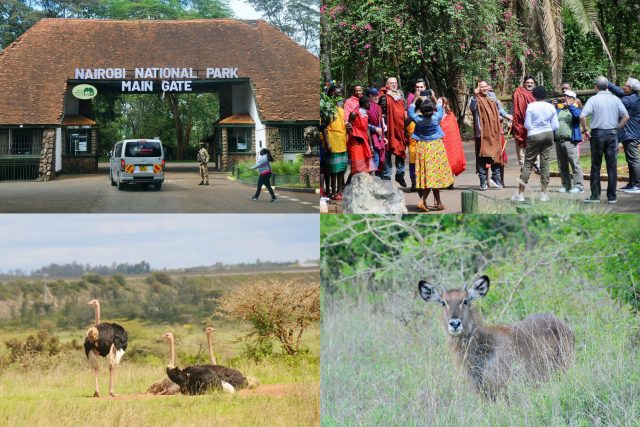
The Nairobi National Park in Kenya is a short drive away from its central business district. Wide-open grass plains and a backdrop of the city scrapers, scattered acacia bush play host to a wide variety of wildlife.
Established in 1946, the park is fenced on three sides, and the open southern boundary allows migrating wildlife to move around the park and the adjacent Kitengela plains. Despite its proximity to the city and its relatively small size, it boasts a large and varied wildlife population and is one of Kenya’s most successful rhinoceros sanctuaries.
Visitors can enjoy the park’s picnic sites, three campsites, and the walking trails for hikers all within just half hour’s journey from the an centre of the capital. The park has a large and diverse wildlife population and animals found in the park include lions, leopards, African buffaloes, black rhinoceroses’, giraffes, hippopotamuses, spotted hyenas, blue wildebeests, zebras, cheetahs, gazelles, common elands, impalas, hartebeest. waterbucks, common warthogs, olive baboons, black-backed jackals, common ostriches, and Nile crocodiles.
It is the main tourist attraction for visitors to Nairobi. Visitor attractions include the park’s diverse bird species, cheetahs, hyenas, leopards, and lions. Other attractions include wildebeests and zebra migrations, the Ivory Burning Site Monument, the Nairobi Safari Walk, and the animal orphanage. Inhabitants of Nairobi and thousands of Kenyan children on school field trips visit the park every week.
Our tour guide. Kennedy says the park has five big (baring elephants), small fives, ugly fives, and many more fives including the shy five. The sight of animals in their natural surroundings and close to our armoured vehicles was like the films on the popular National Geographic Channel. But the best sight was that of a hungry lioness waiting for its kill – she was unmoved with our presence. The clicking of our cameras and whispering voices hardly had any impact on her.
After a breathtaking 15 minutes, she just walked away like a queen along the sides of our vehicle while other enthusiastic visitors peered out the window to catch a last glimpse of her. According to Kennedy, the term “Big Five” originally referred to the difficulty in hunting lions, leopards, rhinos, elephants, and African buffaloes. These five large African mammal species were known to be dangerous and it was considered a feat by trophy hunters to bring them home. Today, however, the expression takes on a gentler form, referring to ‘seeing’ the Big Five-not shooting them. Kennedy also told us about many other fives the park has. The “Little Five” -ant lions, rhinoceros beetles, buffalo weavers, and leopard tortoises. There is even the Ugly Five- a whimsical listing of animals that includes hyenas, marabou storks, vultures, warthogs and wildebeests. The ‘Shy Five’ are hard to spot due to their introverted nature. These animals are- porcupines, bat-eared foxes, aardvarks, meerkats, and aardwolves. Like all other parks, Nairobi National Park is being affected by the ever increasing human, and livestock population including poaching of wildlife. The park’s creator Mervyn Cowie designed several of Kenya’s national parks with human visitors in mind. This emphasis helped in making tourism Kenya’s primary industry.
Initially, it exacerbated problems between the human population and wildlife. The park is under pressure from the city’s growing population and needs for farmland. People live right next to the park’s boundaries, which creates human-animal conflicts. To solve the problems, the government signed treaties with the local Maasai community who gave up their grazing lands on the Laikipia escarpment near Mount Kenya. Some of the park’s revenues have been used for community projects for the people in Kitengela. Maasai landowners have also formed the Kitengela Landowners Association, which works with the Kenyan Wildlife Service to protect the wildlife and find benefits for the locals. The farmers are compensated with cash if their livestock are killed by lions outside the park. The park’s Wildlife Conservation Education Centre has lectures and videos about wildlife and guided tours of the park and animal orphanage. The Kenya Wildlife Service has also created a Safari Walk that highlights the variety of plants and animals that are in Kenya. Above all, the entrance of the park is lined up with original Maasai people of all ages in their traditional attire, welcoming the visitors with their dance.
“Facebook, we are connecting the world. And we are coming to your country whether you like it or not!”, seems like a good start to the Facebook commercial – Yet probably they omitted the important parts:
Between 80% – 100% of what is on our site/platform is B*llshi*(crap)!, according to John Oliver of Last Week Tonight show.
Facebook pages are full of lies about the posters themselves; their activities, their looks, and their wealth, exaggerated to the fullest possible extent. In Myanmar at least 50% of the FB accounts are using fake names or anonymous. At least everyone MI has spoken to has at least two FB accounts; a real name account and a fake account, where they can hide under anonymity. The tendency to post lies and commit illegal acts exponentially increased once you can hide under anonymity and not get caught. Married guys pretend to be single girls. Old men pretend to be teenagers. Single mothers pretend to be virgins. Everyone is trying out their fantasies using their anonymous/fake avatar accounts.
2. Facebook believes in giving everyone a voice, probably without worrying much about what that voice chooses to say. How bad could it be?
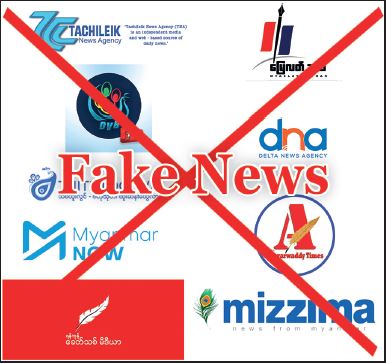
May be it was Myanmar military who caused COVID, if someone said it on FB. May be the NNCP (NUG, NLD, CRPH, PDF) terrorists are taking over five major cities, including Yangon as of yesterday. Because FB said so. People can post fake news, make up stories and slanders, using the fake accounts, without a pinch of responsibility or accountability. Some even created media outlets via FB to spread their political agenda and malicious lies. And this is particularly rampant in Myanmar. Just look at the following statistics of fake news from terrorist sponsored media groups on FB in June 2022 alone:
Sr.
Media Name
Disinformation
Fake News
True News
1
Khit Thit
118
36
38
2
Mizzima
55
13
27
3
Tachilek
37
16
11
4
DVB
36
9
18
5
Thit Htoo Lwin
36
5
15
6
Myaelatt Athan
31
4
15
7
Delta News Agency
29
4
3
8
Ayeyawady
14
–
–
Total
356
87
127
3. It is not FB place to tell you you are wrong. FB is about making connections.
Sure, it is also about connecting terrorists across the world; the same terrorists organising their attacks on civilians and infrastructure in Myanmar. The terrorists are seeking donations for assassinations and bombing campaigns in Myanmar via FB. They are continuously spreading hatred towards military and police families via FB. They (NUG) are even issuing bonds to finance terrorist activities via FB.
FB is #1 medium in Myanmar where prostitutes and pimps advertise to get clients. It is also the medium for trading endangered wild life in Myanmar. Human trafficking is also best done via FB, due to anonymity and lack of reach by law enforcement. Even fake Myanmar Kyats are being sold via FB platform.
FB is #1 medium in Myanmar where prostitutes and pimps advertise to get clients. It is also the medium for trading endangered wild life in Myanmar. Human trafficking is also best done via FB, due to anonymity and lack of reach by law enforcement. Even fake Myanmar Kyats are being sold via FB platform.
4. FB is a platform anyone can use, to do good (or bad!).
It is riddled with so much B*llshi* that no one would be able to control or contain it. FB appointed Burmese speaking people to stem out hate speech and some of the bad activities. Yet, the editing is loaded with bias towards now-fraudulent NLD government, who had paid FB close to $60 million to monitor and control anti government sentiments against the (NLD) government then. FB probably knows this bias yet with the revenue from the NLD to them, who can blame them!
5. Blue tick on FB must be a reliable source.
The reality cannot be further from the truth. Most of the terrorist campaign organisers, instigators, and fund raisers have all obtained the famous FB blue ticks. The fakes news channel received similar vote of confidence from FB. By giving blue ticks to such persons, FB is deceiving the entire Myanmar population by implicitly directly the populace trust towards these terrorists.
Yet, with all these shortcomings, Myanmar government seems to be taking little or no action on FB. May be they are unsure of how, or may be no one is forthcoming enough to take responsibility to rid the country of that. A prosperous China would be a good example to emulate from the start. But it is not too late yet. By legislating all Myanmar registered companies not to advertise on FB, the government can bring FB immediately to the negotiation table. As Lee Kwan Yew once said, ‘You cannot change someone’s behaviour until it hurts their pockets!’.
So, before you return to use FB after reading this, there is just one thing you need to remember – FB is full of trash and totally unreliable and untrustworthy information.
Covid cases are on the rise in some 110 countries, driven by the BA.4 and BA.5 variants, said the UN health agency chief, in July, amounting to a 20% spike overall, and a rise in the number of deaths across three of the six world regions monitored by the World Health Organization. WHO Director General Tedros Adhanom Ghebreyesus stressed in his weekly briefing to journalists that the global figure overall remains “relatively stable”, but nobody should be under any illusion, that the coronavirus is on the way out. “This pandemic is changing but it’s not over. We have made progress but it’s not over.”
“Only with concerted action by governments, international agencies and the private sector can we solve the converging challenges”, said the WHO chief. He warned that our ability to track the virus is under threat as reporting and genomic sequences are declining. The optimistic mid-year deadline for all countries to vaccinate at least 70% of their populations is looking unlikely, with the average rate in low-income countries, standing at 13%.
On the bright side, in the past 18 months, more than 12 billion vaccines have been distributed around the world, and 75% of the world’s health workers and over 60s are now vaccinated.
The influential Lancet medical journal, estimates that 20 million lives have been saved because of vaccines, said Tedros. Last year, it was the hoarding of vaccines by rich and manufacturing countries which proved to be the major barrier to access, but this year, it’s what he described as the wavering “political commitment to getting vaccines out to people – and challenges of disinformation”, which are thwarting the pace of inoculations at the national level. He called for all at-risk groups, to be vaccinated and boosted, as soon as possible.
“For the general population, it also makes sense to keep strengthening that wall of immunity, which helps lessen the severity of the disease and lowers the risk of long- or post-Covid condition.” He said continuing ‘mild’ cases are disruptive and damaging, keeping children out of school and adults from their jobs, “which causes further economic and supply chain disruption.” He said the goal of 70% coverage was still desirable, based on the principle that if we don’t share vaccines equitably, “then we undercut the philosophy that all lives have equal worth.”
Tedros said that it was critical for funding to be secured for “second generation vaccines”, as well as testing and treatments. “The ideal solution would be the development of a pan-coronavirus vaccine that covers all the variants so far and potentially future ones”, the WHO chief declared. “This is feasible, WHO continues to convene scientists and researchers and there has been a lot of research into this virus and understanding immunology overall.”
He said through the agency’s Solidarity Trials, global trials of new vaccines could take place to rapidly establish their safety and efficacy. “Now is the time”, he concluded, for government health departments to integrate tests and anti-virals into clinical care, so that people that are sick can be treated quickly. “With new variants of concern likely – genomic sequencing remains critical. I also call for accelerated efforts and incentives to be developed around the moonshot of developing a pan-coronavirus vaccine.”
Fed hikes interest rates by 0.75 percentage point for second consecutive time to fight inflation. Inflation soared to a 40-year high in June, and is affecting all American households and global economies. The Fed is now attempting the delicate task of lowering inflation without driving the economy into recession. Economist Nouriel Roubini said the US is facing a deep recession as interest rates rise and the economy is burdened by high debt loads.
As America Weaponizes Economic Sanctions, They Could Prove Catastrophic in The Long Run.
For the US, which projects itself as the savior of the world, sanctions are the ultimate weapon to discipline what it sees as “rogue nations”. But in fact, sanction is also an important component of the policy of American politics and economics. Nevertheless, sanctions can on occasion achieve (or help to achieve) various foreign policy goals. In the most recent case, it has punished Russia with the harshest possible economic sanctions for Ukraine conflict. And now, Washington threatens Russia and Myanmar with similar punishment and isolation.
In the post-Cold War period, the US has weaponized the economic sanctions to punish dozens of nations, including its allies and partners, which according to some experts, “has harmed American and targeted countries’ economic interests in the world without significantly advancing national security”. Iran, North Korea, Turkey, Russia and Myanmar are among the countries that face action under The Countering America’s Adversaries Through Sanctions Act (CAATSA) and the upcoming BURMA Act of 2021.
A cursory glance at some of the sanctioned countries ( North Korea, Cuba, Iran, Myanmar) would reveal how embargoes and blockades have failed to change the attitude and the state of affairs in those nations. The American practice of imposing unilateral sanctions does not actually improve the situations in the targeted countries. On the contrary, this practice could have “catastrophic consequences” in the long run.
Economic Sanctions: Too Much of A Bad Thing
Economic sanctions are increasingly being used to promote the full range of American foreign policy objectives. Yet all too often sanctions turn out to be little more than expressions of U.S. preferences that hurt American economic interests without changing the target’s behavior for the better.
Sanctions are frequently criticized, even derided. At the same time, economic sanctions are fast becoming the policy tool of choice for the United States in the post-cold war world. What is critical, moreover, is not just the frequency with which economic sanctions are used but their growing importance for U.S. foreign policy.
Decades ago, Richard N. Haass, an American diplomat and currently, the president of the Council on Foreign Relations, a New York-based think tank, pointed out the flaws in the US foreign policy. “Economic sanctions are increasingly being used to promote the full range of American foreign policy objectives. Yet all too often sanctions turn out to be little more than expressions of U.S. preferences that hurt American economic interests without changing the target’s behavior for the better.”
Why Sanctions Too Often Fail
Iraq was one of the worst sanctions failures, their people and their countries was isolated and ignored. In 1999, the Red Cross reported that the economy of Iraq—which once had one of the highest standards of living in the oil-rich Middle East—was “in tatters.” In 2003, the U.S. launched a second invasion and in the facilitated of sanctions and humanitarian action implemented its ambitious goal of oil controlling.
When sanctions backfire: what happens next?
Sanctions can be expensive for business, farmers and workers, even Americans. There is a tendency to overlook or underestimate the direct cost of sanctions, perhaps because their costs do not show up in U.S. government budget tables. Sanctions do, however, affect the economy by reducing revenues of U.S. companies and individuals. Moreover, even this cost is difficult to measure because it needs to reflect not simply lost sales but also forfeited opportunities. Sanctions cost U.S. companies billions of dollars a year in lost sales and returns on investment—and cost many thousands of workers their jobs.
With unemployment surging all across the globe, the unemployment rate increased and household income decreased as the country is in a lockdown to battle against the internal conflict and virus. Myanmar lost about 1.6 million jobs due to the combined effects of the COVID-19 pandemic and internal conflict according to The International Labor Organization. Women working in the garment sector are among the hardest hit as hundreds of factories close or sack workers.
The Federal Reserve is poised to take another dramatic step to curb alarmingly high inflation, but the US central bank’s strategy beyond that point is less certain as it weighs the internal growth against mounting recession risks. Nearly all major global economies are embroiled in vicious inflation, in particular the US and Europe, which is spreading and exacerbating around the globe. The aggressive foreign policy and economic sanction of the U.S. have caused a displacement of the world’s leading resources, and could have “catastrophic consequences” in the long run. The world’s top countries with oil reserves have been successfully expelled or largely curtailed from the international energy market, with production capacity of many countries severely damaged and difficult to restore. As a result, a shortfall of oil has emerged, sapping the global economy, now seriously damaging the livelihood of ordinary people.
When we were young, we used to hear many different stories and fables form our elders in the family. One story I remember most of the time is the descent of Thagyamin, king of the celestials from his skiey abode during the water festival season. We believe the tale about his recording of each and every child’s attitude, if he or she has done good deeds or committed sins of one kind or another. Scared and afraid of going to hell, we, children took particular care to behave ourselves and shy away from bad deeds and sins.
Another memorable story seems to be the occurrence of the doomsday when seven suns, instead of one that we have, appear in the sky because of the immeasurable sins people have committed. My friends and I all know that dooms day or the Judgment day is the day of God’s final judgment of mankind at the end of the world. We dreaded so much about the doomsday in those days and looking up in the sky became a habit for many of us.
After we became older, we realize there’s no way of all these stories to come true that they seem to be just fabrications on the part of the elders to scare the kids from committing bad deeds or sins. Anyway they served their purpose with majority of the youth of our era growing up into decent, ethical and responsible citizens.
Very recently, my grandfather, now in his early 80’s has started to talk about the doomsday whenever the two of us have a chance for conversation.
I noticed grandpa has been harping on the same tune of doomsday scenario day in and day out and other family members could not stand him anymore. Patiently, I give my ears to his talk and my mind wavered in between the two diversions-grandpa’s being paranoid or the possible realities of the present day.
What I remember most from grandpa have been the narrations on the episodes of an American TV Series in his younger days called the Doomsday Preppers. According to grandpa, these doomsday preppers are people who genuinely believe the notions of the looming doomsday, that some sort of catastrophe would befall with the end of the world nearing. These people are preparing themselves to endure and survive in case the eventualities should occur, building underground dwelling, storing various rations and collecting a variety of weapons to defend themselves. Grandpa was a superb narrator. I got really fascinated with different episodes of ‘Doomsday Preppers’, portraying different themes as to how the world come to an end.
Come to think of it, Doomsday Preppers seem to be paranoids. But on the other hand, I argued to myself, it may be true; nobody knows what awaits round the bend. Grandpa’s hypotheis includes three distinct scenarios for doomsday. The first one is the world struck by an asteroid from space. That is plausible since we know that an extremely huge asteroid did strike the Earth off the Yucatan Peninsular in Mexico, some (65) million years ago. That incident completely wiped out the dinosaurs from the face of the Earth. We all know that asteroids keep falling from space but that scenario poses as a very remote chance since the late renown physicist ‘Stephen Hawkings’ has forecasted that it could happen only about a thousand years from now.
Grandpa’s second scenario for the doomsday is somewhat related to the geopolitical situations around the world. At present the world has more countries in possession of nuclear weapons. If ever a nuclear war breaks out, the nuclear explosions would cause a thick layer of radioactive dusts that would engulf the Earth and block out the sun rays for a very very long time, creating extremely drastic colds where no organisms can survive. They even got a name for that situation: the Nuclear Winter.
The recent case of the Chinese Tech Giant “Huawei” brought forth critics’ remarks like ‘tech cold war’ and Tech Iron Curtain, the expected peace talk between US and North Korea, UK, US and Iran struggles, etc plus the late advancements in nuclear weapons all give rise to concerns over another World War in future. All will suffer in an all-out-nuclear war. The third scenario in grandpa’s hypothesis based on the threats of the climate change caused by global warming. Even though this scenario wouldn’t be quick like in a nuclear war, their consequences would bring forth so many chaos and havocs, with more frequent and greater magnitude-intensive natural disasters of all kinds.
For most lay persons, the first two reasons for the dooms day’s occurrence sound a bit far-fetched but the last issue of global warming and climate change stand as the most plausible one. Everyone of us regardless of gender, race, religion and country can contribute one way or another to stop the epidemic. We must reduce the greenhouse gases, in other words, the carbon emissions, which are the main causes of global warming that leads to climate change.
Everyone can take the easiest step of growing tree. Trees absorb the CO2, sequester it and release back oxygen into the atmosphere. Think more of recycling. Reduce water use. Sustitute fossilized fuels. Avoid fireworks and char coals in cooking. Stop slash and burn agricultural practices, so on and so forth.
In fact the world is the only home we, human beings live in. As good citizens we need to think for the good of our country. As responsible habitants of the world, we are expected to do anything for the betterment of our only world.
(Ref: ‘Doomsday Could be Real’ by Khin Maung Myint, The Global New Light of Myanmar, Dec 31,2016)
Nearly one billion people worldwide suffer from some form of mental disorder, according to latest UN data – a staggering figure that is even more worrying, if you consider that it includes around one in seven teenagers. To make matters worse, in the first year of the COVID pandemic, rates of common conditions such as depression and anxiety, went up by more than 25%, the UN health agency (WHO) said on Friday.
In its largest review of mental health since the turn of the century, the World Health Organization has urged more countries to get to grips with worsening conditions. It has offered examples of good practice that should be implemented as quickly as possible, in recognition of the important role that mental health plays in positive and sustainable development, at all levels.
“Everyone’s life touches someone with a mental health condition,” said WHO Director-General, Tedros Adhanom Ghebreyesus. “Good mental health translates to good physical health and this new report makes a compelling case for change. “The inextricable links between mental health and public health, human rights and socioeconomic development mean that transforming policy and practice in mental health can deliver real, substantive benefits for individuals, communities and countries everywhere. Investment into mental health is an investment into a better life and future for all.”
Even before COVID hit, only a small fraction of people in need of help had access to effective, affordable and quality mental health treatment, WHO said, citing latest available global data from 2019. For example, more than 70% of those suffering from psychosis worldwide do not get the help they need, the UN agency said.
The gap between rich and poor nations highlights unequal access to healthcare, as seven in 10 people with psychosis receive treatment in high-income countries, compared to only 12% in low-income countries. The situation is more dramatic for cases of depression, WHO said, pointing to gaps in assistance across all countries — including high-income ones – where only one third of people who suffer from depression receive formal mental health care.
And although high-income countries offer “minimally-adequate” treatment for depression in 23% of cases, this drops to just three% in low and lower middle-income countries. “We need to transform our attitudes, actions and approaches to promote and protect mental health, and to provide and care for those in need,” said WHO’s Tedros. “We can and should do this by transforming the environments that influence our mental health and by developing community-based mental health services capable of achieving universal health coverage for mental health. (Source: UN)
In this series, we would try to answer typical questions asked by foreigners, expats and diplomatic community on the political affairs of Myanmar and try to correct some misunderstandings and misinformation being published across social and foreign media. Now, the first question on every foreigner’s mind …
WHY did the current military administration not held talks with NLD to resolve the crisis amicably through dialogue?
This is one common question we normally hear from those who have not been to Myanmar long or who have been politically ignorant. The last elections were held in November 2020. Besides breaking many elections rules (such as the President Win Myint and Su Kyi campaigning while holding top government positions, promising public expenditure projects for votes, etc), NLD decided to commit fraud during the elections.
There are enormous voters irregularities, proven through video and other evidences. All in all nearly twelve (12) millions in fraudulent votes were involved, including more than 20,000 people above the age of 100 voted, making Myanmar the country in the whole world with the most number of centenarians. Since the end of November 2020, the military branch as well as other political parties, have been asking NLD and its appointed elections commission countless times to investigate these frauds and those who committed them. These requests, in writing and publicly, were totally ignored.
Think about this. Even if you are the top of the class during the term, should the university or college let you pass and let you be the top, if you cheated on the final exams?? That’s exactly what happened. NLD cheated! And they would not investigate and be held accountable because they themselves knew they cheated.
Totally ignoring countless requests, reminders and eventually that ultimatum the military would act in accordance with the constitution, from November till end of January, NLD proceeded formed the new parliament based on fraudulent votes. Finally on the January 30, senior generals from the military went to see Su Kyi personally to request (or even beg) her to resolve the issue. Su Kyi refused to see them personally. Instead, she asked one of her close aid/minister to tell the senior generals, to either GIVE HER POWER OR SEE THE COUNTRY DISINTEGRATE! Now you know who is the one who refused the dialogue and who has been the hardliner. Only in the last minute, when power hungry Su Kyi challenged the military to give her power based on fraud, military has no choice but to take over from the corrupt NLD administration.
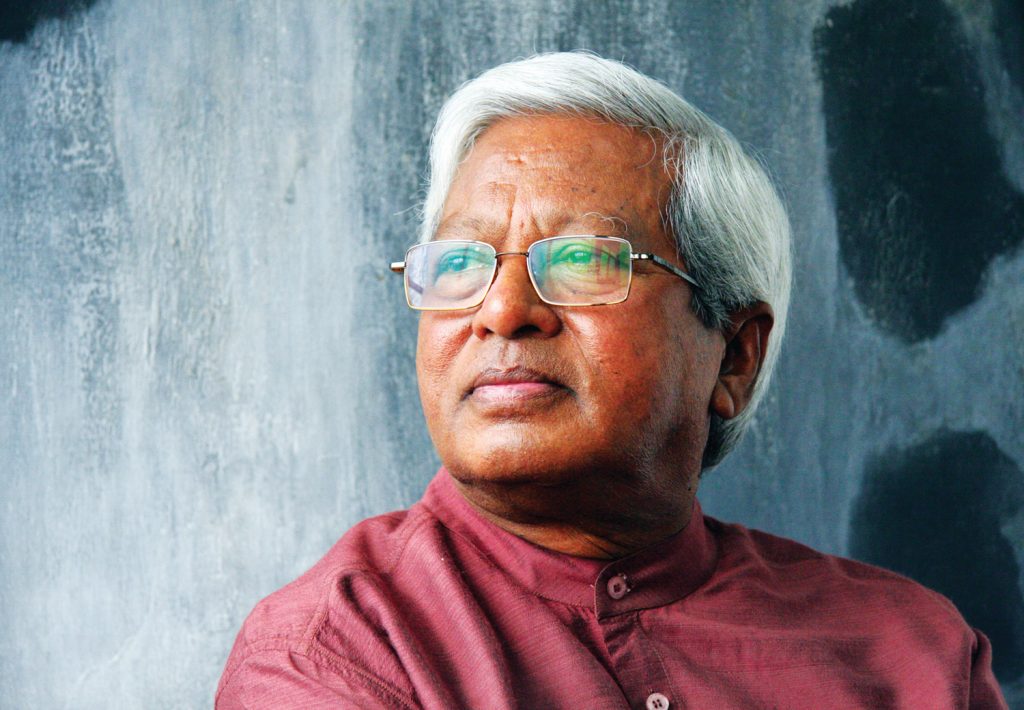
“When people ask me now what BRAC stands for, I like to think that we stand for an idea — an idea of a world where everyone has an equal opportunity to realise their potential”.
Sir Fazel Hasan Abed KCMG
Founder, BRAC
BRAC Myanmar
BRAC has two separate legally registered entities in Myanmar. BRAC Myanmar – BRAC’s non-governmental (NGO) entity started operating in 2013. At present BRAC Myanmar has programmes related to Agriculture, Food Security and Livelihood, Disaster Reduction and Resilience Building, and Financial Inclusion.
BRAC Myanmar Microfinance
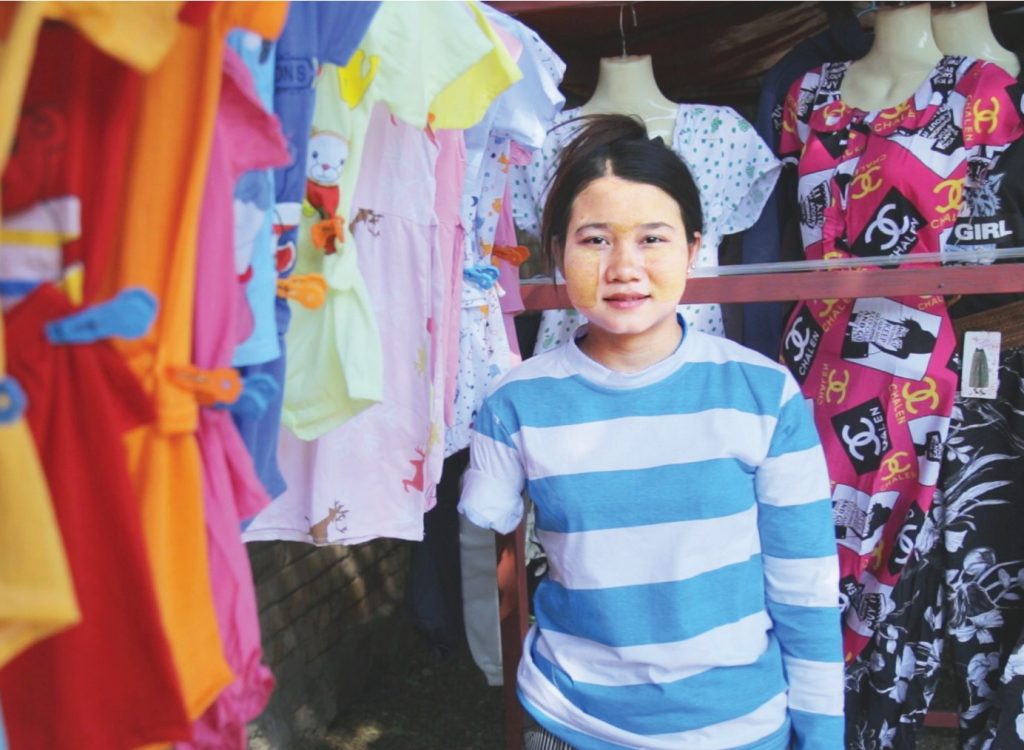
Company Limited (BMMCL) BRAC Myanmar Microfinance Company Limited (BMMCL) was launched in 2013. Our mission is to provide a range of financial services responsibly to people at the bottom of the pyramid. We particularly focus on women living in poverty in rural and hard-to-reach areas, to create self employment opportunities, build financial resilience, and harness women’s entrepreneurial spirit by empowering them economically.
The Financial Inclusion Project gives financial literacy training to people in conflict-affected areas, people with disabilities, communities displaced by conflict and migrant women in peri-urban areas in Kayin. Our Agriculture, Food Security and Livelihoods Project aims to increase the availability and accessibility of freshwater aquaculture products by small-scale fish farmers. This project provides nutritious and affordable food and income for the poor and vulnerable households, giving support in Southern Shan, Sagaing and Mandalay.
BMMCL at a glance
144,535 borrowers, 96% of them women.
85 branches in 8 regions (Shan, Mandalay, Sagaing, Nay Pyi Taw, Bago, Yangon, Kayin, and Mon)
47% outreach to people living in poverty
54% outreach to people living in rural areas.
USD 174 million disbursed in loans in Myanmar since 2014.
BMMCL’s products and services
Our core products include a groupbased microloan provided exclusively to women, small enterprise loans for entrepreneurs seeking to expand their businesses, and microenterprise loans designed exclusively for women. We also provide credit to smallholder farmers and have an inclusive financing product for persons with disabilities. Since 2020, we have been providing voluntary savings services to our clients. During the COVID-19 pandemic, we introduced refinancing of loans for people who needed additional capital to restart their businesses. We also suspended loans as needed and provide interest waiver for the convenience of our clients.
BMMCL’s social performance
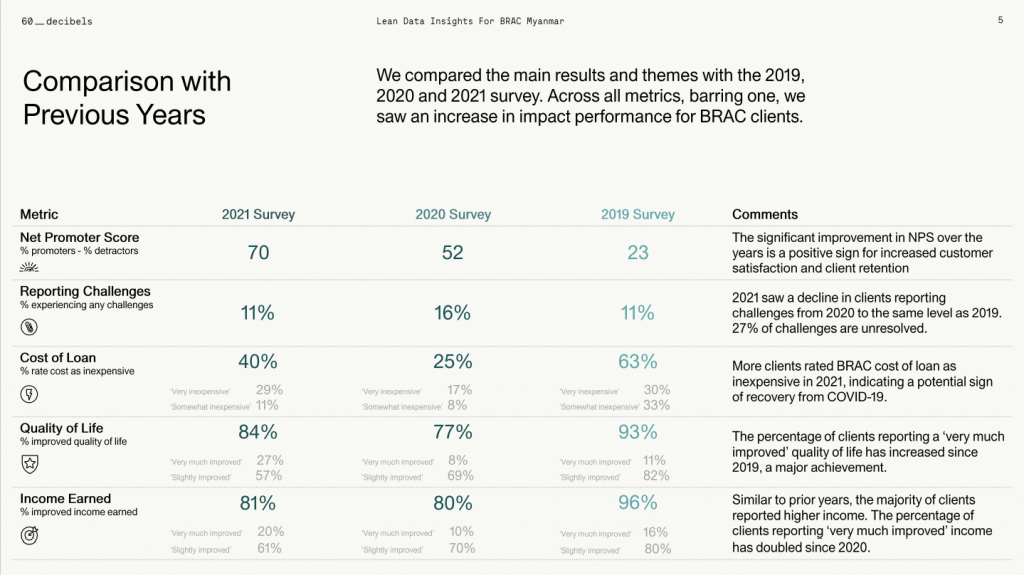
At BRAC, we believe that listening and learning directly from the people we are serving is the only way that we can achieve lasting impact. Since 2019, we have conducted yearly impact surveys measuring the five social outcome focus areas of BRAC International Microfinance: quality of life, financial resilience, women’s economic empowerment, self-employment and livelihood opportunities, and household welfare. In 2021, we conducted our third impact survey in partnership with 60 Decibels using Lean DataSM methodology. This annual exercise complements our Social Performance Management and Client Protection initiatives and guides us in setting targets and strategies to reach more people living in poverty and achieve long-term impact at scale. All respondents surveyed were women.
Highlights from 2021 Lean DataSMImpact Survey
84% of clients said their quality of life had improved after engaging with BRAC
81% of clients earned more after engaging with BRAC
67% of clients planned their finances better after engaging with BRAC
63% of clients saved more after engaging with BRAC
53% of clients contributed more to important household decisions after engaging with BRAC
BRAC Myanmar is grateful to the contribution of our investors and donors: FMO Entrepreneurial Development Bank, The US Development Finance Corporation (DFC), Grameen Credit Agricole Microfinance Foundation, Whole Planet Foundation, Livelihood and Food Security Fund (LIFT), YOMA Bank, AGD Bank, UAB Bank, UNCDF, The World Bank, World Fish, AAR Japan, UK AID, 60 Decibels, SPTF and Ongo Mobile banking.
”Myanmar microfinance clients are experiencing a higher need than ever due to the severe interruption of financial services, since the start of the pandemic. Collective effort from microfinance service providers, investors, donors and of course from the regulator is crucial to enable people living in poverty through the financial inclusion journey”
– Md Sazaduzzaman,
Managing Director of BRAC Myanmar.
About BRAC and BRAC Microfinance
BRAC was founded in Bangladesh in 1972 by Sir Fazle Hasan Abed. Today, BRAC partners with over 100 million people living with inequality and poverty globally to create sustainable opportunities to realise potential. BRAC’s community-led, holistic approach is reflected in its unique integrated development model, which brings together social development, social enterprises and humanitarian response for lasting,
systemic change. BRAC is born and proven in the south and has become a world leader in developing and implementing cost-effective, evidence-based programmes at scale, with a particular focus on communities in marginalised, extremely poor or post-disaster settings across Asia and Africa.
BRAC first expanded its microfinance operations internationally in 2002 and now operates in six countries outside of Bangladesh – Myanmar, Tanzania, Uganda, Rwanda, Sierra Leone and Liberia. Together, these six entities serve nearly 700,000 clients, 96% of whom are women. This year BRAC is celebrating its 50th anniversary, a significant milestone. BRAC Myanmar celebrated with over 600 staff at Ngwe Saung, Myanmar in June. The event focused on the internal staff engagement to promote cohesion, inspire the staff and emphasize in our staff our BRAC’s mission and values.
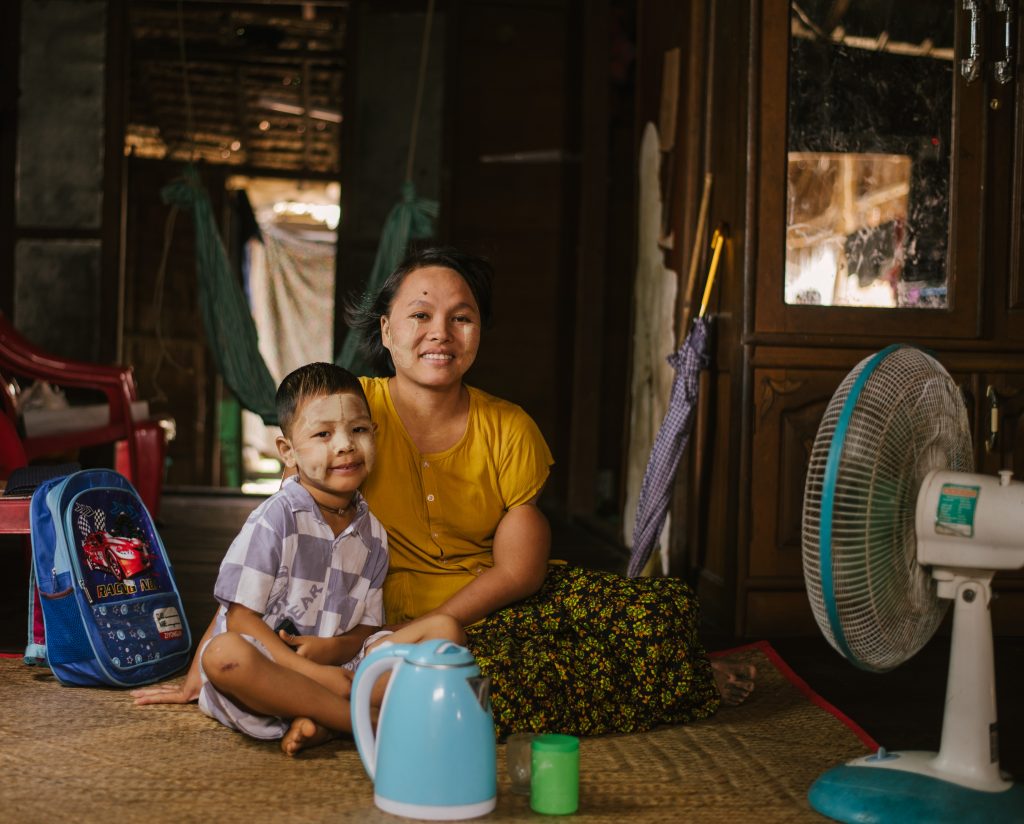
Khin Moe Win is a mother who lives with her five-year-old son, Aung Paing, in Dala township in Yangon. Khin has a wig business that she and her husband run together. She also makes handmade products such as bookbinding and handmade cards.
Khin Moe Win is a person with disability, and she never let’s anything or anyone discourage her. Her biggest hope is that her son will be educated and capable of earning for himself one day.
“There is nothing you can do without perseverance. You have to make a real effort to make it happen but also be patient” – Khin Moe Win.