Home Blog Page 26

New International Port and Airport to be Constructed in Mon State

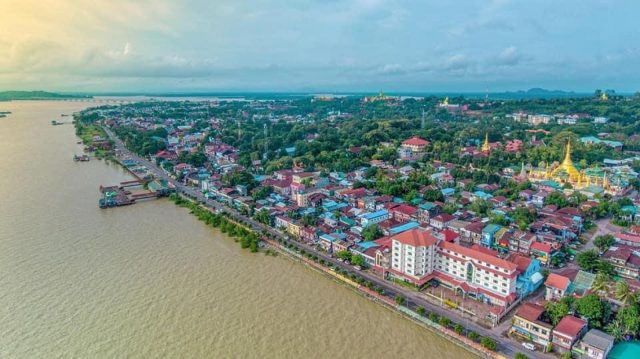
Mon State government has designated the locations to construct one new international airport near Kawparan village of Mudon Township and one new international port terminal between Balauk Nyaung Waing and Wekali villages in Mawlamyine District.

“During the visit of the SAC Chairman on June 1, he instructed officials to construct a new international airport in Mon State and create a port city as it is located near the sea. The main point is to develop the region’s economy. Therefore, we find the proper location for an airport and conduct a feasibility study. We will also conduct the feasibility study to turn Mawlamyine into a seaport,” said an official.

The international airport and port terminal projects will be implemented on approximately 4,600 acres of land, the state government said. When the two projects are completed, it will develop the local tourism industry and economy and create job opportunities for Mon State.

This project, if actually materialises, would bring a much needed boost to Mawlamyine economy. It was one of the top cities during its hay days of the late 1980s, where the unlicensed cross border shipment of consumer goods from Thailand to Yangon made the traders from the city very prosperous. Since the opening of the highway from Myawaddy to Hpa Ann, Mawlamyine has been bypassed and its economy has contracted year after year.

Consumer purchasing power simply do not exist. Restaurants with stunning Thanlwin river views are mostly empty. Many restaurant chains such as YKKO have tried to open branches in Mawlamyine and have since closed down. Talk of the town is such that there are only two types of jobs available in Mawlamyine, one selling illegal lotteries and the other sale and transport of drugs!

Border Exports to China Plummet due to $ Transaction Requirement

Transaction settlements on agricultural products are instructed to be made in Dollars as an official settlement currency at the border points. Consequently, exports to China through the Muse border post dropped, as traders engaged in the Muse border mainly deal in Yuen – Kyats dealings.

Previously, Myanmar exported around 70 truckloads of goods per day to China through the Kyin San Kyawt checkpoint in the Muse trade zone. At present, only 40 trucks carrying export items are seen in the border market.

“The directive of the Dollar as official settlement currency adversely affected the exports. The supply of corn and pulses has not been seen. The number of cargo trucks is down by 20 – 30 for now,” said Min Thein, vice-chair of the Muse Rice Wholesale Depot.

On December 14, 2021, CBM released a notification that Yuan/ Kyat cross-currency settlement in the bilateral transaction was officially allowed in the border areas between Myanmar and China to boost the bilateral cross-border trade, facilitate the trading and bilateral transaction, increase the use of domestic currency as per the objectives of the ASEAN Financial Integration.

After export earnings on agricultural products were earlier set to be paid in dollars instead of Yuan, the official exchange rate against the US dollar was set at 1,850 Kyats. At present, the dollar was valued at over 2,500 Kyats in the informal FX market, indicating a large gap in the exchange rate. Consequently, it dealt a blow to the agricultural products and exports drastically fell, traders said.

Interview with WWF Myanmar

WWF and WildAid launched ‘The Price We Pay’ campaign last month, tackling illegal wildlife trade last month in Myanmar. MI interviewed WWF to understand more on the wildlife trade within Myanmar.

WWF: Consultant Daniel and Saw Lin Htet.

Expert: Dr Nay Myo Swe, Head of Wildlife and WWF Myanmar Program.

MI to WWF: Why this campaign now?

Because currently, we faced so many challenges in Myanmar, and another pandemic, it’s not something we want to add that long list. Also the illegal wildlife trade has not gone away despite the political situation in Myanmar; rather than it has gone further underground. And, and, and also WWF recent study on online illegal wildlife trade show a dramatic escalation, particularly among certain species and we felt we had to take action on that. So this campaign is one of the various approaches we are taking.

MI to Expert: How do you end up in WWF in the first place?

Thanks, Sir. Firstly, it’s very nice to meet you again. Prior to joining WWF as a head of wildlife, in Myanmar program, I was employed by Fauna and Flora International in the Myanmar program as the Conservation Program Manager. Before that, I have a lot of conservation organisation experience and was also both a director in the Friends of Wildlife and a patron and technical advisor in the Wildlife and Ecosystem Conservation Asian Nations. That is my history before joining the WWF. I joined WWF that is the one of the wildlife focus organisation, which act mainly to protect and conserve the species, especially in Myanmar. And also, as you can see, and the campaign a lot of the wildlife related issues. So that is my main reason why I end up in the WWF.

MI to WWF: How would you ensure the widespread viewership of this video for your targeted audience?  

Yeah, we have our campaign plan and also the outreach plan which includes support from the selected key opinion leaders (KOL) and the private sector partner like viber, and also the other companies who are happy as to share the messages to reach widely into into the public. And we also hope that that campaign will resonate with the people of Myanmar and they will want to share it with their friends and their family members.

MI to Expert: How would you ensure that Myanmar people take the protection of the Endangered Species seriously?

While we, in this game, we will continue to raise awareness on the importance of protecting Myanmar natural species so that our forest, rivers and sky would not be empty. The empty forest means so empty of wildlife. We need to ensure that another pandemic is not added to the existing list of challenges in Myanmar. We are working on the partnership between private companies, civil society and also the local community.

MI to Both: These days in the in the public areas, there’s also bad things that people mentioned about Facebook, doing all the illegal activities from human trafficking to xxx videos to some other illegal things, bad things about Facebook inciting hatred, etc. So in a wildlife trade also, my opinion is the main culprit seems to be the Facebook platform, which is allowing the very brisk, very happy sale, of wildlife? So without a medium to sell, there’ll be no buyers there. If you remove Facebook out of the equation wildlife trade would have gone down significantly.? What is your response to that?

WWF: Yes, for our country, Facebook is the most popular social media platform. But on the other hand, the illegal wildlife, they always find a way to sell the product, the wildlife, if, you know, it wasn’t on Facebook, there will be other online or other offline market, facilitating sales. And the problem problem lies not with the medium we believe, but with our behaviour. If there is no demand that trade will not increase. That’s our thought on that.

Expert: As Ko Soe mentioned, Facebook is a most social, popular social media platform in the country, but actually, not only with the Facebook. The people are already trading wildlife in areas where demand exists in the country. So trade would continue when we want, and stop when we all become aware that consequence take action to change and behaviour and stop accepting this trade. So for me it is not only the Facebook, but the demand is a major for the wildlife trade in the country. That is the cases not only in Myanmar, that is also in the other developing countries.

MI to WWF: What have WWF has done so far, to encourage the platform, i.e., the Facebook to ban the sale of such endangered species, not only in Myanmar, but in other parts of the developing world?

Conservation groups in Myanmar and all over the world, including WWF have the collaboration with Facebook, and other social media and other e commerce companies to curtail the online wildlife trade through the coalition of End Wildlife Trafficking Online. This collaboration has resulted in the removal of thousands of trading groups on Facebook.

However, the researcher in Myanmar noted that that previously removed accounts, re-emerge in newly created groups doing 2021. So rather than looking into others to do more, we all need to ask ourselves, and our friends and family what more we can do personally. We all need to change our behaviour and the demand for the wildlife and wildlife products that drive the trade and the removal of the species from their habitats.

MI to Expert: What has been your proudest achievement in the protection of wildlife in your career?

Thank you actually. That is a very delightful question I want to raise. The wildlife protection cannot be done alone. So in this case, I’m more proudly of raising the awareness and that itself is a big challenge or issue in the country. And also in my free time, I work as an adjunct professor in the University, training wildlife specialists to ensure better wildlife protection in the country. We need more people in wildlife conservation. It’s my proud achievement in sharing my knowledge, mainly  focusing on the wildlife conservation.

MI to WWF: In your press release, you talked about this zoonotic diseases; the type of diseases that got transferred from animals to humans. You say a future zoonotic diseases are emerging. In China obviously, swine flu from pigs got transferred to humans, but in this specific areas of Southeast Asia especially Myanmar, what evidence have you got that of zoonotic type of diseases being happened in this area in the past?

WWF: We have some research in in last decade, Southeast Asia has been at the centre of global attention regarding emerging infectious diseases after SARS and strain of bird flu and locate appearance of deadly viruses such as Nipah Virus, and, also recurring emergence of new influenza H1N1 virus.

In a report by WWF, Germany named this region the Pandora’s box. In this report highlighted that the Southeast Asia has human zoonotic diseases risk, in areas where the wildlife markets are located. This report was published in August 2020. Also Southeast Asia was identified as a potential emerging hotspot due to the following factors: high mammals and bird diversity, high deforestation rate, the population growth, growing demand for animal proteins and most importantly, where exist and of wildlife consumption and trade overlap.

Just to give you some examples of some of the emergence of zoonotic disease in this region. The other thing is, worth mentioning is that we have all these factors actually. So, you have a potential of this happening, and all these factors are the one that will make it happen not just Myanmar. This is also quite similar in other countries like Thailand, Laos, Cambodia and Vietnam.

Expert: I just add in like some technical information that, in the wildlife there are several families and class like a mammal species, bird species, reptiles and amphibians species, aquatic species. In Myanmar, however, that is only a slightly different between the species to species, we have more diverse in the mammals species than the other wildlife species. That is one of the the factors that could contribute towards zoonotic diseases. If people are eating insects that is not so serious, as the species are far away from human kind, in terms of DNA. In an environment where there are more mammals species the diversity between human and mammals is likely to be smaller.

MI to Expert: I was told that you are currently researching on tigers in Myanmar, Indian border. I don’t know whether that is true or not.

Expert: Actually not only for the Myanmar Indian border. That’s for tigers inside the whole country.

MI to Expert: We recently read an article that the wild tiger population is actually higher than what has been estimated on paper previously. So what is your stand on that?

Expert: Yes wild tiger population increase. I agree on this. But we in this case we can classify the two different locations: low density country and high density country. Like India, Russia and Thailand, they are high density countries. For Myanmar, Indonesia, Malaysia, etc., they are low density countries. We the tiger conservation team try a lot to double the tiger population in the near future, but that is a slightly different between the low density country and high density country. We are still struggling for the tiger density inside Myanmar. In general, the population increase but not for Myanmar. We are still trying to protect the heartland or the breeding ground of the tigers inside the country.

MI to Expert: Where can we find tigers in Myanmar?

This is a very good question. Normally, we did not mention the location of the tiger. But I can answer roughly that they are in the Northern and Southern part of Myanmar. In Northern part we call that area the Upper Chindwin landscape, along the borders of Sagaing and Kachin States. The  Southern part is within Dawna and Thanin Tharyi  landscape.

MI to WWF: Already with the low education and low analytical skills of people in rural Myanmar,  why do you think that this video alone is sufficient? If you don’t think is sufficient, what extras you have in your plan?

I think it is a misconception to think that the problem of illegal wildlife trade come from the rural people. Often the demand for life animals and their products come from urban centres. Keeping wild animals are incorrectly perceived by some to be kindness. And for many reasons, human home is not the right place as a home for wild animals. Also transporting the wildlife is not only cruel but also increases the possibility of zoonotic disease transmission, by putting all the animals in one place together with other species and people.

And as the famous slogan states, when the buying stops, the killing can too. This is also why in the price we pay campaign video, we add, you know, all Myanmar people in one place. I mean, in this video, we put different age group, genders and social economic economic status as a buyer. The meaning is that it is related not only to the urban population or the rural area people. It is related with all of us. This responsibility to take care of our wildlife, our heritage, and consequently our health lies with each of us.

Obviously, one campaign is not enough, there will be more work to be done. And we cannot just rely on just one campaign, one video to do the work. But every little work that we do will help us get closer towards the goal of you know, one day eliminating the trade. So if will ask us really honestly, is this sufficient? No. But it’s not the end of the activities that we’ll be doing. There’ll be more campaigns, you know, either by us or other organisations, all very passionate, trying our best to do what we can for the wildlife.

MI to Expert: What are your future plans in relation to the projects that you are going to do in the near future?

Thank you. Actually, that’s the plan I would like to highlight. This year is the year of the tiger in the Chinese Calendar and we have this plan to raise awareness of the urgent need to protect the Myanmar dwindling tiger population and we are also working to empower Myanmar’s youth to speak up at the national, regional, global platforms. That just is so much left to protect so much to do and we are more committed than ever to continue our work in Myanmar. We believe our work in Myanmar is key to achieving the global conservation and also the climate projects. So that is my plan in the future.

MI to Expert: When will you work with the tigers be completed?

That is another wildlife protection challenge. Conservation of tigers cannot be done within a short period. Not only for tigers but also for any other species. It may even take longer to plan for tiger population recovery within the country. There are several technical methods to recover the tiger population inside. There are several methods and approaches. What I can say is that this is not a short period project and have to make more efforts for a continuous protection of the species.

MI to Expert: How many tigers do you estimate to be still in Myanmar?

Oh, that is another tricky question for the wildlife conservation people. We use camera tracking which is mainly studying the striped patterns of the tiger body. Based on the 2018, both in the Northern and Southern landscape, minimum detection is only 28 or 29. That is a minimum. So the actual can be more than this. There are a lot of un-surveyed areas for the tigers. So we definitely have more than 28.

MI to Expert:  Very conservatively speaking, we have less than 50 tigers left in the whole country?

That’s very difficult to estimate because some area we did not know the detailed information. Some areas we can see, based on the ecology of the tiger, but some areas are still left un-surveyed. So it is very difficult to estimate whether it is 50 or 55. I have sighted nearly 30, so we can confidently say there are at least 30 tigers around.

Sometimes, it is also difficult to say because different organisations, different people and different experts, they all will have different things to say and sometimes this kind of thing become a controversy in getting the right number.

You can in fact, put a GPS collar on the tiger. Then we can observe how they are moving and understand their movements.

MI to WWF: Right now, WWF is tackling on educating the buying side. Should it not be tackling in the market as well as the logistics side? Because most of the wildlife, they are being shipped or transported on the on-highway buses or boats? How are you going to tackle that?

We do know the whole cycle right from, from the source to the buyer. So there are a lot of different players within the cycle. We are actually looking to work with each and every one of them. But obviously, all this all this take time. And also especially given the condition of our country right now, it’s even harder to do that. But we are trying, for example, you did mention some of the issues like FB, right? We have our coalition. We did that. We are also partnering with MITI, responsible tourism as well.

We are looking at more partners. But again, all these things, still go back to the end of the day to the consumer. You can tackle all these things. But if the consumer still demand for this, you will have find another way. So that’s why we need consumer to change your behaviour so that the consumer would say, no, we don’t buy this anymore. Then there is no demand for it, the supply will will eventually stop. Actually, people in Myanmar are very creative. I think you stop something, they will find another way to do something else. So, yes, we are definitely tackling all that. But that’s why we are doing this campaign specifically targeted to the audience, to everybody, to the public. Asking them to understand this issue and also to say no to it.

MI to Expert: Myanmar people, some of them has little or low education. They are poor. They got to survive first. So if somebody is buying a tiger, they found a tiger, probably they will kill it and sell it. In addition to this video alone, what what other things would you recommend to reduce the wildlife trade here?

Expert: Actually, as you mentioned like it, the people, if they see the tiger, and they kill it and sell it. That is really challenging. It is a developing country wildlife conservation issue, not only the Myanmar issue.

As you see in the video, this is not the rural only problem with the demand often driven by wealthy urban citizens. So we start creating awareness and we continue to do more as part of raising awareness. We believe it’s possible together. We will continue to more through programs and partnerships between private companies, civil society and local community. We cannot do it alone. Doing together part of it is our belief to stop the wildlife trade and also prevent further pandemics.

Myanmar’s Irrawaddy Dolphin Population Growing

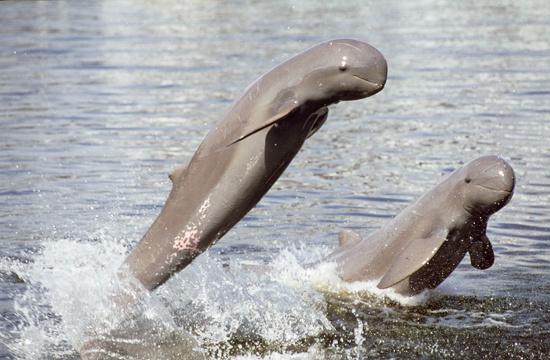
Irrawaddy dolphin population in the Ayeyawady River has increased, according to the Irrawaddy dolphin conservation team under the Fisheries Department. A total of 79 dolphins living in Ayeyawady River in Mandalay – Kyauk Myaung sections between Bhamo and the second defile are spotted near the Mingun Stupa this rainy season.

The Wildlife Conservation Society (WCS) and the Fisheries Department conducted Irrawaddy dolphin conservation and a survey between Mandalay and Bhamo in February 2020 and found 79 dolphins inhabiting in that part of the Ayeyawady river and the dolphin population has increased over one year period.

“According to our regular data, one to seven new dolphins are born per year. Currently, they are breeding. As we haven’t conducted a ground survey since 2021, we don’t have the exact number of newborns. The fishermen reported that they found seven dolphins including two newborns near Mingun in July. There are
a few numbers of dolphin deaths in the Ayeyawady River every year. We carry out conservation as much as we can and so it shows an increase in dolphin population,” said an official of the conservation team.

There are 29 dolphins between Mandalay and Kyauk Myaung, 16 between
the second defile and Bhamo and 34 between the second and third defiles. They live near the Mingun Stupa in the rainy season. The Fisheries Department of respective region/state launched awareness campaign to fishermen not to incur losses in marine resources and not to catch the dolphins together with the Irrawaddy dolphin conservation team.

Irrawaddy dolphins are found in three rivers – the Mekong, the Mahakam (Indonesia) and the Ayeyawady (Myanmar)— in addition to the estuary and coastal wetlands. The dolphins in Myanmar’s neighbours and India are called Irrawaddy dolphins. It found over 20 dolphins near Main Ma Hla Island in Bogale
Township of Ayeyawady Region in 2018, over 60 at Rakhine coastal region of Sittway Township in 2010 and another 60 between Myeik and Kawthoung in 2011. The survey shows the dolphin population increased over one year despite the deaths in 2022.

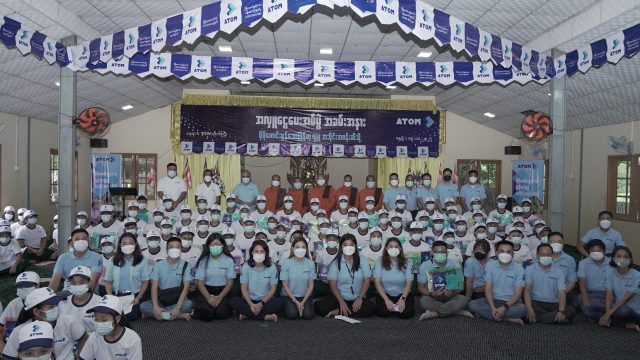
Interview with CEO of ATOM (Formerly Telenor Myanmar)

What significant changes have occurred since the change of shareholders?

Mingalar par and good morning thank you very much for this opportunity of talking to me. Change of shareholding for our organisation has ushered in an era of several changes, the biggest change that I can say was moving from the existing brand to the ATOM brand so rebranding activity was the biggest activity that was there. And with the launch of this brand ATOM, a Myanmar local brand, owned and actually developed by the team in Myanmar, we have moved and we have come up with a commitment to the society and to our subscribers. The brand we have made for ourselves. So, the significant change that I can say that we have done the rebranding, and second change is that we now have a clear commitment and design. We have come out with ten commitments towards the society; all these commitments are given by our effort to deliver beyond better.

In general, we as well as the consumer notice that the prices of data packages in SIM cards have generally gone up. What is the reason behind that?

Yeah, but I don’t think this is the case. If you look at the pricing for the last one or two years, I don’t think there has been any change upwards in terms of the pricing. What our focus has been as a telecom operator as a people focused telecom operator and especially with rebranding to ATOM to provide the best telecommunication services at the most affordable cost. So, I think you must have noticed and I would like your subscribers to also go for the current launch of the on-net package that we have launched. Similarly, the data packages that we have, have a lot of options, where the data is comparatively much cheaper if they subscribe to a bundle or a pack out rather than if they are not in the pack. So, my advice to your subscribers and everybody would be to go for the packs, look for almost free items when you subscribe and then you are not supposed to pay anything for on net calls. So unlimited online call bundle, they should go for that. In terms of the products and services, what we are not targeting is to provide cheap. We are targeting to provide the best value for money. So, our effort is to provide the best telecommunication services at the most economical rates and this has been our effort and we will continue towards that. So delivering doing better as well in that area as well that is our target.

Maybe you can elaborate a little bit though on the current shareholding structure for atom.

Yes, sure. Atom Myanmar Limited is a wholly owned subsidiary of Investcom Pte Ltd. Investcom Pte Ltd, Singapore owns 100% of the shares of this company. Investcom in turn is owned by two groups SPP group hold the majority share of Investcom and M1 group of Lebanon is the other shareholder of Investcom. Anything else that you hear and anything else in terms of beneficial ownership or anything else, have not been is substantiated and mostly rumors. Transparently, this is what the structure is and this is how it is.

What are your immediate plans other than the rebranding exercise itself?

Yeah, I think all our activities are driven by the rebranding. None of the activity is outside the scope of branding because what I see says that the brand has come out as a new brand which I feel proud to say is a local Myanmar brand. Our objective as a team is to make sure that globally, with a period of time, with the quality of service and products that we associate and the characteristics that we associate with the brand people should recognise this brand as a Myanmar brand and should be a reference and a benchmark for the quality of service there.

All the activities that we are doing now, are being driven by the promise that we have made the key promise of the brand that we have, which is ‘beyond better’. For example, if it is customer care, our effort is to deliver more than better than what we were what we were delivering you must have seen that some of the calls to the call centre were previously charged. Now there is not charge. In terms of the availability, the operating hours have been expanded and we are targeting that people should be able to connect digitally 24/7 365 days of the week, but we will we are continuously expanding on the call centre access. Similarly in terms of the products and services, there is huge number of products and services in the pipeline.

Another area if you talk about the CSR, we are focusing on making sure that we continue to contribute to the society in the most positive way. All these activities and everything that we do, we are trying to do ‘beyond better’ what we were doing earlier. We are trying to make a significant positive impact to the lives of the people in Myanmar and making our brand as a reference and developing it as a reference to be an international brand which can be identified globally with the name of Myanmar people should know that this ATOM is a brand characteristic like any other global brand. We should have a brand which was originated and developed and nurtured in Myanmar.

How has your market share changed over the past one year?

This past one year, six months has been the rebranding period. In telecom industry, you calculate the market share two ways; market share based on the number of subscribers and the market share based on the value share in the market i.e., how much percentage of the revenue of the telecom industry. In terms of the revenue share, we are clearly a market leader, but in terms of the subscriber number, we are a clear challenger and our objective is to be the number one in terms of that market share as well. Our focus during this period has been on the transition. But with transition now almost completed, we are now focusing on the market share. Our objective and the target is to be the market leader and we want to do anything in the way that we can serve better to the people of Myanmar. The more we can serve the people of Myanmar, the more we will have the market share. In terms of the other plans, we are exploring the opportunities with 5G. We would love to be the first one in Myanmar to introduce 5G in the country.

Since you have taken your position in ATOM as a CEO, what initiatives that you take it so far within a company?

What I see as my role in the company, my role is towards three areas: my role towards the team is to be a leader, my role is towards the subscribers is to be their educator and to make sure that they are provided the best quality of service and my role towards the stakeholders which include the shareholders, regulator and other stakeholders, is to make sure that in terms of their expectations, we meet their expectations.

Taking care of these activities can be made easier by focusing on one thing: the people. So, my activities as a CEO have been directed towards being most beneficial to the people. In terms of the team, I try to encourage them, I try to engage them the most, I try to develop the local talent as much as possible. We try to find our best blend of the people so that the team can benefit from the learning and experiences of the experts who are working with us as part of the team.

Towards the subscribers, our focus is to provide as I said earlier, to provide beyond better in terms of the best telecommunication services at the most economical costs. While trying to do this, I try to take care of the interests of the stakeholders and be compliant with local and international law.

How would your CSR programs be different from previous years?

This year, we have allocated a sum of about three Billion Kyats for the purpose of CSR. What we have tried to do and in terms of how it will be different from previous activities that we were doing, this time, our focus is more on doing things which are sustainable, which are not one time donations. Surely at times you require one time donation, for natural disasters such as flooding during the rainy season, for example.

The focus of our activities, CSR activities this year are mainly to do things which are sustainable, and which can be benefit for the people of people or the community for a long period of time. Out of this three Billion, one Billion Kyat is allocated for advancement of education. So far we have done two activities, where we have supported to two monastery schools, in terms of building and  supporting them in infrastructure, providing them with computer labs, helping them in digitalisation. Similarly, the other project that will be coming would involve digitalisation for the healthcare where we can help people in, in healthcare. So, sustainability is the key differentiator for all activities, sustainability and digitalisation will be the key differentiator for this year.

Myanmar obviously, is facing a different landscape compared to the previous years in terms of operating landscape. How would your strategy be changed to accommodate that?

As a person or as a leader or as a father of this ATOM Myanmar family, my blood group is be positive. This is my approach in life. I see the challenges as opportunities. Things might look challenging but the best test for a sailor is when the sea is rough. You do not test a sailor when the sea is quiet. When things are different and challenging, opportunities are huge. And with this approach, we are trying to actually serve best during this period with all this within this landscape.

Please tell us some statistics, useful statistics of ATOM in terms of like user base and data usage and number of towers and the coverage percentage for the whole country?

In fact, we cover about 95% of the country. In terms of towers we have about 9,000 towers, across the country. We cover 312 townships and the best thing is that most of the coverage, in about 90%  of the areas, we have 4G available. So, in terms of the technology, we have the best technology, we call it 4.5G advanced technology. And we have 18 million subscribers.

What about the corporate users? Are you are coming up with any innovative plans for them?

Corporate users, this is one area which we intend to actually focus on. And we see a huge scope and opportunity there. Digitalisation is one area where what we are what we are focusing on. Like a fintech is one area which is developing globally and providing the ecosystem to the local SMEs. Providing them digitalisation and support is one area that we will be focusing on going forward. You will see products such as IOT, ICT, fleet management, vehicle tracking, MTM semi private APN, Cloud PABX etc. In terms of the target that we have set internally for our business team is that in terms of products and services, we are targeting to provide to facilitate job creation and to facilitate the local businesses and SMEs through digitalisation. This is the key and the guiding principle for us. All the products, services and everything that we are plan and activities for the businesses are being directed towards that.

Interview with WWF Myanmar

WWF and WildAid launched ‘The Price We Pay’ campaign last month, tackling illegal wildlife trade last month in Myanmar. MI interviewed WWF to understand more on the wildlife trade within Myanmar.

Interview with CEO of ATOM (Formerly Telenor Myanmar)

Interview with Ziaullah Siddiqui – CEO of ATOM

THE “2022 BEST COMPANIES TO WORK IN MYANMAR” REVEALS THIS YEAR’S WINNERS

YANGON, MYANMAR. The Best Companies to Work in Myanmar (BCIM) campaign acts as an independent platform to help companies be recognized as an employer of choice in Myanmar. The yearly program is organized by JobNet.com.mm, Myanmar’s most widely used job site for professionals.

“For organisations, employer branding activities are key to attracting and retaining the best talent in any market. This becomes increasingly important as the Myanmar job market becomes more competitive and more companies fight for a reduced talent pool. At the same time, BCIM  is a helpful tool for job seekers to identify the best employers during their job search,” said Matt De Luca, Co-Founder and Managing Director of JobNet Group.

Participating companies were required to complete a 70-question, anonymous online Employee Engagement Survey of their workforce. Survey results were then verified by Deloitte and companies who reached a minimum employee engagement threshold are celebrated as the qualifying companies for a given year. The program aims to provide a measure for companies to benchmark themselves against the rest of the market, as well as provide companies the opportunity to further strengthen their employer brands and gain better insights into the levels of satisfaction and employee engagement. The BCIM Employee Engagement Analytics Report, which is sent privately to all participating companies, provides detailed analytics and insights on the results of the survey across 7 engagement areas. The campaign received extensive support from Deloitte as Official Verifying Partner, the British Chamber of Commerce Myanmar as Official Chamber Partner, and CEO Magazine, Myanmar Business Today, and Myanmar Insider as Official Media Partners.

Congratulations to the 2022 Best Companies to Work in Myanmar

  1. AIA Myanmar
  2. CANAL+ Myanmar
  3. Carlsberg Myanmar
  4. edotco Myanmar Limited
  5. Global Technology Group
  6. KSTL Limited
  7. LUPIN Limited (Myanmar)
  8. Manulife Myanmar Life Insurance Company Limited
  9. uab bank Limited
  10. WWF – Myanmar

Car Transactions Revive after Suspension of Auto Factories

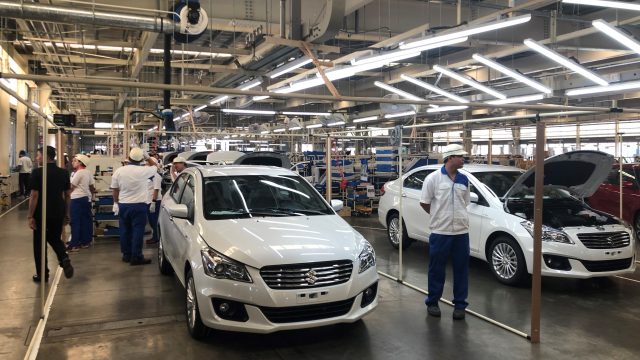
Auto factories suspended their operations in the country and the car transactions were robust again, according to the dealers. More than dozens of automobile companies including Suzuki, Nissan, KIA, Hyundai and Ford suspended their SKD (Semi Knocked Down) assembly productions recently.

“The existing cars in the market see good transactions. Due to restrictions in imports, the car prices become higher,” said car broker Hla Win Tun. “The government is reviewing the car imports and assembly policy,” said Union Minister for Commerce Dr Pwint San. The productions were suspended for the difficulties regarding dollars and imports, said most of the car brokers.

“The people can sell their Ciaz, Swift, Ertiga, and Carry at Suzuki KL Seven Showroom at the corner of Ywama in Insein Township. If they have not made the bank payment in full, the remaining amount will be paid to the bank and the surplus money will be returned to the owner, and I will buy it. I will buy any Suzuki from any showroom,” Kyi Thar Han of Suzuki KL Seven posted on his Facebook page.

“The Suzuki Ertiga was priced at over 30 million Kyats in the past, and now it is over 60 million Kyats since the auto plants shut down. The Hyundai Assent price rose to 50 million Kyats from 30 million Kyats. The Suzuki price is the highest in the market. The prices rose millions of Kyats and it is the very first occasion,” said car broker Win Zaw.

In the local SKD market, vehicles from Japan, Korea and China occupy most of the market shares.

“In the local market, the people make transactions by the type of car rather than the alphabet. The sale of below 20 million Kyats vehicles with a 2000-cc engine is good,” he added.

Trade Deficit Widens to $141 Million in Q1

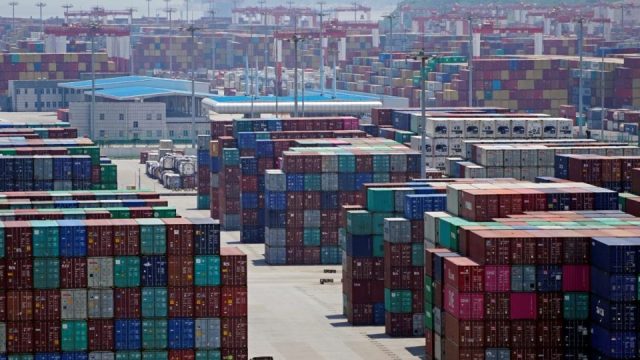
A surge in imports pushed up Myanmar’s trade gap to over $141 million in the first quarter (April-June) of the current financial year 2022/23 from just $86 million registered in the corresponding period of the 2021/22 FY, according to data provided by the Ministry of Commerce. In the past three months, Myanmar’s external trade soared to $8.5 billion from $7.24 billion recorded in the year-ago period.

While exports were estimated at $4.2 billion, imports were valued relatively high at $4.33 billion in the first quarter. Compared to the FY 2021/22, exports showed an increase of over $522.7 million, while import value was up by $749.8 million.

Myanmar’s maritime trade climbed up yet the country witnessed a drop in border trade as cross-border trade with the main trade partner China has not returned to normalcy amid the strict virus policy. Myanmar exports agricultural products, animal products, minerals, forest products, and finished industrial goods, while it imports capital goods, raw industrial materials, and consumer goods.

Myanmar’s lower imports and higher exports in the past six-month mini-budget period (Oct 21- Mar 22) resulted in a positive trade balance of $169 million. Moreover, an import fall led to the largest trade surplus of $677 million in the FY 2020/21, with $15.4 billion worth of exports outperforming $14.7 billion worth of imports, according to data provided by the Ministry of Commerce.

The country’s export sector relies more on the agricultural and manufacturing sectors. The Ministry of Commerce is trying to reduce the trade deficit by screening luxury import items and boosting exports. The country mainly imports essential goods, construction materials, capital goods, hygienic materials and supporting products for export promotion and the import substitution.

Latest Videos

Interview with Alison Fox Principal of The British School Yangon

Interview with Alison Fox Principal of The British School Yangon

Recent Posts