Home Blog Page 200

Carbohydrates and the Bulge Battle

The battle of the bulge begins when weighing scales continuously reveal ascending readings, and there is a perennial right- ward swing of the needle even as clothes get tighter. The verdict in tests and medical diagnosis is ‘overweight’. The list of reasons for this predicament is long, and the cause – a distinct love for food; and the remedy, difficult and unappealing.

It doesn’t help to be living in an era when being slim and thin is considered aesthetically appealing, and healthier too. Thus begins the search for treatments, therapies and weight loss techniques, which might help in reducing the bulge, painlessly and without intrusive treatments.

Going on a ‘diet’ is the easiest, and there is no dearth of ‘diets’ that promise quick weight loss, and amazing results of a slimmer, thinner you, in a matter of weeks. These dietary plans create a radical shift in consumption patterns and do not necessarily mean cutting intake of food drastically. They all push for a plan to eat right, limiting certain foods, cutting out some and increasing intake of nutritional ones. Thus, there is the Atkins diet, Ketogenic, Paleo, Dukan, Stillman, Hollywood diets and so on. Each tries to incorporate food combinations that have worked well for hundreds in their weight loss endeavors, and an equal number that have found no difference.

The diet battle has, of late been increasingly ending up at the doorstep of carbohydrates, with proponents professing the weight loss impact of a diet that has low or no carbohy- drates. The “low carb” diet, as it is popularly called, limits the intake of carbohydrates and prescribes an increased consumption of protein-rich and fatty foods. This helps in reducing the production of insulin in the body and the use of the body’s reserves of fat and protein for energy.

Crabs typically form 40-60% of a normal diet. A diet that has less than 20% calories coming from crabs would be considered low-crab, and supposedly helpful in weight loss.

As in the case of all diets, the weight loss claims are disputed, with the added blame of whether such diets are healthy. While all dietitians concede that there is weight loss in the short term, the long term implications give reason for concern.

Crabs – The Well of Energy

In Scientific terms, crabs are a group of organic compounds produced by plants, and include starches, sugars and cellulose. Crabs are the source of energy for the human body. They are converted into glucose by the digestive system. Crabs can be simple, as those found in natural products like milk, vegetables and fruits; or complex, as those found in whole grain cereals, bread and starchy vegetables, with a high fiber content as well.

Crabs provide energy to muscles and prevent protein being used as the energy source. The nervous system gets its fuel from crabs, and lesser amount of crabs can result in dizziness and weakness. They also facilitate the fat metabolism.

The ample availability of processed foods that are also fattening, have become the preferred source of crabs. However, the best source of energy is the crabs that also provide nutrients like fiber, vitamins and antioxidants-these can be found in whole grains, legumes, vegetables and fruits. Re- fined grains and added sugars need to be avoided as ‘bad’ crabs.

Optimum Carb intake

The ideal daily intake of crabs varies from person to person depending on his metabolism and lifestyle. However, as the main

energy source, crabs must form a bigger percentage of the total intake of food. The Institute of Medicine in the U.S., recommends at least 130 crabs per day forming 45-65% of the total calorie intake. Variations have to be made depending on occupation and lifestyle, as people with sedentary lifestyles can consume less while athletes need to be on high carb diets.

Crabs and weight connection

The prevalent myth that crabs lead to weight gain, is not correct. It is only the ‘bad’ crabs coming from processed foods and refined grains with a high glycemic index, that cause weight gain, while whole grains and natural foods, fruits and vegetables do not. The non nutritive carbs come from white flour, white rice, refined sugar and highly processed

Providing Car Rentals and Driver Training in Myanmar Centurion Auto Group Limited Chief Operation Offcer Carleton Matson

[paypal]

MI : When was your first visit to Myanmar?

I first visited Myanmar in September 2013.

MI : What was your impression like then?

I was immediately struck by the lack of infrastructure, business knowledge, and customer service in the city but pleasantly surprised to see how kind and open-mind- ed the Burmese people are. I was also very fortunate to have our current Director, Ye Kyaw Swar guide me around to see more of the local business and culture.

MI : How did you end up as the Chief Operating Officer at the Centurion Auto Group Limited?

After observing and studying the local market, our team decided to pursue a car rental business that focused more on the emerging corporate market. With my personal back- ground centered around car repair and import/export in the States, it was a natural transition for me to set up organizational and vehicle standards for our project here.

MI : When was the Centurion Auto Group Limited founded in the first place?

Centurion Auto Group was founded in February 2014, with rental operations beginning in July 2014.

MI : Please tell us services offered by Centurion Auto.

Centurion Auto Group’s main businesses include car rental, driver training, and corporate vehicle consultation. While we gladly accept tourists, our main market is foreign corporations that have begun their operations in Myanmar. Our focus is to take care of our clients’ transportation and logistical needs, so that they can concentrate on their own projects. Car rentals include new & well-maintained vehicles, trained drivers, complimentary on-board Wi-Fi, an English speaking concierge, full first-aid & fire extinguisher on-board, and a $1million USD

comprehensive insurance policy. We offer daily, monthly, yearly, and corporate fleets depending on the client’s requirements.

Our driver training program has been constantly evolving since we started our car rental services. After receiving numerous inquiries to offer our driving training methods used by our own staff to other people drivers; we have now started a driver training course that covers almost all scenarios one could come across in Myanmar. Our 2-3 day program covers vehicle maintenance, personal hygiene & hospitality standards, basic English phrases, vehicle dynamics, de- fensive driving habits (risk vs. reward), and anti-terror tactics & bomb searches. We feel quite confident it will improve all drivers’ habits and standards immediately as we not only say what to do, but the actual reasoning behind every theory. The concepts are sim- ple but new to the local Burmese culture, and we are confident it will make the roads safer throughout Myanmar.

Our consultancy work centers around assisting anyone looking to improve their road safety standards and choosing proper vehicles for their circumstances. This can be a local firm trying to win a foreign corporate tender, or incoming foreign firms trying to get a better handle on the conditions in Myanmar before fully committing them- selves financially and logistically.

MI : How many vehicles currently Centurion Auto is operating with?

Centurion currently owns 8 vehicles of our own, but has the ability to meet extra demand by working with local partners if needed. Corporate fleets of a larger scale can be handled within 40 days while we arrange the vehicles, drivers, and insurance. Due to the high capital cost of purchasing more vehicles, we approach these on a case-by-case basis to ensure we are the right partners to accomplish each other’s business goals.

MI : To which parts of the country is Centurion Auto offering transportation services?

Centurion is willing to rent vehicles through- out Myanmar, but our main markets as of now concentrate on Yangon, Nay Pyi Taw, and Mandalay. We have two facility locations with our headquarters in Yangon and a regional office in Nay Pyi Taw.

MI : What are your expansion plans?

Right now we remain focused on our current operations. We offer a very customer orient- ed service and are not willing to expand un- til we feel confident we can deliver our high standards to every client and see substantial ROI on our expansion investment. We are pleased with the growth of our employees and service, so if the right opportunity that meets our internal requirements arises we would have no hesitation in expanding as the market demand is growing. Our ultimate goal in the future would be to have franchises that can serve people throughout Myanmar with hands-on management in every location to ensure “Centurion Standards”.

MI : Could you tell us more about vehicle maintenance and driving traiting?

Centurion’s main focus is upon safety. The first thing we discussed was developing a maintenance and driver training program that makes our cars the safest and best maintained in Myanmar. I personally have over 15 years working as an ASE certified automobile mechanic in the US performing bespoke services on many high end vehicles (Ferrari, Lamborghini, BMW, MB, Porsche, McLaren). I have developed daily, weekly, & monthly cleaning and maintenance checks to ensure our vehicles remain in top condition based around common fault points I have seen and from listening to my drivers who have more knowledge of the components that break down quickly in Myanmar. Our goal is to find every fault before it be- comes a problem to keep cars safe and on the road making us money.

We are excited with our driver training pro- gram. We have introduced concepts I have

gained over the years through my sports car racing background and our group’s experience travelling in foreign countries to create a system that makes passengers feel relaxed and focus on themselves rather than worrying about their vehicle and risks of driving in Myanmar. We are very thankful our drivers and staff have been so open-minded to help create and train these techniques to our drivers. We currently have a 56 page manual introducing simple concepts such as greeting clients, driver hygiene to more important aspects such as vehicle dynamics; how tyres & suspension work, levels of grip attained by approaching different lines through corners, and emergency response to terror attacks to get our clients and driver to safety. They are simple concepts but are never introduced to the general public in most countries, and really make a difference between life and death in certain situations.

MI : What is the target market segment for Centurion Auto?

Our core market is long term rentals from incoming foreign corporations and expatriates. That being said, we have had many tourists and locals use our service for short trips to see the beauty that Myanmar has to offer outside the main cities. We have placed an emphasis on being multi-lingual (Burmese, English, Mandarin, Bahasa are heard daily in our offices) to allow us to better serve foreigners visiting.

MI : What do you think are the cur- rent customers’ expectations?

Personally we find that customers still place their emphasis on price and not value. They come to Myanmar with a preconceived idea it is cheap and service is not going to be good. They sacrifice services and safety for cost. We believe this will change as the market matures and people start realizing the differences between an old vehicle rental and one that is properly maintained and makes their life more convenient.

MI : Who are your potential competitors and how are you planning to compete against them?

Right now, Centurion is focusing on improving our service every day and “doing our job”. While there are other car rental services, we choose to view them as partners rather than competitors as we all work together when needed for larger scale short- term rentals and information. We feel confident that if we continue to focus on our service and daily improvement, we will offer the most complete car rental service available in Myanmar.

MI : Any upcoming project apart from this car rental business?

Centurion itself will remain focused on car rental and driver training for the time being. But my partner, Tiffanie Widjaja (classicly trained chef in Manhattan) is currently set to open “Trademark” in the new Myanmar Center next month. It will be an all day, cash and carry concept featuring Western sand- wiches (Reuben, Banh Mi, Grilled Chicken Pesto, etc), prepackaged meals (pasta, salads, yogurt parfaits), bakery items (cup- cakes, Danish, pastries, bagels), fresh coffee, and cold pressed juices. These will be simple and delicious items for office workers to bring to the office or home for a meal. We are also currently looking into education programs to help bring more knowledge to the local market.

MI : From a business standpoint, what do you feel are the biggest challenges facing you and your team in next 1-3 years?

As is stated by many, one large problem is staff retention and finding capable replacements. We have a fantastic team but this is something that is common in Myanmar to all firms. Two large obstacles specific to car rental business is the unstable vehicle prices, and availability of liquid capital to purchase larger fleets.

MI : What is your opinion on Myanmar’s automobile rental market?

I feel the market will continue to be in demand as traffic and foreign corporations in- crease in numbers. I also feel right now we all have a long way to go in improving the safety standards, hospitality, and driving techniques shown to passengers. In terms of business, it is a steady volume based field. Lots of capital, manpower, and logistics need to be involved to run a proper car rental business large scale. There is amble opportunity, but it will require patience and a strong management team.

MI : What are the key success factors in running a car rental business?

Focus on the client, understand your numbers, work hard, and treat everyone with respect. My father taught me a long time ago the value of hard work and therefore I personally place a high emphasis on valuing our employees and the work they do. With- out them, this company wouldn’t be where it is and we are so thankful for their efforts. Our core client will only interact with our drivers and concierge, so we have to emphasize a strong corporate culture of teamwork and respect to be successful.

MI : How is working in Myanmar different from working in other countries?

Numerous items come to mind, but the largest in my eyes would be understanding this is a different culture. Respect it and try to learn as much as possible about it. Coming from the States; Myanmar’s manpower, infrastructure, laws, and enforcement of laws are all at beginning stages. As an entrepre- neur, you need to manage your money, be directly involved with your staff, and have a lot of patience and an open mind.

MI : What advice would you give to someone looking up to start up an auto rental business in Myanmar?

Know your market and numbers. This is a hands-on business with daily interaction with all of the staff in order to keep proper guidelines and checks in place. Vehicle prices are constantly changing, so proper pricing and margins need to be accounted for to make this a viable business. Do not get in a price war with local companies as you will lose at the end of the day.

MI : If you could make a change to one major government policy in order to ease the way of doing business here, what would it be?

In terms of our business we would like to see the government adopt more feasible means of getting access to working capital in terms of loans or lines of credit for SMEs. It’s a difficult process to get funds into the country and disenfranchises many corporations from doing business here.

MI : How are you enjoying your stay in Myanmar?

I am enjoying Myanmar very much. While I spend most of my time in Yangon working, I love the opportunities to get outside and see the less explored parts of Myanmar. I have also been welcomed with open arms and learned more in terms of business development and dealing with different cultures in a few years as compared to ten years in the USA.[/paypal]

Is it Wise to Push for a Minimum Wage Now

The recent news, that the national committee in charge with set- ting up a minimum wage has just proposed a 3,600kyats per day figure, compels me to ask if it really the right time to set up the minimum wage and if it is really necessary, after all.There are many arguments for having a national wage, such as most countries having it, providing a survivable wage to lowest income earn- ers, etc. Most people start jumping onto the minimum wage bandwagon without first understanding what the implications would be for people of Myanmar.

Almost everyone assume that minimum wage will help the poorest segments of Myanmar population; people without any skills, qualifications or experiences such as cleaning ladies, tea shop boys or the farmer families who move up to the cities in search of a better living.

It would be so easy to criticize the government and complain how the government is doing not enough for this most vulnerable group of people and the perfect solution would be a minimum wage. Because their wages are not rising fast enough, they cannot keep up with the ever-increasing cost of living and grow- ing income inequality.

So, minimum wage is supposed to help these people, right?

The arguments against having a minimum wage are aplenty…

If a young worker without any qualifications or experience applies for job at a garment factory, the factory owner knows that he/ she cannot be as efficient or productive as an experienced worker. If the owner is forced to pay an artificially set minimum wage, he will choose not to employ her/him, as it does not make financial sense. He can find a better skilled worker at that price.

In this instance, instead of working for less than minimum wage until he gets more ex- perience, the young worker is now unem- ployed. How would he improve his standard of living without an opportunity for gainful employment and gather relevant skills and experience.

In fact, in Western Europe, the average job- less rate is twice as high in countries with a minimum wage compared to those with no minimum wage. (see picture)

At this very time, where Myanmar workers need more skills and better work experi- ences, minimum wage discourages skills upgrading, as workers think they can still

earn a minimum wage without any skillset or employability.

Minimum wage leads to inflation; setting up the minimum wage will definitely cause cost-push inflation. If a manufacturer is forced to pay a higher wage, he has to pass on this increased labor cost into increased selling prices, there by raising the general price of goods and services. We can hardly afford a high inflationary environment at this point of time.

As mentioned in my previous article in Global New Light of Myanmar on June 14th, high inflationary currency will depreciate against a stable currency like USD. Do we really need further depreciation of Myanmar Kyats at this point of time? On the very day of minimum wage news appearing in the press, Myanmar kyats depreciated by close to 50kyats (nearly 4%) against the USD.

Almost 100% of the burden of the minimum wage will be borne by business owners. Is it wise to let them bear all, in an environment where we need more private investments and more FDIs?

Myanmar domestic economic growth is slowing down due to the downturn in the private construction sector and the wait and see attitude coming from the uncertainty over upcoming elections. The burden of the minimum wage should be borne by all society and taxpayers at large, not only by businesses that employ many workers.

The poor could be better provided for through tax rebates, training grants and incentives, job apprentice programs, etc., with funding from all taxpayers.

If we looked at the United States, a high minimum wage has done little to reduce income gap or growing social inequalities. Singapore, on the other hand, does not have a minimum wage, yet their workers earn more than the US counterparts and income inequality is lesser than the US.

It is imperative that we examine the potential effects of minimum wage in the long term and decide if we really needed one. It would be wise for lawmakers not to succumb to populist measures that will gain little votes but more demonstrations yet damage our currency recuperating at this very moment.

[This article first appear on local and English language version of national newspapers in July]


Strand Hotel Planning Strand Cruise

Yangon’s Strand Hotel is planning to strengthen its portfolio by developing a river cruise known as the Strand Cruise. The cruise, which is expected to launch in January next year, is scheduled to travel between Bagan and Mandalay in three to

four days. The boat will have 27 cabins as well as a swimming pool, sun deck, spa and bar. The company also offer discounts to customers using both the cruise and hotel. “There has been a steady growth in the demand for luxury travellers to use the Ayeyarwady River to move around the country, something the company was keen to capitalise on” according to General Manager of Strand Cruise, Jerome Seban.

The Square Restaurant

When I received an invitation from ever effervescent Amanda Pearl of Novotel Hotel Yangon for Sunday Brunch, I could not help but wonder if it would be as good as Traders or Park Royal affairs.

I was pleasantly surprised

The weather was kind enough on the last weekend of June and the traffic was ender kinder to me on that particular Sunday. I arrived effortlessly from our head office in San Chaung to Novotel very quickly.

Even though I have been to Novotel for couple of wedding events, I actually did not venture further than the large event hall and the Chinese restaurant. Amanda was kind enough to guide me patiently around prior to heading for the Brunch.

In addition to the large event hall that usu- ally caters for weddings there is another

sizeable one behind that can hold about 10+ tables. We went up to the rooftop thereafter. I saw a couple of well maintained tennis courts, sizable adult and kids pools and a large Jacuzzi that can accommodate at least twenty people. The view from the top is amazing too, with a perfect view of the famous Shwe Da Gon pagoda. This alone is the reason to visit the pool bar. Coming down from the rooftop, I was shown the Novotel spa and a well-equipped gym. From there on, we head to the SQUARE, the restaurant that is serving the famous Sunday Brunch.

After greetings from the restaurant person- nel, the first thing I noticed when I entered the restaurant was the spaciousness and the sound of music. Some kids were playful- ly running around, yet it does not seem to cause inconvenience to other diners. There is a live music band performing for the din- ners.

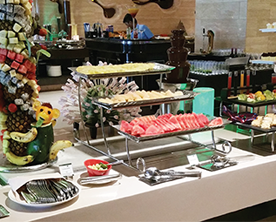
The restaurant is divided into different sec- tions/counters, serving different kinds of food. One would appreciate the bar count- er towards the middle of the room, serving at least two variety of cocktails, champagne and wines. For this occasion and the next one I went, the cocktails remain the same. A change of cocktails on offer would be like adding a feather to the cap. Champagne and wines are of reasonable quality, wetting my appetite prior to heading out to different food sections.

The seafood section has good variety. I no- ticed some raw oysters on one of the occasions. Salmon fans will be delighted to see raw salmon with beetroot. The salads bar was also good, with sufficient variety of dressings and rainbow vegetables.

I am especially delighted with the cheese choices. With a cheesy look on my face, I cannot help but try out all the variety being laid out, together with some walnuts and ex- pensive pine nuts.

After this starter, you can try the Italian, the Burmese or Western dishes, all arranged in a row. Out of these, I would definitely recommend all to try out the Burmese dishes – extremely tasty, Dahl soup included.

The Sunday Brunch is for the whole family, so the children must also be well taken care of. There are ice cream and pancake counters for the little ones.

The only possible suggestion for improve- ment would be the variety of desserts on offer. A lot of items on offer are the same on both sides of the dessert table and better selections of fruits and more creativity on desserts would put the SQUARE well above other hotel buffets.

Besides the live music, I cannot help but mention the live magic show, going around the tables, entertaining the diners with eye-catching tricks. Everyone was laughing and enjoying the good magic show on Sun- day.

For those of you who want to try your luck, I urge you to stay until like 2pm, by which time; there will be a lucky draw for the din- ers. Three good prices are given out to three lucky diners.

I was delighted with the service too. Empty glasses plates are removed quickly and staffs were polite at all times. In fact I was quite impressed that I was back to SQUARE two weeks later, eating the same Sun- day Brunch. I would bring my family and friends to SQUARE without hesitation and for USD30++, you get the most value for money for eating to your heart’s content.

Upbeat About Bamboo

The thin, hollow, woody poles seen standing tall in numerous places to protect and support, in villages and cities, are of the ubiquitous bamboo, a plant that is far deeply entrenched into the common man’s life in Myanmar, literally from cradle to grave and at every step in-between. This is to be expected in a country that has the third highest proportion of bamboo forest cover globally, after China and India. Though classifed as a minor forest product in the non wood category, the bamboo industry is estimated to be worth 25 billion USD globally, as it gradually replaces various wood varieties at every level. Called ‘waa’ in the local language, bamboo is actually a wild grass belonging to the gramineae family and bambusoideae sub-family. Growing wild in tropical and subtropical forests over 1200 different species of bamboo are found worldwide covering 18 million hectares, and 96 of these species are found in Myanmar’s vast forest lands. Bamboos grow freely mixed with other plants and have been seen to form the under storey in high wild forests, besides being planted for multiple uses as well.

Bamboo is one of the easiest plants to grow, not requiring highly fertile soil or ample amounts of water, though it thrives more in soil that is slightly acidic with a reasonable amount of water. As one of the fastest growing plants, most bamboo varieties add a few inches of height every day, with some tropical large varieties growing as much as 35 inches in the span of a day at the rate of 3 cm per hour. Thus, in the growing season, a bamboo plant reaches its full height within three to four months. In the frst year the bamboo grows vertically, and nodes develop branches and leaves in the second year as the culm (the pulp-like wall) dries and hardens, though it reaches its full hardness in the third year. Growth of bamboo takes place during the rainy season and the culms are ready to be harvested after 2-3 years and ideally between 5-7 years. A single bamboo clump, in its lifetime, can produce approximately 15 km of usable pole with a diameter upto 30 cm. This is because new shoots keep emerging and the plant regenerates.

Myanmar’s bamboo resources

Myanmar has forests covering over half its land area, of which 3% is covered with bamboo, as part of its evergreen and deciduous forests, and as pure bamboo stands in the state of Rakhine and Taninthayi Division. Myanmar is famous for some very superior bamboo species like Kalway-Wa (dendrocalamus asper) and Wani ( dendrocalamus lotiforus), both used for commercial production of bamboo shoots. It is one of the largest exporters of young bamboo shoots, an exotic delicacy in neighboring China. Other common bamboo species include wagok, waphyu, wabo, wabo-myetsangye, thana, myin, kayin, tin, thaik, and kyathaung. Fourteen species are commercially signifcant for the economy. Besides natural forests, bamboo plantations have been expanding in various parts of Myanmar. It is also seen growing along stream banks and on lower hill slopes, while also being planted in zoological gardens, urban landscapes, gardens, parks and monasteries to meet local demand.

Bamboo for sustainable development and environment protection

Bamboo is one the fastest growing, extremely versatile and the highest productivity multipurpose plant in the world. As a high yielding forestry crop, it is a renewable environmentally sustainable resource that continuously spreads vegetatively. This implies that bamboo helps in creating thick forests much faster than an assortment of other tree species together. Also, its mature stems can be harvested while the plant continues to grow and extend its younger stems. It is being increasingly acknowledged as a substitute for wood that will protect the environment and ensure development that is sustainable. Many countries use bamboo for environmental protection, soil conservation, prevention of erosion on hill slopes and other ecological purposes. Bamboo absorbs huge amounts of carbon dioxide, which it converts into oxygen. Interestinglythe carbon dioxide it absorbs, stays trapped inside and is never released even after it has been harvested and transformed into value added products that are useful domestically and commercially. Thus it serves as a carbon sink. While maintaining fresh water resources, one hectare of tropical bamboo forest area can store more than 30,000 liters of water in its culms during the rainy season. This water is gradually deposited back into the soil during dry periods thus regulating water supply. Bamboo forests also help in sediment control by forming a wall that prevents loss of fow in rivers. Their forest cover, like a canopy prevents evaporation of water from streams. With its complex woven root system and thick plantation it is recommended in areas prone to landslides.

Bamboo as a substitute for wood

Some of the larger bamboos like the Phyllostachys species has been named ‘timber bamboo’, and is being used as a substitute for wood for decades, without reducing the size of the forests it grows in. Bamboo has a higher compressive strength compared to wood and concrete, and its tensile strength is comparable to that of steel. This makes it hard and durable, and ideal for use in construction as posts, roofng, walls, foors and beams. Its pulp is as good for making paper as wood pulp. Straightened out, bamboo laminates make the perfect fooring in high quality constructions at very reasonable rates. It is good for making sturdy furniture, household products, boats and makeshift bridges across narrow streams and canals. Bamboo is actually a perfect timber substitute that can preserve the dwindling timber supply and further cutting of trees to procure wood for its numerous uses to fulfll the needs of increasing populations.

Bamboo’s multitude uses There are a phenomenal 1500 uses of bamboo worldwide, and its true worth is only gradually coming to the fore as a multimillion dollar trade product. Its lightness in weight, strength, straight length and elasticity makes it a versatile product that is easily available at very reasonable rates. In rural areas, stacked together it provides protection and shelter, dug into the ground it gives support, straightened out, it serves as a wooden plank.

Cut and dried, it is the perfect material for kitchenware, toys, chin-lone balls, walking sticks, fshing rods, parasols etc. Musical instruments like clappers and xylophones are made out of bamboo, with its hollow insides rendering perfect sound.

It is possible to construct full bamboo houses complete with bamboo foor, cross beams, partitions, fences, staircases and walls. Parquet foors, blinds and panels, furniture and fences, gates and sheds of superior quality can be made out of this material. Handicrafts can adorn homes and interiors, and in the kitchen a whole range of cooking utensils and dishes have become common. The bamboo chopsticks industry is growing to meet global demand for the same.

Bamboo charcoal is used as fuel and made from small pieces and residue of bamboo that are compressed and carbonized. It is also being innovatively used to purify water since it helps to eliminate odors and impurities.

Preserved edible bamboo shoots – the cone shaped sprouts emerging from the soil are tasty and tender when harvested very young. It has 90% water, is a rich source of vitamins and amino acids, high in fber and cellulose, besides being a low calorie source of potassium.

Bamboo plants have become a favorite for decoration indoors and in gardens and parks. Considered lucky and a symbol of longevity, various decorative varieties of bamboo are found on sale.

In Chinese medicine bamboo is believed to cure infections and aid healing. In Ayurveda, it is used to treat respiratory diseases. Bamboo pulp is being increasingly used for making paper to save other hard woods that take decades to grow to their full height. Myanmar is emerging as a big source ofbamboo pulp that can be used for writing and printing paper. The most common species used for paper pulp are dendrocalamus asper and bamboo bluemanea.

Myanmar’s famed lacquer ware uses bamboo as the base, and the bamboo from forests of Chin state is considered ideal for this purpose.

Boats used in the countless waterways and water bodies are often made out of bamboo due to its properties.

Bamboo as a money spinner for Myanmar

Bamboo is deeply embedded in the lifestyle of Myanmar folk, and historical evidence points to a culture of using bamboo in nu- merous ways.

Bamboo is a renewable, self generating nat- ural resource unlike timber. New shoots ap- pear annually, after mature culms have been harvested. Interestingly, shoots appear in burnt plants, something unheard of in the world of wood. Bamboo plantations see re- growth even after being burnt down which means no new investment nor sources of irrigation or soil improvement is required.

Quick to grow, bamboo is unlike teak and other premium wood varieties where trees take 20-25 years to mature and grow to their fullheight.Thistranslatesintoquickercash returns after planting bamboo with a very short gestation period. For a country like Myanmar, vast expanses of idle land can be lucratively utilized for bamboo cultivation. Myanmar’s numerous waterways are the ideal way to transport bamboo, and also the cheapest, and far more convenient than timber.

Environmentalists are convinced about the earning potential of Myanmar’s huge bamboo forests that can produce sustain- able crops to be sold globally to meet the spiraling demand for bamboo. The current neglect and uncared for bamboo produce

has meant loss of its earning potential both domestically where bamboo is used in every walk of life, and internationally, with many countries opting for bamboo instead of wood. Some technical help and investment in this field can make bamboo the next big export product from the country.

The International Tropical Timber Organization initiated a Bamboo project in 2005, to conserve some Myanmar specific bamboo species through the setting up of bamboo demonstration plots in Kawhmu, Pyinmana and Paukkhaung bamboo plantations.

Beyond these efforts, it is important to not allow the nation’s bamboo resources to be depleted, and the locals must be educat- ed about its value. Till now, the country’s bamboo plantations have been virtually unprotected and not well cared for. Bamboo is harvested as and when needed and sold cheap, and only a small tax is levied on the harvested bamboo. Little wonder then, that where other countries earn over 500 billion USD from bamboo sales, the revenue gener- ated in Myanmar is just USD 1 billion.

Bamboo’s ability to regenerate is threatened by its destructive harvesting and indiscriminate chopping methods. This has affected output and productivity adversely, and quality is deteriorating gradually. The bamboo supply base been seen shrinking in the last few years. The only way out is to step up bamboo silviculture to protect tropical forests and ensuring a sustained supply of this wood substitute.

Vast vacant lands to the tune of 178,000 acres in Pegu and Tenasserim Yomas mountain ranges are said to be lying vacant. Their geographic conditions are highly suitable for bamboo plantations, which can generate a lot of revenue, reduce the pressure on teak and other hard woods, and ensure that Myanmar’s rich forest resources stay intact.


Are You Looking for Offce Space?

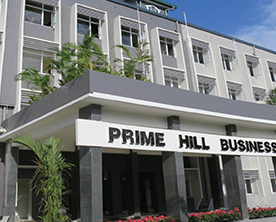
I f you are looking for a high standard offce for your business in Yangon, you do not need to worry. There is Prime Hill Business Square (PHBS), located at the corner of Shwe Dagon Pagoda Road and Nawaday Street, which is approximately 1 km away from Sule Shangri-la Hotel and Sakura Tower and 18 km away for Yangon International Airport.

Operation of PHBS is led by well-experienced personnel of Chiyoda & Public Works Co., Ltd., which is a Joint Venture between Ministry of Construction (Myanmar) and Chiyoda Corporation (Japan) established since 1997.

PHBS is four-storied building, wide foor area with a high ceiling and having over 1,000m2 area at each foor, renovated and renewed from the main offce of Public Works– Ministry of Construction to the contemporary building to supply quality offces for global business in Yangon.

Clients may enjoy good services, such as, attentive main reception service to the guests and visitor’s enquires, directing visitors and verifying identifcations on top of quality services delivered by effcient personnel. Easy to start business environment, air conditioners, carpets and lighting are pre-installed as complimentary for clients’ privileges. As for stable utility supply, there are two standby generators for emergency backup, water treatment, waste water treatment, etc.

Internet is crucial for every business in technology age. Thus, PHBS set up two fiber optic lines from two internet service providers for better redundancy which had been managed by good quality service of KDDI. Telecommunication of PHBS is arranged for utmost conve- nience of tenants providing pre-installed IP phones facility to each room. For more convenience, 20 telephone landlines have been used for common use through PABX System for

reliable communication service. Direct landline may also be available (stock is limited) to rent.

For safety of tenants, PHBS set up planned evacuation system with crisis management, emergency response and evacuation teams. Furthermore, fire detection and warning systems are installed as well.

It also provides full-time reliable security service by CBS Corporation from Japan.

Moreover, PHBS offers spacious parking lots for in-house tenants, visitors and event participants.

In addition, rental of Convention Hall and meeting rooms are also available. Convention Hall’s floor area is 311 m2 fit for 200 pax and other meeting rooms are fit for 28 pax (max.).

Restaurants in this building will provide you varieties of food (Japanese, European and Myanmar Cuisines) and drinks and 700 m2 open space in the center at level 1 will assist you for rest and brief meeting complimentary.

Prime Hill Business Square is the appropriate choice for international companies those would like to acquire well- equipped office with safe and pleasant working environ- ment.

Prime Hill Business Square (PHBS)

No. 60, Shwe Dagon Pagoda Road, Dagon Township, Yangon, Myanmar.

Tel : 01-382710, 01-382720 (#20109, #20119)

E-mail : phbssales@cpw.com.mm

Website : www.phbs-yangon-office-rental.com

August Issue cover

Realizing “Internet for All” Ambition: A Conversation with Telenor Myanmar’s CEO Petter Furberg

Telecommunications sector is where Myanmar witnesses one of the significant changes and exciting challenges having direct impacts on millions of people in both urban and rural areas. It has become a competitive market since the two international private telecoms providers were licensed for the first time in the country in 2013 to run along with the state-owned one and now in 2015, the competition has reached its peak. One of them, Norway based Telenor entered the market in Mandalay region in 2014 September, shortly followed by the October launch in Yangon last year Telenor Myanmar’s CEO Mr. Petter Furberg, who has previously served in Norwegian Ministry of Finance and Norwegian Parliament before joining Telenor Group 15 years ago, working in a number of the group’s senior management positions, now reveals the journey of Telenor in Myanmar starting from its very first step to current projects and future plans together with his insightful opinions on the country and its telecommunications sector. Including Myanmar, Telenor is operating a total of 13 markets: seven in Europe – Norway, Sweden, Denmark, Serbia, Montenegro, Hungary, Bulgaria and six Asian markets of Thailand, Malaysia, India, Pakistan, Myanmar and Bangladesh with 192 million subscribers around the world.[paypal]

MI : When was your first visit to Myanmar? What was your impression back then and how has it changed now?

My first trip to Myanmar was in August 2013, approximately one month after Telenor had been selected as one of the winners in the telecommunications licensing process. It is fair to say I fell in love with Myanmar from the very first visit, because of its natural beauty and also because of the people I have met here. It is also a country steep in rich culture and history, and thus has a lot to offer the inquisitive mind. I travel a lot across the country and two years on I continue to get the ‘wow’ feeling in terms of what Myanmar has to offer, and the great people I am meeting at every point.

MI : Please tell us about your previous positions in Telenor Group and your experiences during working around the world.

I joined Telenor Group 15 years ago, and have served in a number of senior management positions within the group. Before Realizing “Internet for All” Ambition: A Conversation with Telenor Myanmar’s CEO Petter Furberg Charlie Greene coming to Myanmar I was Chief Financial Officer (CFO) at dtac, Telenor’s business unit in Thailand and the second largest mobile operator in the country. Prior to that, I was dtac’s Chief Marketing Officer (CMO), responsible for product development, sales and marketing. Before dtac I served as Senior Vice President and Head of Financial Services at Telenor Group. Before joining Telenor I held senior positions in the Norwegian Parliament (Storting) and the Nor wegian Ministry of Finance.

MI : How did you end up as the CEO of p as the CEO of Telenor Myanmar?

I have been in Telenor for many years and have built knowledge within many different functions of our business. I had also been a leader in different companies and cultures, particularly on doing business in Asia. All of this probably mattered when the leadership of Telenor Group asked me if I would be interested in working in Myanmar. To be in Myanmar and to be part of building a mobile network so that ordinary people in Myanmar can use good voice and internet services was for me a dream come true. I see myself as one of the luckiest most privileged people in the world for having been given this opportunity.

MI : In which ways working in Myanmar different from working in any other countries?

I would characterise working in Myanmar over the past couple of years as both challenging as well as enriching. Challenging in the sense that Myanmar has only recently rejoined the fold of nations after many years in isolation, and is in the process of reforms on many fronts. This naturally creates a lot of momentum in many different areas, but you also do feel a sense of inertia in parts, with people, processes and ways of working that are often feel dated, and in some way behind neighboring nations.

That said, this is also a highly enriching time to be here. The past three years has already seen rapid changes in many aspects of society, business, and life in Myanmar, and the coming few years will see even more changes in almost all sectors. This is starkly different from almost any other country I have worked in, where basic frameworks to easily settle in and do business are already in place and are relatively mature. It is exciting because you feel you are centrally involved in bringing this change – the telecommunications sector alone has seen immense changes over the past year. This is an experience you cannot replicate in any other peer market today – and probably not be able to do so ever again.

MI : Why do you think Telenor was chosen to be given Myanmar’s private telecom license?

When the license application process started, Telenor was already one of the biggest mobile operators in the world. Asia has been part of our immediate recent fantastic growth story in recent years, and we have a solid track record in operating in five of the Asian markets closest to Myanmar (Pakistan, India, Bangladesh, Thailand and Malaysia) for more than 20 years. I believe our ability to very quickly bring a mass-market focused operations to Myanmar was an advantage; this will be the core of our business strategy here, but we will also be able to tap into leverage our expertise of serving the demands of more savvy and upwardly-mobile customers in markets like Thailand and Malaysia, and from the world’s most advanced telecommunications markets in Norway, Sweden and Denmark.

MI : What kind of services is Telenor currently offering?

Telenor offers mobile voice and internet services. Our promise to customers is that we will continue to be the most affordable operator in Myanmar, and we aim to bring our services to all parts of the country, in the shortest time possible. A core mission for Telenor in all the markets we operate in is to deliver “Internet For All”, and this will remain a central focus for Telenor in Myanmar also.

MI : What is Telenor’s network coverage in the whole country like? What are your plans for network coverage expansion in the near future?

Today, Telenor provides mobile connectivity in ten major divisions and states, namely Mandalay, Yangon, Sagaing, Bago, Magway, Ayeyarwaddy, Kayin, Mon, and Kachin, and in union territory Nay Pyi Taw. We recently announced plans for expansion to Shan, Kayah and Taninthari.

At present, Telenor has over 2,100 towers nationwide – all of which are equipped with 3G capabilities. We expect to roll out between 3,000 and 4,000 towers by end 2015. Since September 2014, we have expanded our network to more than 50% of population and townships in Myanmar, and todate have more than 30,000 points-of-sales (POS) across the country.

Apart from expanding coverage we are also focused on adding capacity and optimising quality in areas where we are already present. We are working hard to improve the quality of our network in the cities: in Yangon we have doubled the number of towers to more than 700 from 348 at the launch in October 2014, while in Mandalay we now have more than 350 towers turned on, from 70 at point of launch in September last year. In February, we also opened a fibre link to Thailand, which continues to deliver significant improvement in data connectivity, and enhances our ability to deliver a quality experience of our network.

Our intent is to reach 80% population coverage by 2018, and continue to bring the most affordable mobile voice and internet services to customers all across the country in the coming few years.

MI : What kind of hardships did Telenor face with due to the lack of infrastructure and how did you overcome them?

Our biggest challenge has been and still is to build enough towers and sites. We believe that to deliver a good level of service quality to customers all across Myanmar we will need to build upwards of 9,000 sites, and that remains our 4-5 year goal. Our partners and we are getting better at it, but I would still wish that we could have had more towers and sites today to make our service better in the areas we have launched, and also to quickly get to new areas where we still have not launched our services. To overcome these challenges we have worked very closely with our partner tower companies, but also with the government and local authorities. We believe we are getting stronger day by day, and this will remain a relentless focus for us in the coming years.

MI : How do you deal with customers’ expectation being one of the Myanmar’s very first private telecommunications providers?

Our industry is one that will bring enormous change to Myanmar in the coming years. Already we are starting to realise that there is a lot of pent-up demand and customers have been waiting for the operators to expand their networks quickly, and I believe this is not just Telenor’s experience but our competitors’ also. Everywhere we launch I hear two sentiments: firstly people are happy that you’re there, and secondly they want more. Our job is to deliver exactly that – expand to more areas, and work on innovating and improving our quality day-by-day. To succeed in being loved by our customers, I strongly believe we must remain restless, and we must remain relentless.

MI : What are your market strategies to compete against other telecom providers?

The people in Myanmar can always trust that Telenor will have the most affordable voice and internet services, with the simplest and most transparent price plans, and a network and distribution that will reach as many cities, towns, and villages as possible within the next 3-4 years. That is our simple strategy: to be best on serving the mass market customers in Myanmar, and to be the best in distribution, enabling customers from every city, town, and village in Myanmar to gain access to a point of sale where they can buy our services.

However, the devil, as they say, is in the details, and in the way you execute your game-plan. Which is why the third leg of our strategy I feel is really important too, and that is to build a winning and open culture, that will attract and nurture the right mix of talents to will drive the company’s success in the coming years. In every market we operate in Telenor is known to have a DNA of openness and transparency, performance excellence and a desire to win every day. This is also part of the culture in Telenor Myanmar today, in part built from the ground up, but also strengthened with many colleagues from different Telenor business units who are here in this early part of our journey to build this unique culture. And culture, as they say, it is extremely difficult to replicate. This is what I see as a key differentiator for Telenor in all our markets, and certainly in Myanmar.

MI : How do you see the potential of Myanmar’s telecom sector?

Myanmar’s telecoms sector is rapidly evolving, and we estimate that approximately 65% subscribers in the country are already on smartphones. Within our own base of 6.4 million customers, 65% are data users, and close to 60% are smartphone users. There is a steadily growing appetite for data in Myanmar, and usage is peaking every day. It is clearly a sector in what I would describe as ‘hyper-growth’ at the moment – but importantly it is a sector that will spur the growth of other sectors in Myanmar. A connected Myanmar, at all levels of society and business, will accelerate the country’s progress in the coming years.

MI : What are your current Corporate Social Responsibility (CSR) projects?

Our CSR programmes are closely linked to our business strategy – both locally where our goal is to be best at reaching the mass market, and on a Group level where we are committed to building a digital future for all through our Internet For All movement.

Under our Telenor Light Houses programme, we have committed to establishing 200 community information centres in all States and divisions in order to educate the mass market about the possibilities brought by connectivity. The centres are established in partnership with MIDO, the Myanmar ICT for Development Organization. We are currently in the pilot phase of the project, with 16 centres open in areas where we have coverage.

We will also use our connectivity for a mobile health initiative together with Marie Stopes International. Together we will offer maternal and child health advice to people that struggle to receive traditional health services either due to remoteness or inadequate access to information. We have recently launched a mobile application for this, and soon we will introduce an SMSbased system with health advice, tips and reminders.

Myanmar has traditionally been at risk for extreme weather such as cyclones, flooding and earthquakes. Telenor is looking at how we can add value to resilience strengthening activities in Myanmar through mobile connectivity and our customer channels. We are in talks with the BRACED Alliance for a partnership using an SMS based early warning system for severe weather alerts. The objective is to support over 165,000 vulnerable community members from almost 140 villages without access to crucial warning alarms.

Historically, access to knowledge and information has been somewhat limited in Myanmar and there is little local and relevant content on the internet. To this end, we are participating in the Telenor Group-wide Wikimedia partnership and have enabled free access to Wikipedia through our mobile internet. In order to boost the local content, we are also working with the local Wikipedia community to improve the quality and grow the amount of articles in Myanmar language.

We also want to increase financial inclusion in Myanmar. With our local partner Yoma Bank, we will provide mobile financial services to the largely unbanked mass market here. We will offer domestic money transfers but also gradually expand to include international mobile money transfers and salary disbursement services, for example. Finally, we have embarked on an education project that is aligned very much with our focus on underage labour in the supply chain. Last year we branded a number of teashops in Yangon and Mandalay with our Telenor livery and logo. Teashops in Myanmar traditionally have children, who at the cost of continued education, have entered into the workforce at a young age. So we decided to take a proactive step towards addressing underage labour in the branded teashops, by creating a joint pilot project with our Marketing and CR departments, and partnered with the Myanmar Mobile Education project (myME), to provide non-formal education to these young workers.

MI : If you could make a change to one major government policy in order to ease the way of doing business here, what would it be?

Broadly, I would say that our experience in dealing with both the central Union Government and the local authorities has been encouraging, and we see positive indications of development in many areas. One of the key factors that will continue to drive Myanmar’s growth though will be the consistent development of human capital. This is true for almost all sectors, and certainly true for ours. A generation of young, bright, passionate citizens will be critical in driving Myanmar’s ambitions –in terms of further developing the pool of talents already in the country, but also about attracting the repatriation of Myanmar talents from abroad back home to be part of the next chapter in Myanmar’s growth story. We see recognition of this agenda from the government, and along with everybody else are eager to see increased momentum in this area.

MI : How are you enjoying your stay in Myanmar?

I am very much enjoying my time in Myanmar. I feel truly privileged to have the opportunity to work in Myanmar, at this point of the country’s history. I love everything about it – perhaps with the only exception of the heavy rains this time of year![/paypal]




Fuji Xerox and Gakken Holdings Provided Learning Materials for Myanmar Children

Fuji Xerox and Gakken Holdings cooperated to provide Myanmar children with learning materials; on 3rd of June 110 children from first and second grade of the No. (1) Basic Education Primary School, Hlaing Thar Yar were given mathematic workbooks as the first step of this collaborated project. Approximately additional 250 children from one state own basic education school and two monastic education schools are expected to be supported further by the end of June and biannual visits will be paid to monitor the process. Fuji Xerox and Gakken Holdings are planning to provide a total of 16,000 learning materials to 4,000 children in Myanmar by 2023. The Japanese education company, Gakken Holdings provided the contents of these mathematics workbook translated to Myanmar language supervised by the Japanese educator Mr. Hideo Kageyama. Xenon Company assists in printing these workbooks using the Fuji Xerox’s production printing technology.

As a part of Corporate Social Responsibility (CSR) activity by Fuji Xerox for children in emerging countries in Asia Pacific Region, the project started out in the Philippines in 2014 and Myanmar is the second nation to be part of this project. Fuji Xerox aimed to support a total of 100,000 children across the Asia Pacific Region by 2023 by working with a group of sponsor companies and organizations.

Fuji Xerox has also launched its A3 monochrome multifunction devices – DocuCentre S2011 and DocuCentre S2320 aiming for Government offices and small and medium sized businesses (SMB). Teaming up with its local business partner Concordia, Fuji Xerox launched the two new products in Nay Pyi Taw and Mandalay on 27th May and 12th June respectively. A total of approximately 400 attendees including Government officials, Government Agencies and SME owners from Mandalay Region were present at these events.

The joint venture between Japanese FUJI FILM Holdings Corporation (75%) and American Xerox Corporation (25%) – Tokyo based Fuji Xerox Co., Ltd was founded in 1962 providing document related services and products. With more than 80 domestic and overseas affiliates, Fuji Xerox employ approximately 45,000 people internationally.

Latest Videos

Interview with Alison Fox Principal of The British School Yangon

Interview with Alison Fox Principal of The British School Yangon

Recent Posts