Home Blog Page 241

Beijing’s Black Market License Plates

Imagine taking out a loan for a new car, but then having to take another loan – twice as large – to buy a license plate on the black market. That’s precisely what is happening in Beijing, where a government clampdown on license plates has fueled skyrocketing prices for plates on the black market.

In a bid to rein in its pollution and traffic jams, officials in the Chinese capital in 2011 instituted a license plate lottery that awarded plates to one in ten people who apply. This year, Beijing cut the new plate allocation by 40 percent to just 150,000, which means only one in 150 applicants will get a plate.

Such impossible odds have created a thriving black market where plates can draw an asking price as high as $33,000 – almost double the price of China’s best selling car, the Ford Focus. Even though it is technically illegal to buy, sell or rent plates, desperate drivers in Beijing have found few other options.

I participated in every lottery over the past two years but have never won. I’m desperate”, said Han Kuilong, an office worker who last month rented a car plate for RMB5,000 (US$830) a year. “I live on the outskirts but work in downtown. Life is very inconvenient without a car”.

Another Beijing resident, Zhang Cheng, has been entering lotteries for the past two years, but to no avail. Most recently, there was a lottery in which 2 million participants vied for about 25,000 plates.

“The government is depriving us of our rights to enjoy a better life. Instead of restricting car plates, they should build more roads and improve infrastructure”, Zhang, who is now seeking to rent a plate, said.

Zhang is not alone. The practice of renting or buying car plates is now so widespread that it has become impossible to police, said Yang Lisha, a Beijing based lawyer.

The hot demand has caused a surge in prices. Just six months ago, a car plate could be bought for around RMB120,000, but this year’s cut in allocation prompted an increase to RMB200,000 a piece, according to a manager at Beijing Sunshine Aomei Asset Management Co., a company that says it buys and sells car plates on its website. Several other car plate dealers corroborated the figures.


Border Trade

Myanmar’s border trade reached US$4.01 billion during the first 10 months of the 2013-2014 fiscal year. The country’s border trade in the April-January period was through 14 points with four neighbouring countries which are China, Thailand, Bangladesh and India.

Myanmar’s largest border trade point, Muse, accounted for nearly US$3.12 billion of the total border trade during the period.

Official statistics show that Myanmar’s foreign trade came at US$15.27 billion as of September last year, with exports hitting US$7.43 billion and imports reaching US$7.84 billion.

Project Finance: the importance of a CRD

It is not the first, nor the second, nor the third transaction in Myanmar that I have been involved where document registration related matters have come up and one of the parties who is involved in such transaction does not see the importance of ensuring that any such documents are properly registered with the relevant authorities, or does not want to go through the hassle that such registration implies. And, in all honesty, their position is quite understandable from a business standpoint – the process is burdensome and many may end up exhausted walking down that road, notwithstanding the fact that substantial delays derive from undergoing such an exercise and this may exasperate even the most patient businessman who just wants to see the transactions materialised and finished. Yet, its importance is extreme, if not essential.

To put the matter in perspective, Section 109 of the Myanmar Companies Act, 1914 (“MC Act”) provides that “every mortgage or charge created by a company and being either: (i) a mortgage or charge for the purpose of securing any issue of debentures; (ii) a mortgage or charge on uncalled share capital of the company; (iii) a mortgage or charge on any immovable property wherever situated or any interest therein; (iv) a mortgage or charge on any book debts of the company; (v) a mortgage or charge, not being a pledge on any movable property of the company except stock-in-trade, or (vi) a floating charge on the undertaking or property of the company, shall be void against the liquidator and any creditor of the company unless the prescribed particulars of the mortgage or charge, together with the instrument by which the mortgage or charge is created or evidenced (…) are filed with the Registrar for registration within 21 days after the date of its creation (….)”.

At first sight, it would appear that compliance with Section 109 of the MC Act would exist upon the filing of the required documentation with the Registrar of the Companies Registration Office (CRO), but unfortunately that impression is not completely accurate and the creation of securities over movable and immovable properties requires at least one or two more twits. Indeed, as provided in Section 109 of the MC Act, the act of filing is not sufficient, per se, and applicants should seek registration of every mortgage or charge. Undeniably, Section 109 of the MC Act should be read together with Section 114 of the MC Act.

Section 114 of the MC Act provides that “the Registrar shall give a certificate under his hand of the registration of any mortgage or charge registered in pursuance of section 109, stating the amount thereby secured, and the certificate shall be conclusive evidence that the requirements of section 109 to 112 as to registration have been complied with” and, as it may be inferred, this is the step where many problems arise. Indeed, Section 114 of the MC Act requires the Registrar of the CRO to provide a certificate that would directly identify him or her, and would evidence that the mortgage or charge has been registered and is compliant with the laws of Myanmar – such certificate being the so called certificate of registration document (CRD). In this context, considering that Myanmar is still in its early stages of development and that sometimes there is a gap between the letter of the law and the current practice, it is understandable that the Registrar of the CRO would not want to put him- or herself at an unnecessary risk. Yet, it is our obligation, as attorneys to our clients, to seek their maximum protection and to safeguard, as much as possible, that any such security may be enforceable down the line. Thus, obtaining such registration ends up being the key document to a somewhat long process, which typically requires liaising with the relevant authorities in order to get the deal through – and, even when doing, as with many things in life, there is never a guarantee of success.

Having said that, it cannot be forgotten that the ability of foreign companies in Myanmar to secure immovable property, or foreign banks located outside Myanmar to take security of immovable property for their loans or credit facilities, is limited. There is a law entitled The Transfer of Immovable Property Restriction Law, 1987, under which the following acts are prohibited: (i) transfer of any immovable property by any person to a foreigner or a company owned by a foreigner by way of sale, purchase, gift, acceptance of a gift, mortgage, acceptance of a mortgage, exchange or transfer, and acceptance of a transfer by any other means, and (ii) transfer of any immovable property by any foreigner or a company owned by a foreigner by way of sale, purchase, gift, acceptance of a gift, mortgage, acceptance of a mortgage, exchange or transfer, and acceptance of a transfer by any other means. A foreign lender or borrower is, therefore, in principle, prohibited to take or make secured loans by way of transfer or sale and mortgage of immovable property.

However, if the project can be embedded under any of the categories that are promoted by the Myanmar Government under the Foreign Investment Law, 2012 (FIL), and many of the projects that require financing could well be, the said restriction on immovable property may be easier to overcome. Certainly, under Section 64 of the Rules to the FIL, mortgages may be allowed provided that prior consent has been obtained from the Myanmar Investment Commission (MIC), which, in turn, will scrutinise the request and decide thereupon. Thus, based on the particulars of each specific case, before proceeding straight to the Registrar of the CRO, it may be necessary to liaise with MIC and obtain their prior approval. Fortunately, an approval from MIC should help to expedite the registration of a mortgage over immovable property by the Registrar of the CRO, so it may end up being beneficial in the big scheme of the project finance. Yet, once again, there is never a guarantee of success.

There is, however, one more hurdle to be crossed. Section 112 of the MC Act provides that “the Registrar shall keep, with respect to each company, a register in the prescribed form of all mortgages and charges created by the company after the commencement of this Act and requiring registration under section 109, and shall, no payment of the prescribed fee, enter in the register, with respect to every such mortgage or charge, the date of creation, the amount secured by it, short particulars of the property mortgaged or charged, and the names of the mortgagees or persons entitled to the charge”, which would be “open to inspection by any person on payment of the prescribed fee”. Unfortunately, such a register is not fully “operating” as of the date of this writing, and there is no clear date as to when such a scenario may change. As with almost everything in Myanmar, it could be a matter of days or, most likely, it could be a matter of months, or even years – but it will happen eventually. Fortunately, some of us are currently working on this issue. Until then, if required, it is extremely necessary and prudent to include the relevant representations, warranties, covenants and undertakings in the relevant sale and purchase agreements in regards to existence or inexistence of mortgages, or charges, over the assets of a company. Be advised.

 

US Export-Import Bank opens to Myanmar

T he US Export-Import Bank says it will start offering credit for trade with Myanmar, hoping to support businesses against competitors in a market that has boomed since democratic reforms.

Officials say they hope to boost US exports and jobs by providing similar terms as credit agencies from European and Asian nations, whose governments have gone even further in ending barriers to trade with the once pariah state.

“Hopefully, with this announcement, we can level the playing field and we can compete on the basis of price and quality, not terms”, said an official from the Export-Import Bank, who requested anonymity in line with agency policy.

Myanmar has undertaken sweeping reforms since former general Thein Sein became president in 2011, with the release of political prisoners, easing of censorship and a revamp of an antiquated exchange rate system.

President Barack Obama’s administration has heralded Myanmar’s changes as a success for diplomatic outreach, but critics say the United States has overlooked human rights violations.

The Export-Import Bank’s decision “is very much a reflection of [Myanmar’s] creditworthiness and it’s not connected to any particular event”, she said.

Foreign investors have been flocking to Myanmar, which has a large untapped consumer market, ample natural resources (including gas and oil), and a strategic location bordering China and India.

The Export-Import Bank is no stranger to the country. One of its first projects after its creation in 1934 was to provide US$22 million to build the Burma Road to supply China during its war with Japan.

Myanmar and Naga

Nagaland chief minister Neiphiu Rio has met several Naga leaders and policymakers there in an effort to boost the economic development of the Naga inhabited areas during his official visit to Myanmar.

The chief minister began his five day official visit on February 5th.

Rio, who was accompanied by several top officials of the state government, met chief ministers of Sagaing division Thar Aye and Mandalay division Ye Myint and other top officials of the Myanmar government.

Sources said the Naga officials met several top leaders of the Myanmar government and exchanged views on development in Sagaing division where Nagas live.

“We got calls from people in the interior Naga areas in Myanmar,” a source said. The Naga officials met the Chief Minister, the Union Border Affairs Minister, the speaker of Parliament and other dignitaries and officials and visited Nay Pyi Taw, the capital of Myanmar, and other places, including Mandalay, Yangon and Monya. The Chief Minister has been meeting the government officials for faster development and better trade opportunities in the Naga inhabited areas.

Nagaland has opened four international trade centres along the Indo-Myanmar border, but so far it has remained a white elephant. Several Naga organisations and Naga policymakers in Myanmar have appreciated the Nagaland government’s concern and initiatives for the development in the Naga areas.

Nagas in Myanmar said they were at a “crossroad” with the country adopting a democratic system of government recently and that the Nagas have been inevitably made to get involved in this transition.

Major Developments for Myanmar Airways International

IOSA

Myanmar’s International Operational Safety Audit (IOSA) recently registered Myanmar Airways International (MAI), which has had a 100 percent safety record since 1993 and, since 2013, has been flying the Yangon-Seoul-Yangon route since a code share agreement was made between MAI, Korean Air and Asiana Airlines.

On February the 21st, 2014, the very first MAI chartered flight from Pusan International Airport, Korea, successfully landed at Yangon International Airport, and by the end of the year, Korea-Yangon daily scheduled flights are set to be taking off on a regular basis.

MOU

MAI recently announced a tie up with Japanese firm Hama Inc. Co., Ltd. and signed the official Memorandum of Understanding (MOU) agreement on February 14, 2014, at the MAI Head Office in Yangon. According to the MOU, MAI is now a functioning joint venture with Hama Inc. and operates as Myanmar Airways International Japan Co., Ltd. in Japan. Simultaneously, this agreement allows for the expansion of the Japan-Myanmar daily scheduled flights and chartered flights.

MAI is currently the only international airline that offers direct flights to Cambodian destinations, such as Siem Reap and Phnom Penh, destinations which can now be added to the travel itineraries of Japanese travellers who might wish to visit Cambodia, as well as Myanmar.

As with any airline, safety is the top priority, and MAI have recently teamed up with world renowned Air France Industries with regards to obtaining the latest instruction on safety issues and technical support services.

“Modern Comforts and Gentle Traditions” Operating with Airbus A320 (capacity of 180 seats) and A319 (capacity of 120 seats) aircraft, MAI covers various international destinations, such as Bangkok, Singapore, Kuala Lumpur, Guangzhou, Gaya, Phnom Penh and Siem Reap.

MAI is currently considered to be a private airline, despite the fact that only 80 percent is privately owned, with the state owning the other 20 percent.

The Future of Food and the Business Solution to Malnutrition in Myanmar

Background

In Myanmar, the future of food is soy. For Myanmar to achieve food security, it must strategically develop soya bean agriculture with improved inputs, and for Myanmar to become dairy independent, it must intentionally develop its soy dairy industry with new technology and infrastructure. To find sustainable solutions to protein malnutrition, it must judiciously seize the current opportunity to develop its distribution of soy products and encourage market expansion of value added products.

Soy is a super food that has been cultivated since the dawn of civilisation. Indeed, it is indicative of a civilised society. Soy food products are consumed all around the world and, from culture to culture, it is contextualised to create indigenous recipes, products and flavours. As such, it is a global and ubiquitous food second only to rice in terms of its universality, and first in terms of imaginative uses and versatility. Soy can be made into everything from automobile parts to nutritious dairy products, from wholesome snacks and health foods to meat alternatives for vegetarians. It is used to fuel cars and to both treat and prevent malnutrition related diseases, such as heart disease, diabetes and certain cancers. No other food on earth can claim such efficacy to human needs with the added benefit of being ethical and environmentally beneficial. When land once used to sustain cows is converted to soy cultivation, protein yields increase nearly tenfold. Moreover, food, such as beef, which once contributed more greenhouse causing emissions than automobiles, is replaced with food whose cultivation is actually removes carbon and requires nearly ten times less water, as well as other inputs.

History of Soy in Myanmar

Although the scope of our current research did not extend to the origin of soya bean agriculture and consumption in Myanmar, it is probable that soya bean has been cultivated in Myanmar for nearly as long as it has been in China, thus making soya a truly native crop to Myanmar. It is not unrealistic to assume that the food of the original settlers to Myanmar (who originated from the Yellow River and Mongolia) including the Karens, the Shans, the Kachins and the Pa’o people, was similar to that of the Chinese people who had been cultivating soya beans since as early as 2000BC. Soy is a staple in the diet of Shans and Pa’o and can be found in just about every Shan dish. New value added soy products are constantly appearing on the grocery shelves and research is being conducted into other uses for soy in Myanmar.

Current Market Conditions

In spite of all of soy’s potential for the Myanmar economy, environment and nutrition, the soy industry is struggling in Myanmar. In fact, the entire supply chain is embattled by low yields, global and regional market forces, low investment, foreign competition, substandard inputs and farming methodologies, lack of education, governmental indifference, disinformation and a lack of consumer awareness, among other things. If any interventions exist at all from NGOs or foreign investors, they are unfortunately inadequate, incidental and/or haphazard, despite the many needs and opportunities in this sector.

Indeed, nutritional and agricultural interventions that do occur on the part of NGOs and humanitarian organisations are generally focused in the area of carbohydrates production and consumption, but the issue of malnutrition in Myanmar is related more to a lack of protein than a lack of carbohydrates; rice and fruits and vegetables are in large supply.

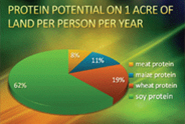
Moreover, programmes that focus on protein nutrition are usually focused on livestock and fish. To provide the amount of protein needed by the majority of Myanmar’s population of 60 million, simply increasing the meat supply will prove to be unsustainable. The input to output ratio are poor. Most of what a cow or pig consumes is to sustain itself and livestock require land that could be used to cultivate soy (refer to pie chart) and they produce waste that can contaminate the water supply.

Also, many of Myanmar’s Buddhists are vegetarians, at least for the period of Lent from April to September. Soy is the best vegetable source of protein (and better than most meats) for providing all the essential amino acids required for human health (refer to chart).

My experience in the Myanmar soy industry over the past several years has also revealed that there is great cause for optimism for the future of the soy industry and that Myanmar might become the ASEAN Brazil of soy production. The latest statistics show that 316,000 hectares are being used to cultivate soya bean in Myanmar, up from about 114,000 hectares in 2000 to 2001. This is phenomenal growth with minimal investment and incentives. Current yields are at about 16 bushels per acre and harvest losses are as high as 45 percent due to a lack of technology and other inputs, but with an intentional investment strategy, better inputs, training and other incentives, Myanmar could rapidly transform itself from a net importer of value added soy foods to a net exporter, not only of high quality raw soya bean, but also a diversity of innovative value added products, as well as a bustling domestic consumer of all things soy. The Myanmar ministry of agriculture is showing signs of a growing interest in developing its soy cultivation and there was great support from our contacts for this research.

Moreover, growers are showing tremendous resilience to market forces and deep desire to improve their yields through improved inputs. Growers associations and middlemen are tenacious in their desire to improve their ability to compete with Thai and Chinese growers and to develop new markets and uses for soy. Entrepreneurs across the country are researching and innovating and trying out new products (such as the made in Myanmar Vitagoat soy milk processing machine) and markets for domestic use. Our assertion is that, if even a small portion of the investment that is put into rice were put into the soy industry, we could create an agricultural and market revolution that will positively and significantly impact GDP and create food security, sustainability, livelihoods and environmental benefits.

Major Stakeholders

Over the past several years, I have interviewed people from the ministry of agriculture, educators at the University of Agriculture, food processing engineers, growers associations in four states and divisions (including Shan and Irrawaddy), growers, middlemen, merchants, NGOs and consumers. One thing we discovered that was clear and univocal was that Myanmar must strengthen its soy industry through investment and technological input, as well as through education and marketing. Every single stakeholder along the value chain and in the academic forum believed that it can be done and that it can be exceedingly successful and beneficial to the nation as a whole.


No More Privacy

Thursday the 13th February will go down in history as the day that the EU and the Organisation for Economic Cooperation and Development (OECD) struck a deal to openly report to each other on your worldwide assets, including all bank accounts, investments, trusts and pensions, etc. The privacy and data protection laws will be waived in almost all cases, in which you will have no say, by the way.

This landmark agreement goes in front of the G20 finance ministers in September of this year for their further agreement and ratification.

If the G20 agrees, then the global nonG20 countries, such as Hong Kong, will concur and comply, as is normal in these matters.

What this means is that, for example, Inland Revenue in the UK do not need your permission to see what’s in your overseas bank accounts, trusts, companies, etc.

We have already seen something similar with the onset of FATCA (Foreign Accounts Tax Compliance Agreements), where information should be reported to Inland Revenue in some cases, but not necessarily on all assets.

This new Auto Information Exchange Agreement (AIEA) is quite odd, given that Canada, Hong Kong, the US and the UK only just reinforced their privacy laws. Don’t you find that quite contrary?

To understand this, we have Mr. Snowden to thank, after his revelations of the nefarious activities of certain “national security agencies”, so the strengthening of privacy laws is perhaps just a political action. However, the ability to breach these privacy laws has at the same time been waived.

How, though, will this new international snooping agreement be implemented? The answer is in the agreement. All 11 pages of it.

It simply says that if a country’s financial regulator asks a bank or financial institution (even a trust) what value and what precisely is owned by you, that institution will be obliged by law to hand over the information to the local regulator.

Then what happens is that the regulator will store that information on a database, so that if a foreign government simply requested that information, then it can and will be readily handed over without your permission. No questions allowed about that bit, and that’s the whole intent of this new s/b AIEA.

If I was a betting man, and I am, I would take a wild guess at what’s going to happen next, which possibly will be the implementation of a US style global taxation strategy coming from the OECD countries and the G20.

This last bit is a natural extension of the s/b AIEA, it would seem.

When does the s/b AIEA come into force? Possibly at the end of 2015. It’s going to be a tough task administratively, but be certain that it’s going to happen.

The “Under The Mattress Banking Corporation” may be launched soon after this.


What’s Happening with the Myitsone Dam

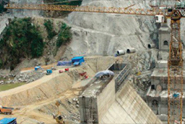
The stalled US$3.6 billion Myitsone Dam saga has left the area in a state of limbo.

Local residents are still in a determined mood to have the project completely shut down in a bid to save their local environment, but the dams Chinese developers are equally determined to have their project restarted. They reportedly lost US$50 million while the project was closed down last year. The project, started in 2011, is still only five percent completed and the continued delays are causing a great deal of tension between the two governments.

It is also fuelling a hot tempered power play between President Thein Sein and opposition leader Aung San Suu Kyi. The government is adamant that the project will not be restarted, but also refuses to totally cancel it. This has prompted the opposition leader to accuse the government of being negligent in its responsibilities to the nation and “not being brave enough” to make a decision on the project. When asked her own views on the project, she  declined, just saying “Questions about the project should only be asked to the president”.

The dam’s developer is the state owned China Power Investment, and they believe the dam would greatly improve the quality of life by bringing hydropower to the nation and at the same time bring in US$54 billion in tax payments. Last December, the company made a statement in its CSR report saying that the project would not cause major environmental damage. It would also create in the region of 40,000 local jobs.

Local residents are quoted as saying that the dam would take away fertile farming lands in this predominantly agricultural community. Also, at least 90 percent of the electricity produced would be channeled to China’s Yunan state.

China Power Investment’s managing director, Mr Li Guanghua, was quoted as saying, “We have worked on hydropower projects in 12 countries… but have never faced anything like we have in Myanmar. Without electricity, there can be no development or international investment.”


Pinching Pennies, Losing Pounds

Serviced offices get a bad rap. They are perceived as “expensive”. In terms of sticker price, this can certainly appear true, but what does sticker price actually tell us? Oftentimes, something that appears quite cheap is, in fact, cheap. That is to say, it is the dictionary definition of cheap, which means “inexpensive because of inferior quality”.

The truth is, one must consider the “opportunity cost” of an office. Opportunity cost is a powerful economic concept, and it’s particularly useful when considering the headaches associated with searching for an office in Yangon these days. A multinational company representative in Myanmar should not pinch pennies if it means losing dollars. If your time is valuable (and if you’re a foreign executive officer for a multinational corporation your time is definitely – even quantifiably – valuable) then it does not make sense to spend that valuable time scouring the streets of Yangon for a print shop or trying to evaluate which mediocre internet router is better than the next. It also doesn’t make sense to be working up in Hledan when half your meetings are downtown and you are attending events at the Traders and the Strand Hotel on a weekly basis.

So, do the maths and conservatively estimate your time per day. Even for a professional with a modest salary, wasting five to ten hours a week on common office dilemmas can easily add up to thousands of dollars per month in wasted opportunity costs for you alone and, of course, it’s likely not just you but wasted time for your colleagues and staff, as well.

This wasted time will take many forms, but all forms can be similarly headache inducing: hours searching for a reliable neighbourhood copy shop, calling your landlord to fix a toilet or door or your leaky ceiling, extra time spent in traffic for the “cheaper” uptown location, leaving to go to a hotel when your electricity fails, and any number of other common inconveniences. When you decide to run your office yourself… well, you have to spend a lot of your time concerning yourself with the mundane mélange of additional office stress. (Compounded severely in Yangon by issues related to traffic, electricity and communications).

At a business and serviced office centre, your office is yours to experience, not to manage. Indeed, just as most things in life these days rely on the logic of specialisation, shouldn’t office management be allocated to professional office managers? This can be particularly useful in an environment like Yangon.

I confess. I spent my first 3 months in Myanmar blindly searching for a decent place to make colour photocopies. My embarrassment was only outdone by my frustration. Place after place presented issue after issue. Language, of course, was the biggest problem. After that was quality, followed by problems with consistency. When I finally found a copy shop that I liked, electricity was an issue. I needed 250 colour photocopies for an important event the following day, but the power was out at my preferred copy shop and I had to seek out yet another place.

Business centres are also designed to maximise the value of shared spaces. In a business centre, a client has access to their own office, as well as access to shared spaces, such as a lounge area, kitchen and pantry area, a coffee machine, a reception and conference and meeting rooms. When several businesses share facility space and service costs, they are able to engage in new types of business that would not be possible if they were operating out of different offices. For instance, some business centres offer messenger services. This is something that can be a big time saver, but it is also an activity that would often be uneconomic for a business to engage by itself on a fulltime basis.

In Yangon, the serviced office market has seen a few new entrants over the last year. Responding to complaints about the lack of short term leases for Grade A office space, a few companies piled into this market. Everyone seems to know Sakura – a prominent location and one of Myanmar’s tallest buildings. UBC and Centrepoint are not quite serviced offices, but they offer Grade A accommodations with some services provided.

Hintha Business Centres in the central business district of downtown is an example a fully serviced, professional office facility with options ranging from individual “hot desk” space to a private office suitable for a staff of a dozen. Hintha’s primary approach is to offer comprehensive professional services and short term leasing options. This ability to “plug & play” allows clients the flexibility to start working immediately.

Latest Videos

Interview with Alison Fox Principal of The British School Yangon

Interview with Alison Fox Principal of The British School Yangon

Recent Posts