Home Blog Page 240

Getting wet in Myanmar during Thingyan

Thingyan is the Myanmar New Year, the highlight of which for many is often the famous Water Festival that will sweep through Myanmar like a wave from April 13th to 16th this year.

If you’re a tourist who wants to know what the new and democratic Myanmar is all about and you’re lucky enough to be here during the week of April 13th, then the trip will be worth your while. If you are lucky enough to live here, well then, you already know amazing the Festival is. Get ready to bravely charge off onto Yangon’s frenetic streets to face the inevitable and relentless drenching. Don’t forget to pack dry clothes in a plastic bag inside your knapsack or bag, if you happen to dislike fun.

A Spiritual Experience

In Myanmar tradition, one has to welcome Thingyan clean in both body and mind. Sprinkling water on other people is intended to wash away one’s sins of the previous year.

The Water Festival originated in the traditional Burmese custom of bidding farewell to the old year and greeting the new. Traditionally, Thingyan involves the sprinkling of scented water in a silver bowl using sprigs of thabyaya (an evergreen tree). This scented water was sprinkled to cleanse friends and family members while the Buddhist god, Thangya Min, came to earth to grade each person’s life over the past year. This tradition remains strong in rural areas today.

Among Myanmar’s 12 festivals, the Thingyan Water Festival is considered the grandest, as it is believed to bring peace and prosperity. The Water Festival starts on day one (April 13th this year), with the first day of Thingyan being known as “A Kyo Nei”. It is a marvellous celebration marked by religious activities across the country as Buddhists renew their faith by vowing to uphold the tenets of their beliefs.

Monks are lavished with offerings and alms. A particular offering is a green coconut decorated with bunches of green bananas and sprigs of thabyay that is placed before an image of the Buddha and sprinkled with scented water.

The evenings bring music, song and dance in anticipation of the Festival the next day. Pavilions or stages called “pandal” are built in cities and towns and it is from these water throwing pandal that people splash water on each other and passersby during the Festival.

The water throwing pandals in cities like Yangon, Mandalay and Nay Pyi Taw also have modern sound and lighting systems, as well as CCTV systems for security. DJs keep the party going with music and rapping. Pandals are expensive to build and are mostly built by the more affluent, by private businesses and by the government.

In 2013, the Mayor of Yangon’s pandal was the largest in the city. It drew large crowds of merry makers and was the stage for a wide variety of performances presented by dance troupes, musicians and comedians.

Crowds of revellers do the rounds of the pandals, some making their own music as they go. Most of the women wear fragrant thanaka on their faces and padauk flowers in their hair. Thanaka is a yellowish white paste made from the ground bark of several trees. It is used as a sunblock and is usually spread across a girl’s cheeks. Padauk is a tree whose sweet scented yellow flowers bloom only one day each year, during Thingyan. Because of this uniqueness, the padauk flower is popularly called the “Thingyan Flower.”

Get Ready

Thingyan really begins on A Kya Nei; a cannon is fired and people with pots of water and sprigs of the thabyay flower pour the water onto the ground while saying prayers. Unlimited water throwing does not begin in earnest until A Kya Nei in most of Myanmar.

In the major cities and towns, people shrug off everyday conventions and begin splashing and spraying everyone in sight. That the Festival remains a peaceful celebration is a tribute to Myanmar’s respect for traditions and the powerful influence of Buddhism.

Opening the floodgates of the Water Festival also unleashes three full days of partying along streets inundated with torrents of water. In major cities, partygoers use garden hoses, bamboo water cannons, water pistols, water bombs, plastic spray bottles, buckets and whatever else will hold water to throw at their fellow man. However, there are unwritten rules: everybody’s fair game, except monks and clearly pregnant women.

The partying continues into the third day, called A Kyat Nei. Atop the pandals, young women sing and dance under a shower of water and disco lights. They stomp their feet on the wooden floors to the hammering of music, both Myanmar and Western. The young men, when not joining the ladies frolicking on the pandals, do their thing on car roofs or anywhere else they may find themselves. The centre of all this chaos in Yangon has traditionally been Inya Road.

This “madness” ceases on the fourth day, which is Thingyan, or New Year’s Day, which will fall on April 17th this year. New Year’s Day is the ideal time for people of Myanmar to visit elders and pay obeisance by gadaw, a tradition in which a person, always of lower social standing, pays respect or homage to a person of higher standing. Young people wash the hair of the elderly.

People make New Year’s resolutions and continue with the tradition of releasing fish, saying a prayer and making a wish: “I release you once, you release me ten times”. They also make food donations called satuditha.

In various part of Asia, it’s a choice between partying amid gunpowder explosions or partying amid exploding water bombs. I’d prefer to get wet, wouldn’t you?

One on One with U Maw Than

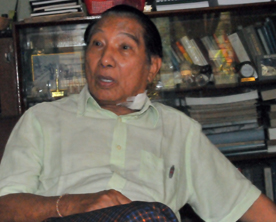
Name: U Maw Than

Age: 75

Positions held: Director (Central Bank of Myanmar), Member (Tax Board), Member (Myanmar Accountancy Council)

Profession: Academic – Accounting, Finance and Management.

The Myanmar Insider: You have held various positions in both public and private sectors over many years. Could you summarise the various portfolios that you have held until now?

U Maw Than: After my graduation in March, 1960, I joined my family company, owned by my father and a few associates. I worked there for three years. It was called Mone Man Corporation Ltd; “Mone Man” referring to Mon Ywar and Mandalay, two of the biggest cities in Upper Burma. It was located in Pabedan, Yangon, and after the military coup in 1962, they began to nationalise the private companies and we liquidated the company. Soon after, I joined U Hla Tun (at that time known as Allen Charlesworth & Co, Chartered and Registered Accountants) in 1963 as a trainee. I completed the articleship programme in 1966. In 1967, I joined the People’s Pearl and Fisheries Board, under the Ministry of Agriculture and Forestry. I was with the board until December, 1972 – for five years. I was selected in the state scholar programme and transferred to the Ministry of Education. I was sent to study at Aston Business School in England. I did my research there, first completing my MBA and then Master of Philosophy. I came back to Burma in 1977. From 1977 until December 2000, I was with the Yangon Institute of Economics – for nearly 23 years. From 1977 to 1985, I was an assistant lecturer at the Department of Commerce. I became a lecturer in 1985, associate professor in 1992, professor in 1994 and rector in 1996. I have been on the board of the Myanmar Accountancy Council (MAC) as professor and rector of the Institute of Economics. I was asked to join the Board of Directors of the Central Bank of Myanmar (CBM) in 2013. After I retired, in addition to participating actively on these boards, I also lecture during my spare time. I currently lecture at one of the private schools, specialising in ACCA subjects at professional level. I also give some of the continuing professional education (CPE) seminars at the Myanmar Institute of Certified Public Accountants (MICPA). Actually, I have to thank these teaching assignments, as they have kept me updated on current issues in the accounting world.

MI: One of your key positions is Tax Advisor to the present government, through the Tax Board. Could you elaborate on key challenges that the country is facing now, in terms of taxation concerns?

MT: The main issue here is the tax to GDP ratio. In Myanmar, our ratio is around four percent. This is extremely low compared with 25 to 30 percent for the United States and around 16 percent for ASEAN countries. Our tax revenues are extremely low. Behind the issue is the enforcement action. Tax officers have to enforce the tax laws to ensure the efficiency of collection. Just like in every civilised society, everyone has to contribute their own fair share of taxes.

MI: Can you summarise the tax system and the types of taxes in Myanmar?

MT: In Myanmar, most taxes are handled by Inland Revenue; taxes, such as income tax, commercial tax, custom duties and lottery taxes. Others are levied by respective ministries in the form of indirect taxes, for example, road tax, etc. Income tax is, in turn, grouped into seven categories: salary; professional earnings; business; properties; capital gains; other sources; and undisclosed income. Income tax system wise, taxable income here is assessed on a prior year basis. The income tax is naturally progressive, whereas commercial tax is proportional. As recently reported in the news, there are about 10,000 companies that do not pay tax. What structural and policy changes would you recommend in order to restore the country’s tax system deficiency? It is a question of enforcement of the tax law. I would advise Inland Revenue to focus on these 10,000 companies and carry out detailed investigations and take action. Enforcement officers must understand tax laws thoroughly, and rules and regulations for enforcement.

MI: How does the new system go hand in hand with the investment law as far as foreign investors are concerned?

MT: Foreign investment law provides lots of tax exemptions and tax holidays for companies. I am a bit concerned that companies will transfer their operations into another new company or set up – even liquidate – once the tax benefits expire.

MI: What are the main policies that the government has changed or adapted to accommodate Myanmar’s new trends and its opening up to international markets?

MT: Our government has started economic zones and a lot of infrastructure works, especially roads, bridges and telecommunications infrastructure upgrades. Now, more sectors are open to foreign participation. They are also emphasising the increase in power supply to businesses. The government realised that, once the businesses prosper, tax revenues will go up.

MI: As far as personal income tax is concerned, will there be significant changes going forward?

MT: The current income tax threshold is pretty low. Salary earners have to start paying tax once they earn 120,000 kyats (around US$120) per month. The rate ranges from one percent to a maximum of 20 percent.

MI: As one of the Board of Directors at the CBM, what are your main duties?

MT: At the CBM, our objective is the control of inflation and exchange rate stabilisation. Since we’ve had the free float of the kyat, we have been trying to keep the inflation and exchange rates stable through monetary policy tools.

MI: What is your view on the CBM maintaining a high interest rate regime?

MT: The Myanmar interest rate is spread eight to 13 percent. The main purpose of maintaining the high rates is to control inflation. If the interest rates are lower than inflation, there will not be incentives for capital accumulation and lesser demand for the kyat. We cannot have out of control inflation for the sake of stability of the country and the financial system. I must let you know that the informal rates are even higher.

MI: You are a significant figure in the Myanmar accounting world. What are the present changes in Myanmar accounting standards that will close the gap of local standards versus IFRS?

MT: The MAC has already adopted IAS/IFRS (International Accounting Standards/International Financial Reporting Standards) since 2010. The MICPA has also been providing CPE training seminars for existing CPAs. The MAC also requires companies to adopt IAS/IFRS. We are in the midst of structuring Myanmar tax and Myanmar company law exams for Myanmar nationals who’ve graduated from overseas to become CPAs here.

MI: With the influx of foreign investors, the demand for well qualified accountants will increase. Could our present education syllabus on both taxation and accounting standards fulfill the international standard requirements?

MT: Our immediate response is the MAC inviting applications to join our CPA programme on a wider basis. Initially, it is targeted at previous Yangon Institute of Economics (YIE) fresh commerce graduates. Holders of Accounting Diplomas from the MAC are admitted to the programme since two to three years ago. For the current year, we already have close to 780 applicants. We will exercise quality control through exams. For the medium term, we would like to update the syllabus of the YIE. One of the MAC members is a professor from the YIE, so we expect to get good cooperation on that. The MAC would keep abreast of developments of the IASB (International Accounting Standards Board).

MI: The Myanmar Stock Exchange is launching in early 2015. In order to qualify for the IPO application, what are the criteria that companies must possess, in your opinion?

MT: First, we need the authorities to change the Companies Act to include corporate governance or adopt a code of corporate governance in Myanmar. We need a strong corporate governance regime here. Companies have to abide by that. We can adopt a rule based on SOX or principles based on the Combined Code; I personally prefer the latter. Every company these days is turning themselves into public companies, trying to issue shares to an unsuspecting public. They seem to just make up 50 percent of the shareholder requirements with their own friends and relatives to become a public company

MI: Public awareness of risk and reward when investing in public companies is minimal. What is being done to address this issue?

MT: Listing criteria will be needed to go public soon. They will then know these requirements and trust can be developed. The public need to be aware of requirements, such as the minimum percentage to be held by the public, the percentage of independent directors within the board, etc. For the time being, the public need to be aware of listed public companies versus just public companies.

MI: How do you feel that foreign companies now entering into business here will affect the local workforce?

MT: If the foreign entity is an MIC (Myanmar Investment Commission) approved entity, then FDI law specifies the local employee must have a certain percentage of local staff; yes, they will be a boost to the local employment scene. In essence, our local staff will become better and more efficient, through practical experiences, transfer of management skills and knowhow.

MI: From a country development standpoint, in your area of expertise, what do you see as being the biggest challenges facing the current government in the next one to three years?

MT: At the policy level, I believe the government has taken and is currently taking all good and appropriate measures. The main challenge would be the changing of the mindset of the people, especially civil servants, from being used to just carrying out orders or what is being asked to do, to taking the initiative. Currently there is little or no initiative at the corporate staff or civil service level. For example, putting up for approval or needing to inform management where it is within one’s authority to decide. Maybe we are facing a crisis of confidence. As a result of this, we ended up forming committee after committee in parliament, with the prospect of no one being held responsible or accountable.

MI: How do you see Myanmar comparing with its Asian neighbours in the short and long term future?

MT: I am an optimist. Myanmar people are generally smart and resourceful. They also learn fast. With proper use of our natural resources, even if we are behind in the short run, we will catch up with our neighbours fast, assuming our government continues the current open door pathway.

MI: What would your advice to the generation of young people in Myanmar on their future, and what can they do to help to build and develop the country?

M T: We need them to correct the weaknesses and mistakes of older generations. People of our generation were neither bold nor daring enough. “Generation Y” people, because of their exposure, generally have more confidence. They need to keep abreast of digital technology and language. Expose yourself to foreigners and do not be afraid to venture out and take risks.


Temples of the World

Long before the country opened up, the world was privy to images of the Myanmar of old. Perhaps some of the most iconic of these images were the fields full of temples that stretched to the horizon or the statues of the Buddha that so many now come to see. Buddhism has spread around the world and many countries, including western countries and all throughout Asia, have their own versions of statues and temples. As is often the case, such tributes are astounding works of art, and here are but a few of the most recognised in the world.

Wat Arun – Bangkok, Thailand

Found on the Chao Phraya River, Wat Arun, meaning “Temple of Dawn”, is one of the oldest and certainly one of the more famous landmarks in Thailand. Despite its name, the best views of the temple – an architectural representation of Mount Meru, the centre of the Buddhist universe – are to be found in the evening with the setting sun as its backdrop.

Pha That Luang – Vientiane, Loas

Built in the 16th century over the ruins of a former Khmer temple, Pha That Luang, which means “Great Stupa in Lao”, is probably the single most important monument in the entire country. The stupa features several terraces, each level representing a different stage of Buddhist enlightenment; the material world being the lowest level and the highest level the world of nothingness. In 1828, a Siamese invasion led to the destruction of the temple, which was later rebuilt in 1931 by the French.

Borobudur – Java, Indonesia

Taking some 75 years to complete and found 25 miles northwest of Yogyakarta, this is the largest and most famous Buddhist temple in the world. Construction of the Borobudur, which began in the 8th and 9th centuries in what was then the kingdom of Sailendra, required an estimated 2 million blocks of stone. Abandoned in the 14th century for reasons that are still unknown, it lay hidden in the jungle under layers of volcanic ash for centuries.

Jokhang – Lhasa, Tibet

Attracting thousands of pilgrims each year, the Jokhang Temple is the most significant sacred site in Tibetan Buddhism. The temple was built in the 7th century by King Songtsän Gampo and it survived many an onslaught by the hostile Mongols. Today, the entire complex covers an area of around 25,000 square metres.

Haeinsa Temple – Hapcheon-gu South Korea

First built in 802 (and later rebuilt in the 19th century after a fire in 1817) Haeinsa, which means “Temple of Reflection on a Smooth Sea”, is one of the most revered Buddhist icons in South Korea. The temple’s greatest surviving treasure is a complete copy of Buddhist scriptures (the Tripitaka Koreana) written on 81,258 woodblocks that remained intact despite the blaze.

A Unique Experience

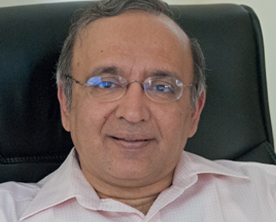
Name: Sunil Seth

Nationality: Indian

Age: 53

Company: Tata International

Position: Country Head

Profession: Mechanical Engineer and MBA.

Sunil has been with the Tata Group for more than 30 years, spending more than 28 of those years with Tata Steel. Sunil’s area of interest and expertise has been the marketing and sale of steel and international trading and he has spent fifty percent of his career working outside of India, having worked in Slovakia, Thailand, Singapore and now Myanmar. One of his main contributions to the Group includes the successful launch of the Tata Tiscon brand of reinforced steel bars in both India and Thailand.

The Myanmar Insider: When was the first time you visited Myanmar?

Sunil Seth: I visited Myanmar first when I was posted in Singapore. It was in 1996 while I was working as a regional manager for exports. I was looking into exporting steel bars to Myanmar at that time from India, Russia and Turkey.

MI: What was your experience of the country like back then?

SS: The market had not evolved as yet compared to other ASEAN markets, even though it had its own unique characteristics, even way back in 1996. I noticed significant limitations in banking facilities and a lack of awareness on quality. At the same time, businessmen were very open to engaging with the outside world. They did bargain hard, but once the terms were agreed, they would honour the contracts. I also experienced difficulties in shipping to Yangon port, as the port was very congested in those days.

MI: What are your impressions of the country now, and what do you see in its future?

SS: During my visit in 2011, I was pleasantly surprised by the improvement of internet facilities, mobile phones and roaming facilities. Of course, now the access is even better. I eventually took the position of Country Head for Tata International on the 1st of January, 2013.

I saw a huge increase in the number of cars on roads in Yangon and an improved banking system; the currency has been floated. Myanmar has very good potential; its demographics are extremely favourable: it has a hardworking, intelligent and adaptive young population. Myanmar people are fast learners and they are very comfortable with technology. In addition, the country is blessed with natural resources and a strategic geographical location. We just need patience, perseverance and time to develop relationships and trust here.

MI: How did you end up stationed full time in Myanmar?

SS: The Tata Group has been looking for opportunities in Myanmar for a while. Tata Motors has built an assembly plant in Magwe Division in partnership with the Ministry of Industry. With my regional experience within ASEAN, I was selected to be the country head for Myanmar, having, as I said earlier, worked for Tata Steel in Singapore and Thailand. I personally wanted to develop other businesses for the Group besides steel.

MI: How does working in Myanmar under the present business climate compare with other Asian countries?

SS: It has been a unique experience for me. The facilities that you take for granted in other countries are not easily available here, for example, proper infrastructure, domestic travelling, power supply and banking facilities. So, one has to be adaptive and flexible to do business in these circumstances.

MI: What, if any, are the challenges with the local workforce? If there is a problem, what would your solution be?

SS: The younger generation is hard working and sincere. Of course, we do need them to be exposed to best practices from around the world. They are fast learners, so given proper training, investment and time, they will come up really fast. Being able to understand English well and to be able to speak it is also a plus, in addition to being technology savvy. The short comings would be the lack of awareness in the concept of loyalty and a lack of initiative. They are good at implementation, but they will wait until the boss tells them what to do.

MI: What does doing business in Myanmar now offer most for your company?

SS: We have many SBUs (strategic business units) within the Tata Group: steel, power, construction, housing, trading, hotels, chemicals, agro and automotive. Each SBU sees an opportunity in Myanmar. Myanmar needs good infrastructure, good hotels, agro investments and reliable trading partners.

MI: Which sectors do you believe offer the most in terms of business opportunities in Myanmar, and why?

SS: My first choice would be power generation. Only 26 percent of the country’s population has access to power. Next would be infrastructure development; the country still needs lots of bridges, roads and housing. The third would be agro business. Under the brand Rallis India, we produce the “cides” (insecticides, fungicides, pesticides, etc.), food nutrients and seeds. We want to market our products, increase productivity and yields and buy back the agro produce for exports.

MI: What effect do you think the sudden influx of foreign companies/nationals will have on the country and its people/culture?

SS: I see this from a positive viewpoint. The foreign companies would offer excellent job opportunities. One of the important side effects of this would be getting an upgrade of workers’ skills and knowledge, either through their own efforts or the company’s training programmes. Local workers will also experience international best practices being deployed here by multinationals. There will also be competition amongst local staff to get the best jobs.

MI: If anything could be introduced quickly – say over the next six months – to improve doing business here, what measure(s) would you implement? Conversely, what long term changes are key to development that need to be implemented now?

SS: I believe government needs to prioritise and focus. They have to understand that they cannot do all the improvements that they want to do at the same time, so it is best to prioritise things, such as infrastructure development, and stay focused on these. Also, the government can help shorten the lead time to get projects approved and implemented, for example, having a standard Power Purchase Agreement in place quickly as an example for power sector development. Another important thing would be clearly stated and unambiguous laws and regulations. A number of foreign investors are hesitant to invest because of non clarity of the legal framework.

MI: Are there any other risks that you see for the economy?

SS: Myanmar is currently getting a lot of attention from the global community. Global organizations, such as the World Bank, the Asian Development .


What is Chinlone?

The Game

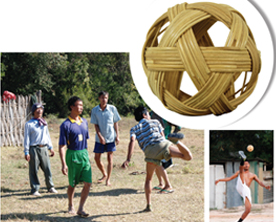
If you have spent any time in Myanmar, you would probably have seen the usual looking combination of sport and dance known locally as Chinlone, which means “rounded basket”. The sport is said to be over 1,500-years old and was once played by Burmese kings.

Known as “caneball” in English, this essentially non competitive game with no opposing team has no focus on winning or losing, but simply on the manner in which the game is played. You don’t hear that very often in the world of professional sport. Over 200 different methods of contacting the ball have been developed since the game was first invented, some of the most difficult of which are performed “blind” with the ball behind your back.

The game consists of one team of six players who play a version of “keepy uppy” as they pass a woven rattan ball (the distinctive sound made by the ball as it is passed around adds to the aesthetic of the game) around in a circle (typically 22 feet in diameter) using their heads, knees and feet. One player stands in the middle of the circle to perform a solo; various moves reminiscent of dance are combined as the soloist is supported by those in the outer circle. Play stops once the ball has touched the ground before starting again as a new round.

Played barefoot or in specialised shoes on dry, hard dirt (ideally, but any surface will suffice), players use six main points of contact with the ball: the top of the toes; the sole of the foot; the instep and outstep of the foot; the heel; and the knee. Of primary importance in chinlone isform, referring to the correct manner in which the hands, arms, upper body and head should be positioned.

The intensely focused state of mind, said to be similar to that achieved in a Zen state of meditation and which is referred to as “jhana”, is known to be key to a successful performance.

Cultural Importance

Chinlone games play a major part in the country’s almost countless Buddhist festivals each year, the largest of which goes on for a month and features thousands of teams vying for perfect performance of form. Live bands play traditional Burmese music that inspires the players and even shapes the style and rhythm of their play; the game is played in time with the music and the instruments accent the moves.

Played amongst both Myanmar men and women, it’s not uncommon to see ladies and gentlemen in their 80s practicing their form. A solo variety of chinlone called “tapandaing” is  not uncommon, but the variant is only played by women.

Origins

The origins of chinlone are thought to be traced to the ancient Chinese game of “tsu chu”, acknowledged by FIFA (football’s world governing body) as being the oldest form of football in recorded history. Similar games are played throughout the region with different styles, rules and balls. There is evidence to suggest that such games traversed the Bering Straits and were adopted by Native Americans, and they are also thought to be the origin of the popular hacky sack style games.

Form takes years to reach the level that is being played at the top of the sport but, as they say, you never know what you can do until you try. It looks difficult and you have probably never even attempted to play anything similar, but that is no excuse for not trying the sport now that you are in Myanmar.

Artist Profile – Phyoe Kyi

One of a handful of artists creating superb digital artworks in a tech challenged Myanmar, Phyoe Kyi believes that “various kinds of works may change according to the development of information technology”. What to expect from young artists throughout Myanmar is difficult to say. In the mean time, Phyoe Kyi continues to inspire with his keen sense of the contemporary in Myanmar art.

Formerly a painter at the University of Arts and Culture, he soon abandoned the medium. It could not contain all that he wanted to achieve. In an interview, he described his introduction to the digital world of art in five processes; five life determining moments in a young boy’s artistic life.

The first process describes a small boy drawing vigorously by candlelight and, as the light fades, his coloured pencils emulate the hues of the yellow flame. When he wakes up in the morning, he is sad because the colours seem “out of place”. The second process introduces electrical lighting in the boy’s home, and he is happy because he “feels free to draw until midnight”. In process three, he meets digital art at a friend’s house, who “paints” on a monitor screen. In the same week he goes to purchase a computer. Processes four and five see the boy become a man, and reinvent his life in colour. He also experiments with other mediums, such as performance. Finally, he uses a phone camcorder to create an animated short film. Years later, he would design a museum – the Mingun Museum of Contemporary Art. A fictional, digital wonderland, it holds artworks designed by Phyoe Kyi. It is revolutionary in its scale and approach to art making in Myanmar.

An artist’s influences are not easily described, but Phyoe Kyi’s short story takes memories of life and colour, to a living artist’s process of discovery for the seemingly endless opportunities the digital medium has to offer. Though he admits there are challenges to digital work, like the threat of copyright infringement or the difficulty in marketing the work, he continues to favour it over all others and uses it whenever possible – paving the way for a generation of Myanmar artists to come, whose lives will surely be consumed by the global technology wave arriving in the country.

It is not only his expertise in digital work, but his willingness to experiment with more unfamiliar mediums. Once Upon A Time There Was Nothing is a performance art homage to the past, or perhaps a push to accept its truth and what it can teach us. Since 2004, he has realised the art piece four times, in four different locations (Mingun and Yangon in Myanmar, Fukuoka in Japan and, most recently, in Berlin, Germany). The essential elements of the performance entail Phyoe Kyi dressing as an ancient Burmese king who walks about, blowing bubbles and posing for pictures. Once Upon A Time implies a fairy tale, but one that is never perfect. Through his costume and movements, he questions the way we look at what has been before us.

The diversity of Phyoe Kyi’s last decade of work goes even deeper, with brilliantly colourful screen prints, impressive sculptures made of paper from his native Shan State and an endless collaborative effort to interact with spaces and the people in them. His childhood is a recurring theme, especially the relationship with his family. His self portraits send the viewer two opposing messages: one being that childhood is about innocence and freedom; the other that he was somehow neither free nor innocent, but longs for childhood nonetheless.

Of course, one could say that, since Phyoe Kyi is from Myanmar, his work relates to the volatile country in which he grew up. He has indeed approached the traumas of social isolationism, as well as increasing environmental damage. Perhaps more interesting is his being from Shan State, which also sets him apart from the rest. Without simplifying too much Phyoe Kyi’s intentions or inspirations, it is best to say that he clings to a human message. It is about family and inspiration, our pasts in opposition with our futures, and creating situations in order to rehabilitate ourselves through expression. A friend described Phyoe Kyi’s beliefs about art as such: “He believes art is easy, and should be easy… that everyone can make art.”


Climate Change

Conferences come and go with a whimper, the supporters and detractors in agreement about disappointing results. But, clearly ambitions must be raised significantly if we are to hold the world to 2 °C variation in global temperature.

While many fail to agree global targets for carbon dioxide (CO2) emissions, I see this as an opportunity to regain entrepreneurial impetus in the approaches to address climate change. Science remains divided on technologies and the effectiveness of mitigation measures. As a result, business that seeks to commit funding to climate change investments – bearing any returns and risks – are looking for guidance that is of relevance to their decisions. Unfortunately, such clarity from science is unlikely to be available – not now or in the foreseeable future. Such is the degree of uncertainty that technologies that may prove effective in the next few years have yet to be developed.

In the face of this uncertainty, what are the options for business?

I do not see this uncertainty as an excuse for business not to take action. In fact, I see in the various strands of renewable energy technologies (RETs) cause for optimism that a CO2 free future is within our grasp. However, the route to this future may not rely on governments agreeing to implement global CO2 reduction targets, provide generous cash and subsidies, or create national champions out of known RETs. The solutions are likely to be local and driven by entrepreneurial prowess, rather than bureaucratic diktat.

Global climate debates are distracted from their economic merits by neo-Malthusian views on resource scarcity. For me, the aberration of a failed conference gives space for entrepreneurial impetus to reassert itself. We only need to be reminded of Stanley Jevons’ 1865 paper on The Coal Question. Jevons argued that British industrial pre-eminence was doomed to decline, given that coal could only be mined at ever greater depths and spiraling costs that would “cripple industries dependent on it”. He boldly declared that “it is useless to think of substituting any other kind of fuel for coal”. Since 1865, British industrial pre-eminence, while eclipsed by the United States, remains in the company of prosperous nations. Coal ceded its predominance to technology and fuels that did not exist in 1865.

Copenhagen Accord The Copenhagen Accord is a non-binding letter of intent to avert the catastrophic consequences of climate change. The signatories agreed to take note of the following: a) to recognise a 2 0C threshold for global temperature variation by 2050; b) a review in 2015 for possible downward revision of the target to 1.5 0C; and c) to create a US$30 billion Copenhagen Green Climate Fund. The Fund attracted most attention with donor countries offering to increase the size to US$100 billion by 2020.

The Fund seeks to assist the most vulnerable developing countries to adapt and mitigate the effects of climate change. To monitor progress, recipient countries undertake to communicate efforts every two years on implementing measures to limit CO2 emissions.

Supporters of the Accord point out that Copenhagen was a major step forward, in spite of its disappointing results. In the first place, the United States is fully engaged – which is in contrast to its disinterested (if not hostile) stance in the past. With the inclusion of China, India, Brazil and other South America countries, any post-Kyoto Protocol (i.e. included only 30 percent of polluters) agreement potentially includes all the major polluters in the world.

Why the 2 0C solution… and its consequences?

The framing of the Accord on reducing CO2 emissions to limit temperature variation to 2 0C is part of the problem. Science is divided on the impact of temperature variation, much less on a precise estimate for 2050. For reasons unknown, political debate zeroed in on 2 0C as an objective. For people accustomed to seasonal temperature swings, a 2 0C variation is no big deal. However, to sustain such a range over a long term average temperature, the costs can be horrendously expensive.

To achieve the 2 0C target, existing technologies would rely on energy conservation and innovation in power generation efficiency to deliver CO2 reduction. However, as higher reduction targets are implemented, the cost of reducing emissions becomes progressively prohibitive.

political commitments notwithstanding, the diverging dynamics of national interests may have been underestimated, if not ignored. During the preparatory meeting in Barcelona, Spain, The Climate Group presented their findings on the impact on long term GDP and employment growth, based on a number of policy scenarios. For example, the European Union (EU) going it alone would gain the most in additional GDP and employment growth (i.e. compared to no action). What stops the European Union from going unilateral, however, is the potential pain inflicted on other countries, such as the United States, Japan, China, India and Mexico. In contrast, global coordinated action benefits all countries – with China gaining the most.

The rub in this analysis, however, is in the significant degrees of error. Thus, while directionally, the results give policy makers some guidance, the pain for inaction is insufficient for countries to take urgent actions. Thus, we are in a stalemate – while the benefits of coordinated actions appear attractive, inaction does not inflict harm, thereby allowing countries the luxury to take a “wait and see” stance. In fact, this is the position most countries took giving rise to a paradox – apparently strong political and consumer support failing to translate into policy actions.

Combine this with the heavy commitment for the early movers; rational decision makers are bound to keep their options open. That is, while there appears to be a consensus on the virtues of a cleaner environment, investors cannot put their faith on an outcome that is so uncertain and so far off in time and benefits.

An alternative approach – taxation and technology choices

Erik Rasmussen, founder of the Copenhagen Climate Council, may have identified a way for entrepreneurs to regain the impetus. Over the past two decades, the accelerating growth in renewable energy was because of a combination of generous public support and subsidies, where technological innovation quickens its pace with greater deployment. Thus, Rasmussen observes that “reducing the emissions that will now have been so linked to our economic growth and betterment will be an enormous, unprecedented global challenge, but will also provide significant opportunities for sustainable growth, green jobs, development and innovation”.

While the vision identifies the attractive opportunities, the remedies proposed are less visionary. The six point agenda proposed by business leaders can be summarised as follows: More incentives (i.e. subsidies, price support) to increase deployment of low emissions technology; more funding for communities to adapt and mitigate; and performance based monitoring of emissions reduction by business.

Subsidies and support for specific renewable energy technologies, under a rapidly changing technological environment, represent a high risk strategy. Our ability to predict which technologies will win – and deliver over the course of the next decade – is limited by existing science. In itself, science’s ability to predict technological changes that can meet future emissions reduction more effectively than present technologies is doubtful.

What gives entrepreneurial impetus to “green” opportunities? In my doctoral research at Cranfield, England, I came to the view that getting the price of competing technologies to RETs is where we need to start. Specifically, coal, oil and gas emit CO2, with power generation and transport accounting for significant parts of emissions. However, CO2 emissions are treated as externalities, because there is no easy way of pricing them. As a result, the politically expedient approach is to subsidise RETs, rather than price CO2 emissions in oil, coal and gas.

This approach results in pricing distortions that favour coal, oil and gas. With society paying for its CO2, hydrocarbon based power technologies and transport are favoured because they are seen, mistakenly, as the cost effective alternative. To realise Rasmussen’s visionary aspiration, pricing CO2 forms the critical mechanics to exercise technology choices between RETs and hydrocarbon technologies.

While future RETs evolution is uncertain, backing technological champions with subsidies based on what is known today can be shortsighted. This is, in fact, the equivalent of Jevon’s Malthusian stance. That is, by subsidising known RETs explicitly, government is making a choice as to which technology will deliver the results in a decade. Unfortunately, just like Jevon’s coal argument, a number of known RETs could be replaced by more advanced and cost effective technologies that are yet unknown today.

For this reason, I propose we start with what we aim to achieve with policy interventions.

There is sufficient political consensus that clean environment is what we as a society prefer to have. Whether we believe this as part of a crusade for global salvation, or plain and simple business opportunity, we can agree on this premise. In effect, what we want is a clean environment (as an objective) with reducing CO2 emissions as the means to achieve this. Seen in this context, the 2 0C solution may indeed appear to confuse the means with the objective.

To achieve this carbon-free future, we know what power and transport technologies contribute to CO2 emissions. Hence, by penalising through taxation and appropriate CO2 pricing, the appropriate costs of CO2 emissions become internalised. In the process, with hydrocarbon technologies no longer looking as “cheap”, innovations to replace them with RETs are given impetus. This is where the entrepreneurs come in to lend a hand in translating technological innovations into commercial opportunities.

An impossible dream? Banning Chlorofluorocarbons (CFCs) spurred the development of a viable alternative – not the subsidies to develop replacement technologies. So, how much in taxation do we need to add to hydrocarbon based technologies?

This is answered by comparing the “levelised” costs of energy, a method of estimating the comparable costs of different technologies. At an oil price of US$60/bbl, onshore wind operated in areas with high wind availability can compete with gas. Compared to coal, on a fully taxed basis (i.e. CO2 emissions), onshore wind is more competitive. Interestingly, hydro, geothermal and nuclear, all non CO2 emitting power generation technologies, are more cost competitive than gas and coal. The carbon tax (or cost) needed to achieve RETs grid parity is less than the marginal cost of carbon.

Contrary to the anti-tax arguments, RETs, such as wind power, can compete effectively by applying indicative prices for CO2 emissions associated with coal, oil and gas. Taxation has the virtues of being transparent, certain – and hits the wallet were it matters. For large scale users of hydrocarbon based energy, taxing CO2 represents an effective way of encouraging the search for alternative technologies and ways of generating CO2 free energy.

Now, we just need to find an agile politician to sell this proposition to their constituencies.

Public/private cooperation Official consensus is inclined to “socialise” funding through subsidies and in the guise of employment creation. Deploying wide ranging tools – subsidies, portfolio standards, feed in tariffs, green certificates, incentives and taxation – governments have mixed records in delivering on their CO2 reductions under the RETs deployment. In fact, poor policy hinders rather than facilities adaptation. Examine for instance:

US periodic setting portfolio standards for RETs led to a boom/bust cycle in investments, given that regulatory uncertainly hinders commitments by firms looking for certainty.

  1. Demand, costs and capex remain uncertain, notwithstanding the US government’s ability to regulate power tariffs. US tax incentives, applied from 1978 to 1985 failed to increase energy conservation investments, given continued uncertainty on benefits that vary with power tariffs, costs, demands and capex (Dixit and Pindyck, 1994) – what Jaffe and Stavins refer as the “energy paradox”.
  2. RETs declining capex and subsidies pose a dilemma on the merits of an “early movers” advantage that delays investments, unless generous subsidies (or threat of their removal) encourage an earlier exercise of investment options.

Government subsidies, however, when used with supportive transformational strategies by firms, facilitates technology diffusion. Spain and Germany’s transformation as global leaders are attributed to supportive regulation that firms use as a backdrop for developing their capabilities for RETs. In contrast, the UK’s uptake of renewal energy by utilities was less enthusiastic, in spite of a similarly supportive package of incentives.

Far from a need for global consensus to turn into a legally binding agreement, governments can play constructive roles by adapting policies that facilitates technology development and deployment. When one talks of aid and support, the mechanics for delivering such intervention is the local government –-not a globally binding agreement.

After all, the conferences failure may prove to be the entrepreneurs’ gain. With local governments pursuing policies that matter to them, working with the private sector, we may yet accelerate achieving a carbon-free future by applying the discipline of the market as opposed to “socialising” investments, as governments are inclined to do.



Will Google enter China?

Google

At Davos, Er ic S c hmidt, the current c hair man of Google, discussed how Google might be enter ing China, regard less of whether or not the Chinese go ver nment wants them to. Google have stated that the y could utilise encr y ption tec hnolog y to get around str ict censorship r ules that are in place in countr ies like China and Nor th Korea. The mere fact the option is being discussed means there is at least a slim c hance of the concept becoming a realit y.

In coming years, companies like Google might be able to enter into the Chinese market under what might be considered more “nor mal ” circumstances. Under the S hanghai Free Tr ade Z one project, Chinese author ities said that the Z one wil l e ventual l y have “open inter net ser vices”, impl y ing that Google would be available f or Chinese inter net users. Progress towards this end, howe ver, seems to be remo ving r ather slowly.

W hile the concept might seem like a pipe dream, the c hances of Google enter ing China o ver the next five to ten years are seen as high.

Baidu

As of this w r iting, Baidu is dominating the Chinese searc h engine market with more than 63 percent of the share. If, as expected, howe ver, Google enter the China market, it is widel y accepted that Baidu would go on to lose a consider able por tion of its current share. Moreo ver, it is likel y that the market wil l begin discounting the impact of suc h a venture bef ore it actual l y star ts.

Fol lowing on from a magnificent r al l y, it may wel l be the r ight time to star t taking profits on Baidu. The r isk and re ward payoff is far from as favour able as it was when Baidu was tr ading at half the f or ward P E r atio that it is now tr ading at. Based on valuation, Baidu is no longer considered to be attr active, so the possibilit y that Google could enter China could wel l be a major obstac le f or Baidu shares.

Shanghai out buys New york

Come on, New York, move over! Shanghai has now overtaken the Big Apple as the global centre of wealthy consumers who purchase high fashion and luxury labels, with the Chinese metropolis’ most fashionable residents far outspending their New York counterparts.

According to a Milan based study amongst luxury shoppers by digital direct marketing firm ContactLab, Shanghai’s shopaholics spent an average of US$1,000 on their last purchase – double that of the average New Yorker. In addition, four out of five Shanghai residents said they purchased at least one luxury item over the past 12 months. On top of that, 91 percent of luxury shoppers surveyed in Shanghai said they plan on spending a similar amount in the next six months, whereas only 77 percent of such New Yorkers said they would be splurging on high end goods. Moreover, Shanghai’s fashion conscious plan to shell out, on average, 66 percent more on luxury items than their New Yorker counterparts.

These numbers aren’t so surprising, considering that Morgan Stanley estimated Chinese travelers will top the list of luxury spenders by 2015, thanks to their expanding middle class. But, luxury sales still aren’t what they used to be. The state run newspaper Global Times cited a report from China’s Ministry of Commerce that said, in the first four days of the Spring Festival holiday, marked by the beginning of the Lunar New Year, consumer market sales for luxury goods took a hit. Sales of luxury items like expensive alcohol, rare seafood and leather goods, which are often exchanged as gifts to coworkers or friends during the holiday, fell sharply. In one pocket of malls in Fuzhou, the capital of the eastern coastal province of Fujian, luxury alcoholic beverage sales fell by 70 percent compared to the year prior during the first four days of the holiday.

The slowdown in luxury purchasing is attributed largely to the central government’s year old austerity drive. At the beginning of his presidency, Xi Jinping cut back on unnecessary spending on luxury items and services that are typically the province of senior Chinese officials. With luxury spending now somewhat taboo at home, many Chinese have just resorted to spending their wealth while overseas. With more and more Chinese heading overseas for schooling, business or holidays, their money is still often spent on luxury items. In fact, in New York, many of the upscale stores that dot Fifth Avenue are employing Chinese speaking people on sales floors. Separately, the ContactLab survey unearthed some other interesting differences between luxury shoppers in Shanghai and New York. “Fashion buying in China is closely linked to the display of one’s own spending capacity, while the New York consumers show greater affection for brands”.

MYANMAR’S RAILWAY – CONNECTING A NATION ( Part One of Two)

The state owned Myanmar Railways (MR) first came into being in 1896, when the British consolidated and combined all previous private railway construction and ownership into a single entity to form a state owned public undertaking, which from 1928 until 1989 was known as Burma Railways until the name was changed to the present Myanmar Railways. The network consists of a 1-metre gauge railway with main lines generally running north to south and branch lines from east to west.

Myanmar Railways Gateway

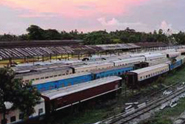
Located in downtown Yangon sits Myanmar’s largest railway station, Yangon Central; an imposing building that is the gateway to the Myanmar Railways network that currently consists of over 5,400 kilometres of track. The first Yangon Central Railway Station, built by the British in 1877, was destroyed in 1943 during WWII. The present structure was completed in 1954; its prominent feature is its indigenous multi tiered roofs (known as pyatthat). The station has been a designated landmark building since 1996. It was designed by prominent Myanmarese architect and engineer Sithu U Tin, who was renowned for fusing features of Myanmarese and Western elements. Yangon’s High School No.2 Dagon and Yangon City Hall are good examples of his work where he has used this design process.

Running through the station is a double track circular railway that encompasses Yangon. Operated by MR, the system comprises of a 39-station loop system covering 45.9 kilometres, which takes approximately 3 hours to complete. The circular railway has 200 carriages and its trains circle the city 22 times a day, connecting satellite towns and suburban areas to the central part of Yangon; between 100,000 to 150,000 tickets are sold daily.

An Unusual Tourist Attraction Looking out from a carriage window while travelling by train in Myanmar can be compared to watching a constant street theatre, providing views of every form and style of life, some of which have remained unchanged for many years. Amongst these glimpses of a bygone era that has disappeared in most countries is the spectacle of working steam locomotives; belching smoke, with hissing pistons beating out a rhythm as they push the huge driving wheels, these mechanical beasts driven by fire and steam still hold a fascination to many.

The sight of steam locomotives in a working environment, although not yet extinct, is becoming an ever increasing rarity throughout the world. In Myanmar there remain some 40 steam locomotives still in service, most of which are employed hauling freight. Despite the age of these locomotives, the MR engine works in the Yangon suburb of Insein keeps them running. The engineers at these works are experts in their trade; if a part on these ageing locomotives is broken beyond repair, their skill is such that they will fabricate a replacement in the workshop.

Repair and maintenance is an ongoing operation, and with three to four of these locomotives being completely overhauled each year, the future use of steam does not appear to be under immediate threat, enabling the country to continue providing a somewhat unusual tourist attraction, much to the pleasure of the many steam enthusiasts who come from all over the world. There are specialist companies in Myanmar who arrange tours to visit the Insein engine works and also negotiate with MR for the charter of steam locomotives for hauling special excursion trains for transporting these tourist groups from Yangon to various destinations across the country.

Out of Yangon The British first introduced rail transport to Myanmar in 1877, with the opening of 262 kilometres of track running northwest from Yangon to Pyay, a town on the Ayeyarwady (Irrawaddy) River, which was established by the British Irrawaddy Flotilla Company (IFC) as a transhipment point for cargo, mail and passengers (especially British soldiers) between Upper and Lower Burma. The IFC grew into the largest fleet of river boats in the world, with over 600 vessels carrying some 9-million passengers a year, and was indispensable for carrying supplies and heavy equipment to the oil fields up river at Chauk and Yenangyaung.

Kyaukpadaung Diversion Leaving Pyay, the line continues northwards through the river port town of Aunglan on the Ayeyarwady, afterwards calling at Kyaukpadaung, which is the main access point for Mount Popa, an extinct volcano a short distance from Taung Kalat, a sheer sided piece of volcanic rock that rises 737 metres above sea level. The Buddhist monastery at its summit can be reached by climbing a stairway consisting of 777 steps carved out of the rock. Due to the volcanic ash, the soil is extremely fertile, resulting in the surrounding area providing an ideal habitat for the proliferation of flowering plants, trees, shrubs and herbs; prominent amongst this fauna are Macaque monkeys, whose presence has become an additional tourist attraction, and Taung Kalat is now a designated nature reserve and national park.

Mount Popa is a solitary conical peak 1,518 metres above sea level, the inside contains a 610 metre wide caldera that drops to a depth of 914 metres so that the mountain, when viewed from different directions, appears to take different forms, giving the illusion of having more than one peak. Although Mount Popa is a tourist attraction, with numerous temples and religious relics, it is a significant place for Myanmarese pilgrims, many of whom walk the 16 kilometres from Kyaukpadaung to climb the mountain every year, particularly during lunar festivals and in April for the Myanmar New Year (Thingyan) festival.

There are many Myanmarese myths about the mountain stemming from ancient times, when it was believed that victory would be guaranteed to any army that assembled on its slopes. Today, by linking the cultural identification of life and prosperity with the mountain, that belief is translated to one of good luck and happiness, which can be achieved by such a visit. This exemplifies that Myanmarese people strongly retain ancient traditions in their daily life; they travel great distances to assure their good luck for the coming years by visiting Mount Popa, which hosts an immense festival on its summit during the annual Thingyan water festival that celebrates the Myanmar New Year.

Bagan

The train journey continues to Bagan on the banks of the Ayeyarwady River, where 800 year old temples and stupas stretch across a 42 square kilometre plain. King Anawratha unified the regions that would later constitute modern Myanmar under Theravāda Buddhism (the oldest surviving form and the closest to the earliest traditions of Buddhism, which today is still followed by 90 percent of Myanmar’s total population), making Bagan his central powerbase. From the 9th to the 13th centuries, it is estimated that 13,000 Buddhist temples, pagodas and stupas stood on the Bagan plains; Marco Polo described Bagan as “…a gilded city alive with tinkling bells and the swishing sound of monks robes.” In 1287, this golden age came to a close when the Kingdom was invaded and sacked by the Mongols, the monasteries were plundered, and its population was reduced to the size of a village that remained amongst the ruins of a once large city.

Approximately 2,200 temples and other religious buildings survived the Mongol onslaught and remain today, albeit in various states of disrepair; some of the larger temples are still well maintained, but a lot of the lesser religious buildings are overgrown with vegetation and have become tumbledown relics. However, all sites are considered sacred. The shape and construction of each is highly significant in Buddhism, with all components having a spiritual meaning. Being home to the largest and densest concentration of Buddhist temples, pagodas, stupas, relics and ruins in the world today, many of which date to the 11th and 12th centuries, Bagan remains unique.

From Bagan, the train travels to the Ayeyarwady River port of Myingyan, an important cotton trading centre with cotton ginning and spinning mill operations. It is also the head of a branch line that travels east, eventually connecting to Thazi, south of Mandalay. This branch line passes through Meiktila, which, due to its central strategic position, has a military air base that is home to the Myanmar Air Force Central Command, and also the Myanmar Aerospace Engineering University, making the city the country’s aeronautical engineering centre. After Myingyan, the journey ends upon the train’s arrival in Mandalay. Although this route that began in Yangon along the first railway track laid in Myanmar, it was another line out of Yangon that started seven years later that would be the first to reach Mandalay.

Latest Videos

Interview with Alison Fox Principal of The British School Yangon

Interview with Alison Fox Principal of The British School Yangon

Recent Posts