Home Blog Page 233

SME financing in Myanmar has a long way to go

S mall and medium enterprises (SME) in Myanmar face challenges common among emerging markets which in-clude access to market, labour supplies and technologies, regulation and taxation access to financing, infrastructure and corruption. These are some of the findings of the Myan-mar business survey conducted by Organisa-tion for Economic Cooperation and Develop-ment (OECD) and UN Economic and Social Commission for Asia and the Pacific (UNES-CAP) released last May 2014. The survey was carried out nationwide with participation from the Union of Myanmar Federation of Chamber of Commerce and Industry (UMF-CCI). It involved 3,000 firms from various sectors such as agriculture, manufacturing, trade, hotel and other services and even ex-tractive industries all over the country.

Financing remains one of the major chal-lenges as very few have availed of financial services from formal financial institutions, with the absence of collateral as the main hindrance. According to the study, 80% of those surveyed source their working capital from personal savings. Those who access funds from banks tend to borrow short-term. This means there is very limited resources for entrepreneurs that can be used for long-term investment, upgrading and expansion, and is a disincentive for start-ups.

If this is the condition of SMEs in the country, those at the bottom of the pyramid are worse. The “underground economy” com-posed of informal enterprises or livelihood activities that are too small to be registered fall prey to the exorbitant rates from infor-mal moneylenders. The high cost and high risk associated with the very small livelihood activities coupled with the absence of collat-eral prevent formal financial institutions to serve them. Left on their own, these liveli-hood activities have the highest mortality rate among the enterprises.

Recent developments in the financial sector may be considered as the light at the end of the tunnel. For one, allowing the entry of foreign banks may result in more funds that will be made available to SMEs. It may also result to the introduction of more innovative financial products appropriate to the needs of SMEs and even start-up enterprises. The competition resulting from the entry of for-eign banks can be the trigger for local banks to react to the market more favorably for SMEs. Local banks may be pushed to inno-vate and start to be more responsive to the needs of local entrepreneurs, or face the al-ternative of their clients being snatched away from them by new players in the market.

For SMEs who are moving to become large enterprises, the planned launching of the stock market is another development that will infuse more resources in the financial sector. Investors with higher appetite for risk and rewards may channel their savings to the stock market. Foreign investors may also start looking at Myanmar’s emerging market.

Another development that bodes well for SMEs is the emerging microfinance sector. Despite its original mandate of serving pri-marily lower income groups, the number of livelihood activities that graduates to be-come SMEs may push regulatory agencies to increase the maximum loan amount. For now, microfinance institutions fill the financ-ing vacuum for informal livelihood activities, a necessary step to the development of more enterprises in the country. Making microfi-nance services available in the rural areas of the country will invigorate local economies as more people can avail of working capital for livelihood activities and later on, bigger and more formal enterprises.

On the part of enterprises, they have to up-grade their products and services also. They have to face the reality of competition from other countries. In the same study, it was re-vealed that only 1/3 of the respondents were aware of of ASEAN economic integration in 2015 which will make the region a single pro-duction and marketing unit. Awareness in the latest developments in the market must be embedded in the consciousness of Myan-mar entrepreneurs or else they may not be able to cope with the onslaught of competi-tion not only locally, but regionally as well.

Coffee by the lake

F inding a decent cup of coffee in Yan-gon isn’t all that easy, despite the ubiquity of tea-houses, where invari-ably the coffee served is the three-in-one va-riety or the equally insipid instant powdered kind.

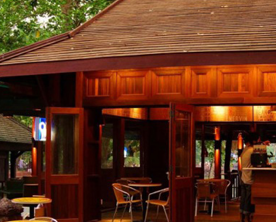
Despite Myanmar being a major grower of coffee beans, real coffee hasn’t really reached the street yet. But, like everything in Myana-mar, things are changing. The Nervin Café on Kandawgi Lake is an exception to the rule; it’s a little oasis of rustic and tranquil ambience serving an extensive range of cof-fees, drinks and excellent café/bistro food. Situated on the eastern shore of the lake, the café is in the Kandawgi ‘Nature’ Park. At the entrance you’ll be changed a nominal K200 on entering the park and recently, even a sleeping child in a buggy didn’t escape the diligent sentries there. If may go some way to explaining why the Nervin café isn’t inundat-ed which it should be. The best way to find it is to follow the lake towards the floating Karaweik Palace and you’ll find the café on your right.

The building is part of a small complex of heritage wooden buildings and has two wide wooden verandahs where you can sit back and relax and look out on the lake and trees. There’s also one or two enclosed rooms for – popular in these parts – private dining. But I prefer the verandah with its beautiful wood-en furnishings, no uncomfortable chromium chairs here, just wood and a light breeze from the lake to get the appetite going. Ye Naing Wynn the owner, is both unassuming and wears his deep knowledgeable about coffee and food very lightly. He’s a veteran and a passionate advocate of coffee culture and was the first to introduce espresso coffee to Myanmar under the Café Aroma outlets which were a familiar sight up to 2004.

After a hiatus of six years of ‘retirement’, Ye travelled to Turin where he trained and qualified as an advanced certified barista. He has no single ideal of how a café should look and feel but has drawn his inspiration from many individual family cafés. And while he admires the ways brands like Starbucks have marketed themselves, he too has set up a chain with outlets of Nervin now in Nay Pyi Taw (Ocean Supercentre) and Dagon Centre 2. He has plans to open others in the Yankin Cente Plazza, downtown Yangon near the Sule Pagoda and in Mandalay.

The name Nervin and the logo attests to a substance that acts as a tonic to the nerves and good coffee certainly does that. There’s an extensive variety of coffees and drinks available from espresso to café speciales to Nervin’s Signature Mocha Glacier; a frozen mocha blended and served with a scoop of chocolate gelato. As well as Crema Freddas and Café Frappes there’s artisan teas like Marrakesh Mint, Hanami a Japanese sencha with cherry blossom. But I broke with tradi-tion and started with a non-alcoholic, it was rather early in the day, Mojito of lime juice, mint leaves, mint syrup and sparking soda which was sensational and an excellent pal-ate cleanser.

The food menu is as extensive as the drinks while keeping closely to café options with a Mediterranean influence so the fare was appetizers like Tomato Brushetta (K4000), salads, soups, burgers (K7500), sandwich-es, Club Sandwich (K6500) grilled Paninis, pasta and pizza.

Bread is baked in-house and I choose a rustic Bacon and Cheese Panini with salad and it was superb combination, done to perfection. My two friends had the Chicken Burger and Barbecued Chicken, both were delicious and the chicken on skewers was coated with a delicious piquant sauce. We topped this off with Tiramisu gelato and of course coffees. I’m old fashioned in my coffee and like it black and sugarless but it was excellent and rich and Arabica, I presume. Nervin is much more than a café and given it’s ambience on the lake and its extensive and delicious menu could just as easily be a very popular dinner destination, one thing is for certain, anytime of the day it’s worth a visit and it’s an excel-lent place to conduct business, meet friends or family.

Address: Nervin Café, Karaweik Oo-Yin Kabar, Kandawgyi Nature Park, Mingalar Taung Nyunt Tsp., Yangon.

Dawei’s Idyllic Charms

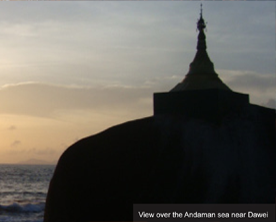
S ince the announcement of the Dawei Special Economic Zone in late 2010, Dawei has become more of a business destination rather than a tourist one. How-ever, I recently had the luck to go to Dawei for the weekend and realised this small charming town and its surrounds has some real attractions to offer.

What strikes you first when you arrive is the beautiful architecture of its colonial hous-es. Multi-coloured, fading pastel coloured two-storied wooden houses with arch topped balconies and intricate wood detail, they seem to have withstood the test of time and the elements and add a real sense of history to the town. Many are government buildings, but some are residential and their open win-dows and doors lead the eye to walls covered with family portraits, clocks and religious shrines. The cool dark interiors are inviting on a hot and dusty day in Dawei. I hope with much of the progress that is bound to change this charming town, that these beautiful old buildings are preserved and treasured.

The other thing that strikes you when you arrive in Dawei, particularly from the traffic choked streets of Yangon, is how few cars there are. In their place is the buzz and hum of mopeds and motorbikes that weave their way as they criss-cross the town. Tuc tucs are the main form of public transport for the vis-itor and can comfortably accommodate up to 6 people. It’s a nice way to view the town, looking out from the back of a tuc tuc as life whizzes by.

Our hotel, ‘Zayar Htet San’ on Ye Yeik street was a very comfortable mid-range priced hotel, with nicely designed and very clean bedrooms and a distinctly Thai feel, making you realise how close you are to the border. There is a pleasant garden and it’s centrally located, within walking distance to restau-rants and shops.

Like many hotels, I imagine this was built with a view to all the new business the Spe-cial Economic Zone (SEZ) would bring to town, and indeed at breakfast more business people with laptops in tow, than tourists lined up for the egg orientated breakfast. And while the choice of eggs ranged from scrambled eggs, eggs sunny-side up, om-elettes, or egg fried rice: a plate of fruit was not to be had which is surprising given the wide range of exotic fruits at hand on the nearby street corner.

The SEZ hasn’t quite gone according to its plan, with the current project stalled await-ing new investors. However I am sure this very pleasant hotel and the many other new establishments in town will do well in the fu-ture regardless of the SEZs’ future

Gekkō manages to merge the old with the very new

T he sprightly new Gekkō restaurant in the historic and beautifully refur-bished Sofaer & Co. building is lo-cated on Merchant St. in downtown Yangon. Built in 1906, the building was part of the empire of Isaac and Meyar Sofaer and both brothers were Baghdad-born, Rangoon-edu-cated and belonging to the Jewish commu-nity here.

As well as owning many commercial prop-erties in Rangoon, Isaac was a successful trader in his own right with interests in wines & spirits amongst others. The Sofaer & Co. building was at the epicenter of the city in the early 1900s, once housing a Reuters telegram office and shops selling a wide va-riety of international products from German beer to Scotch, Egyptian cigars and English sweets.

The ceramic floor tiles were shipped from Manchester and the steel beams that sup-port the ceiling are from the Lanarkshire Steel Company in Scotland. I note this, not because of my huge sleuthing on the build-ing but because of their rather slick website which is simple and to the point. It’s also nice to see historic buildings being restored and given new life when the wrecking ball is more the norm.

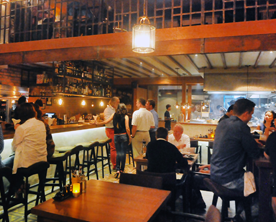
On the ground floor the interior looks sur-Gekkō manages to merge the old with the very new prisingly modern and yet in keeping with the style of the building with a mixture of high and low tables and bar stools. Upstairs is more speakeasy and cosy with a slight prohi-bition feel to it. The space gave me the feel-ing of a Manhattan restaurant/lounge and maybe that’s because the Myanmar archi-tect who worked on this refurbishment has worked in the US.

The drinks menu priced in dollars, kicks off with a variety of Japanese inspired cocktails ($ 7-9) courtesy of Singapore’s famously dis-creet 28 Hong Kong St. establishment – I went for the Japanese Cocktail, a refreshing concoction of VSOP brandy, artisanal orgeat, fresh lime and bitters and my partner tried the Yukata Cocktail; dry gin, green char-treuse, bianco vermouth, yuza, fresh apple and lime bitters. Both were inspired and the cocktail list alone is worth exploring, and in keeping with that Manhattan touch, no tired old concoctions here!

There’s also a large selection of sake’s gath-ered from small breweries across Japan. Many are unpasteurized and ranging from a $5 glass of Jyozen Karatanba to a bottle of Tajime Chiusen Junmai Gingo at $151. There’s also a good selection of wines, beers and shochu.

The menu like the name of the restaurant is Japanese inspired, and loosely based on a Yakitori menu and also serves Ramen and pizzas, but manages to be simple and straightforward. Think Japanese Tapas, for Small Plates ($5-6) we choose, Edamame, Korean Fried Chicken and Pork Gyoza all scrumptious but the Gyoza was simply the best I’ve had since last time I was in Japan, really succulent and perfect dumpling wrap. I’ve already been back for more.

There’s a ‘Yakitori nihon – 2 STIX’ section and from that we choose sticks of Chicken and Scallion, Shan Potatoes with wasabi kewpie, Stuffed Peppers with miso kewpie, again all sensational and I liked the way sauce and dips accompanied each dish. I should add there were four of us. For Medi-um plates ($8-12) we choose Crispy Kimchi Roll and Pork Okonomiyaki, a Japanese chil-dren’s favourite and the Japanese version of the pizza, it was delicious if a little under-done in the centre, the only quibble or a se-ries of perfect dishes.

Gekkō has the best of the new and old but what’s refreshing as well as its drinks and cocktails is the food and its presentation, it’s a very welcome addition to the Yangon bar and restaurant scene, the service was kindly and sweet and it’s going to be one busy eat-ery if it sticks to its winning formula.

535 Merchant Street, Kyautada Township, 4th Quarter, Yangon.

Proposed economic corridor to link Myanmar with Bangladesh, China and India

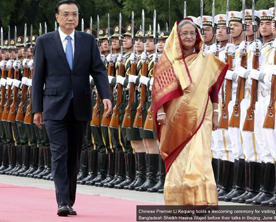
Bangladesh Prime Minister Sheikh Hasina Wajed visted China in June and at a meeting with Chinese Pres-ident Xi Jinping, pledges were made on both sides to build an economic corridor linking Bangladesh, China, India and Myanmar.

“Bangladesh is an important country along the Maritime Silk Road,” Xi said during the meeting, noting that China welcomes the Bangladesh side’s participation in the con-struction of the Silk Road Economic Belt and the 21st Century Maritime Silk Road, while pushing ahead with the economic corridor.

The moves will help build a community of shared interests between China and Bangla-desh, and benefit the people of the two coun-tries and the region at large, according to the Chinese leader.

The concept of the belt and maritime route was initially proposed by President Xi last year. Historically the Silk Road connected China with Europe from around 100 B.C., while the Maritime Silk Road was used by Chinese merchants to transport silk, ceram-ics and tea to overseas markets.

Echoing Xi’s proposal on the belt and mar-itime route, PM Wajed said the four-nation economic corridor is of great significance for the development of South Asia and that her country will play an active role in its con-struction.

According to a joint statement, the two sides recognised that the development of the cor-ridor would constitute an important vehicle to complement various regional connectivity initiatives and provide an important avenue for strengthening cooperation and sustain-able development.

China and Bangladesh agreed to remain ac-tively engaged towards the development of the corridor along with other countries, and expressed their hope of realising mutually beneficial and result-oriented cooperation among the four countries, said the state-ment.

During the meeting, Xi said China attaches great importance to its ties with Bangladesh and regards the country as an important co-operative partner in South Asia and the In-dian Ocean region.

As 2015 will mark the 40th anniversary of the establishment of their diplomatic re-lationship, Xi proposed the two sides hold various events to celebrate the anniversary and boost cooperation in multiple areas to cement their partnership.

Xi also expressed China’s support for Ban-gladesh’s development path and pledged to share technology and experience to reduce poverty and help spur its economy.

Bangladesh will continue to support China firmly on issues involving its core interests and major concerns, said the Bangladesh prime minister.

Wajed is made the official visit to China from June 6 to 11 at the invitation of Chinese Pre-mier Li Keqiang. During the visit, she also attended the second China-South Asia Expo in Kunming in China’s Yunnan Province.

During Wajed’s visit, she and the Chinese premier witnessed the signing of a string of deals regarding economic and technical co-operation, a feasibility study of flood preven-tion and management in Bangladesh, and the construction of a multi-lane road tunnel project under the River Karnaphuli

The Diary of a Yangon Vegetarian

T here was a time when vegetarians had to literally hunt for safe places to get a palatable meat-free meal once they stepped out of their homes. Thankful-ly now, vegetarian options are available in varying proportions across the globe. Veg-etarianism is becomingly increasingly pop-ular for numerous reasons, at least one of which is health. Living in Yangon as a veg-etarian is not really a challenge, but inter-esting culinary experiences give us reason to smile, even here.

Myanmar with its wide variety of earthy pro-duce, a phenomenal variety of greens, tofu and lentils, has endless non-meat options. In fact, it is easier to survive in Myanmar with such preferences than other tourist friendly Asian countries like Thailand and Malaysia. Myanmar cuisine has numerous vegetable-rich salads, soups that can easily be kept vegetarian as well as rice and curries that are delicious even without the addition of meats. Yet vegetarianism is not very com-mon among locals, since dried fish, meats and seafood are added to nearly every prepa-ration to make them tastier, nutritious, and more of a complete one-dish meal. The word to know is “thut-thut-lau” pronounced as “tatalou”, which actually means ‘lifeless’ but implies vegetarian. Interestingly, eggs are not considered to be non-vegetarian.

The ever increasing class of vegetarians can be attributed to the greater awareness about cruelty meted out to animals, and also those who avoid meats for religious beliefs. Bud-dhism does not impose food restrictions but Hinduism does. Many Hindus are pure veg-etarians and many are selectively vegetarian on specific days of the week and at certain times in the year. Myanmar has thousands of Indians residing for generations and though many have adapted to local tastes, an equal number have opted to stick to their vegetar-ian food habits.

Still, as vegetarians, we end up with inter-esting experiences that become amusing narratives later, the dismay and anger long forgotten. These are almost universal, and anyone with specific food preferences would have been through similar experiences in any country, be it Canada, the Philippines or Argentina.

A few years ago, I would have been appalled at the prospect of finding a dubious chunk of something chewy, halfway through my soup. Today, I just put away my plate, take a deep breath, and try not to think of what has al-ready gone in. It is no longer shocking to ask for fried rice ‘thut-thut-lau’ and find pink, curled pieces of shrimp stirred in. For many, being vegetarian simply means not eating pieces of meat, so soup, made of meat stock is fine as long as no pieces are visible. Add-ing fish sauce and shrimp paste to add fla-vor are also considered acceptable, much to the horror of those who would rather starve. Some people are highly sensitive to odors and smells and can make out if a ladle of a meaty preparation has touched their food. I am grateful that I am not one of them, or else eating out would be impossible. Yet I find it difficult to share a table where steamed whole fish is ordered, since I am convinced the fish is looking imploringly at me, to save it…now I try to switch seats so that I face the tail and not the eyes!

The variety of food on offer in Yangon is much more than other places in Myanmar, which have less tourists. This helps since it no longer necessitates eating rice with chili paste as I would have done a decade ago. The abundance of fresh fruit is a boon since these can be picked up and eaten on the go. New eateries from noodle shops to in-ternational chains like The Pizza Company are transforming the food scene in Yangon and vegetarian options are offered as well. Fine dining restaurants, street stalls and tea shops all have something for the vegetarian. The list of options is endless, whether you walk down Anawratha Road in Downtown Yangon, or along the upscale Dhammazedi. Myanmar cuisine is vast, and delectably so. Its repertoire of salads includes the exot-ic tea leaf salad made out of fermented tea leaves, rich in caffeine, and mixed with ses-ame seeds, crushed nuts, cabbage, onions, lime and garlic. Lemon salad is a tangy mix of cabbage, red onions, chili, and sesame seeds. Tomato salad goes beyond tradition-al tomato slices, to include peanuts, sesame, onions and garlic. Even more sumptuous is the eggplant salad made out of the smoked vegetable that gives it a unique taste. Soups are often thickened with cooked chickpeas, and common ingredients include, tofu, veg-etables and noodles. Steamed rice is served with curries that are rich and thick, and can be made with vegetables instead of chicken, fish or red meats. Easily available cauliflow-er, cabbage, bamboo shoots, beans, potatoes and pumpkins, provide numerous curry options. Noodles are prepared with sauces and vegetables, to be eaten as snack or at mealtimes. Fresh juices, jaggery and coconut sweets serve as perfect accompaniments to a vegetarian meal.

Myanmar cuisine has a strong influence of Indian cooking styles and many common ingredients like beans and pulses, curries and similar styles of preparing vegetables. Walking down the streets in the Downtown area, reveals endless stalls selling the ubiq-uitous Indian ‘samosa’, the deep fried, pota-to-stuffed wanton. A large flat pancake called ‘dosa’ is served with chutneys, potatoes and a lentil curry called ‘sambhar’ makes for a delicious meal at all times of the day. The number of Indian eateries is also expanding. All star-rated hotels in Yangon have Indian meal options, and standalone restaurants are opening up. It is easy to find places offer-ing a reasonable vegetarian “thali”, which is a plate of rice with a lentil curry, vegetables and a pickle, or even chapatti and lentil curry called ‘daal’, which is a rich source of protein. Myanmar is a leading exporter of beans and pulses, so the quality couldn’t be better!

Today I am happy with a tea leaf salad or even the Myanmar tomato salad, followed by barbecued or fried vegetables, a tofu noodle soup, some stir fried greens and fried rice. Who can ask for more?

10 Things to know about Microfinance in Myanmar

T here is an increasing interest in business in Myanmar as the coun-try opens up its economy to the rest of the world. One of these is financial ser-vices, particularly ‘microfinance’ which has evolved from informal moneylenders and stereotyped “loan sharks” into a billion-dol-lar global industry with commercial inves-tors participating, stock market listing and regulation by government agencies. With the establishment of the Grameen Bank in the early 80s, microfinance has since become an instrument in poverty alleviation, and in stimulating rural economies.

The potential for microfinance in Myanmar is huge. A large part of the country is still in-accessible and remote areas have no formal financial service providers. In most areas where financial service providers are pres-ent, many entrepreneurs are still not able to access the financial services necessary for ex-pansion. Emerging enterprises are also left to scavenge working capital from informal sources that are expensive and unreliable. Recent emphasis on ‘financial inclusion’ and the proof that there is indeed wealth at the “bottom of the pyramid” has attracted com-mercial investors to venture into the micro-finance industry. Traditionally this was the turf of non-government development organ-isations. For those interested in venturing into microfinance operations, these basic facts are important.

Opportunities in the microfi-nance industry abound In November 2011, the Myanmar Microfi-nance Law was passed outlining the frame-work for the operations of microfinance activities in the country. It defines microfi-nance in the context of the country’s finan-cial system and provides for the licensing and supervision of microfinance service providers. Microfinance institutions can provide the following financial services to its clients:

  1. Credit
  2. Savings deposits
  3. Remittance services
  4.  Insurance services
  5. Borrow locally and from abroad
  6. Other financial service

There are two types of licensed microfinance institutions: deposit-taking institutions and non-deposit-taking institutions.

  • Deposit-taking institutions are full financial intermediary institutions utilizing deposits from its clients to finance lending operations.
  • Non-deposit-taking institutions provide loans from their own funds. In simple words, microfi-nance service providers operating like a bank.

Microfinance is a regulated in-dustry in Myanmar Myanmar is no stranger to financial crises resulting from bank failures.

As such, regula-tion was among the primary concerns of the government when microfinance was allowed to operate in the country. It is necessary to ensure that ordinary people utilizing finan-cial service providers are protected. The regulation of microfinance institutions was placed under the Myanmar Microfinance Supervisory Enterprise (MMSE) a newly formed agency, previously tasked with the management of pawnshop operations of the government. This is the agency that issues licenses to operate, monitor and supervise microfinance institutions. It is expected that there will be a harmonization of operations since the previous function of the agency was to manage pawnshops, while microfinance primarily requires the provision of non-col-lateralized loans. Compared to neighboring countries with vibrant microfinance indus-tries like Cambodia, Vietnam and the Phil-ippines, regulatory functions are vested with their respective central banks.

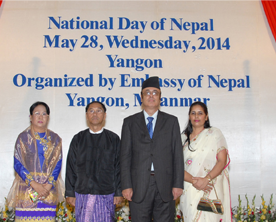
Challenges to build globalised Nepal an interview with HE Ambassador Paras Ghimire

Name: Paras Ghimire

Age: 57

Country: Nepal

Job Title: Ambassador

Profession: Government Insider

[paypal]

MI: What is your mission?

Our mission here comprises in; a) Promot-ing and expanding tourism between Nepal and Myanmar b) Developing and expanding bilateral trade relations between us and c) Promoting cultural diplomacy on a sustain-able basis. It is little wonder that our task is also directed towards the exchange of high level visits ranging from top political level to government- bureaucratic level to business between Nepal and Myanmar.

MI : What is the function of the Nepal-ese Embassy in Myanmar and

The function of the Embassy is first of all to strengthen and forge a cordial and sus-tainable relationship with the government of Myanmar down to its various echelons including the private sector, the ubiquitous NGOs and the wonderful people here at large. It is also to build up and promote an endur-ing relationship with the international com-munity in Myanmar including the friendly diplomatic missions, UN functional agen-cies, other international agencies, INGOs etc. Needless to say, we have close relations with Nepalese compatriots here in Myanmar and also the friendly people of Nepalese origin.

MI: How would you describe the rela-tionship between both countries?

We enjoy friendly and cordial relations marked by the warmth of friendship, mu-tual trust, goodwill and understanding and, above all, a sober appreciation of each other’s hopes and aspirations.

MI: Tell us about something that sur-prised you, if any, when you first began your assignment in Myanmar?

Less than two years ago, when I started here, the first thing that struck me was the clean and pollution-free environment of the city, far less vehicular pollution and peaceful atmospherics in terms of sit-ins-dharnas [ a fast undertaken at the door of an offender], bundh [ general strikes], shutdowns, strikes and lock-outs etc. This is by and large, on of the most promising features of a progressive society.

MI: A common factor that unities both countries is their shared Bud-dhist heritage?

Lord Guatam Buddha, the Universal Light of Asia was born in Nepal and Myanmar is a predominately Buddhist country. Nepal is a peaceful country and its unassuming and hospitable people bear many striking resem-blances to the people of Myanmar.

MI: Agriculture is a key economic ac-tivity in Nepal, how do you see the ag-ricultural market develop in Myanmar in terms of technology and training?

Nepal is an agricultural country and in a rap-idly changing world marked by knowledge society and sweeping information technol-ogy, economic liberalisation and privatisa-tion have worked wonders, and Myanmar won’t be the exception. Myanmar was once  the leading rice producer in the world and is now working to regain that position. Similar-ly, agricultural products like timber, lentil, beans and fruit have good prospects. I’m en-couraged by the success on these fronts. But it’s not time to rest on laurels and there are many miles to go. It’s an acknowledged fact that there is tremendous agricultural market potential here which will be assisted with political, economic and all-encompassing reforms that are taking place in Myanmar.

This wonderland has turned corners during a brief span of time and is set for a turn-around given the good will of the interna-tional community, international investors, the United Nations and so on. With state-of-the-art technology and the cutting edge of knowledge and development that Myanmar has been attracting in its much-acclaimed reform drive, Myanmar is poised for a major leap and breakthrough in due course which will take in all facets of development and modernization.

MI: Nepal being a mountainous country relies on Hydro power and energy. What are the common fea-tures shared with Myanmar given it’s a major source of capturing energy here also?

Nepal is in the Himalayas and we live in the lap of Mount Everest, the highest peak in the world, which is endowed with majestic beau-ty and the range is a repository of tremendous hydro-potential. Regrettably, we have been able to harness precious little energy which has effectively precluded us from unleashing the forces of the all round development of the country. Nepal and Myanmar share com-mon features as countries of rich natural re-sources, truly presenting nature’s panorama, which has attracted new kinds of visitors. These visitors come to Nepal as tourists, trekkers, mountain climbers and as friends of Nepal. We look at our water recourses pri-marily in the interest of our people; we are willing to share with friendly countries in the region. Its exploitation, establishment of industrial joint ventures, multi purpose de-velopment of our hydro-potential for water navigation, irrigation, drinking water, fish-eries and tourism together with power pro-duction are some of the areas in which there could be meaningful collaboration between our countries extending in co-operation for the larger good.

MI: With regard to tourism, how did Nepal resolve the hotel shortage, transportation and challenges on in-frastructure when it first opened up for mass tourism?

Although, we embarked on planned devel-opment and opened up for the tourism sec-tor much earlier, we have so far been able to attract almost one million visitors and friends to Nepal every year. We still have lots of work to do in this area. While there are good hotels in the capital, collectively they are inadequate to deal with demands of the 21st century. We have been working with development partners to step up transpor-tation needs and necessities. As we are put-ting together our spirited efforst to build a globalised Nepal, we still have challenges to surmount especially outside of the capital city.

MI: How do you see bilateral trade relations between Nepal and Myan-mar?

There exist at this point enormous trade prospects and potentials between Nepal and Myanmar. The visit to Myanmar of the busi-ness delegation from Nepal in early 2013 and the delegation talks with UMFCCI (Union of Myanmar Federation of Chambers of Com-merce and Industry) have opened up vistas for further co-operation and collaboration on a range of issues. At this moment in time, although trade prospects look good and promising, more and more concerted efforts and collaboration on both sides is called for in the best national interests.

MI: What are the potential areas that Nepal and Myanmar could work joint-ly upon?

Tourism, especially religious tourism stands out among the potential areas Nepal and Myanmar could cooperate. A good number of Myanmar nationals visit Lumbini, the birthplace of Lord Buddha each year. Re-grettably and paradoxically as we do have as yet, direct air flights to connect our two na-tions. It remains an inconvenience to move from one country to the other. The specific areas can be singled out when we work to-gether at government level or at the level of the private sector.

MI: Are you satisfied with the cur-rent reform process? Which areas have exceeded your expectations and which have not?

It is quite conceivable that development and reform are long drawn-out processes and also one is reminded of the adage ‘if there are no problems, there are no prospects’. The current sweeping reforms have earned wider appreciation and broader admiration from across the globe. The downsides and downturns of the past decades are on course to being tempered by the reform drive. This in itself is a singular turnaround. The fact remains that change, reform, improvement and progress anywhere in the wider world is a gradual, steady progress and it takes place through evolution. We will do well not to ex-pect too much in the short to medium term. It is, above all, a long haul process with the involvement of one and all, people’s partic-ipation, teamwork and working together in harmony with a common purpose towards national goals and objectives. With regard to the economy, some key segments like gas production services, construction, commodity exports and foreign direct investment have made significant gains, according to the World Bank study. Even as affordable and accessible healthcare services and education programmes are, of late in the top priori- ty list in terms of recourse allocation, these sectors are inextricably linked with people’s lives and focussed attention here is called for here on a regular basis. It is rightly said that ‘health and education are our home and hearths and physical activities, food pens and books are our safety and security’, These are areas that we can hardly be complacent about until we designate them as our ‘priori- ty among priorities’.

MI: From a country development standpoint, what do you see as the big-gest challenges facing the current gov-ernment in the next 1-3 years?

As Myanmar is a resource rich, fast moving, developing country of sixty million with 88 percent of them Buddhist adherents, its di-versity and friendly people are its assets. Resources and opportunities for people must be made effective and efficient, people will be required to be more skilful, trained, en-lightened and informed to cope with the 21st century needs and the challenges of global-isation. Achieving inclusive and sustainable development, with a people-centric approach along with poverty alleviation, infrastructure development including telecom reforms and working with international investors and de-velopment partners will go some way to de-veloping the country. Challenges remain like job creation, an uninterrupted power supply together with accessibility to clean safe and piped water regardless of the remoteness of where one lives..

MI: How do you see Myanmar com-paring with its Asian neighbours in the short and long term future?

As nations can be judged by robust leader-ship, good management skills, honesty and above all effective teamwork; an upcoming, emerging and promising developing coun-try should plan and work to long term per-spectives and not with short term band aid solutions.

MI: Some investors are adopting a wait and see attitude, investors are looking for long term stability af-ter 2015. What are your Excellency’s thoughts on the political stability of Myanmar after 2015?

Now that Myanamar has once and for all put its past to rest and with the introduc-tion of far-reaching and meaningful reform efforts, it is now headed for an inimitable game-changing mission by joining hands with the international community. The na-tion has already stepped up to the plate by the successful hosting of the Myanmar Development Forum, World Economic Fo-rum, Asia congregation and the recent SEA games, BIMSTEC Summit meetings and, of late ASEAN chair ship. The region, under ASEAN, is also bracing up for economic integration, home to 600 million dynamic people; it is all set to inaugurate a common market and manufacturing base. Post 2015, it will be able to work in tandem with its neighbours and the international communi-ty at the global high table. There is no look-ing back for Myanmar in terms of economic development and taking forward the reform process on a sustainable basis. Myanmar will do well in formulating a post 2015 de-velopment agenda and a new road map for the next several years – a sort of perspective planning. Looking ahead into the future, the challenging tasks of development are many and varied. It is becoming abundantly clear that no job at hand is independent and can be considered in isolation of another. Myan-mar will do well to take each task as both national challenge and an international one, galvanising the energetic human resources and its tremendous natural resources for the larger good of its people. The task ahead is not only enormous and acute; it also calls for a creative and imaginative approach. It is not only knowledge and skills that we need to ap-ply but sharing experiences and best practices coupled with the strength to resolve and act earnestly and without let up, will be the need of the hour for a 21st century new Myanmar.[/paypal]

 

China, India, Myanmar to celebrate 60-year-old peace principles

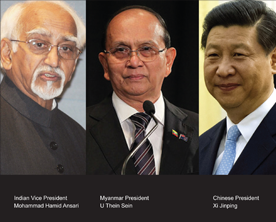
C hinese President Xi Jinping, Premier Li Keqiang, President U Thein Sein and Indian Vice President Moham-mad Hamid Ansari will attend commemo-rative activities for the 60th anniversary of the Five Principles of Peaceful Coexistence, a Chinese Foreign Ministry spokesman has announced.

The three countries have agreed to hold ac-tivities in Beijing at the end of June. Pres-ident Xi will attend the commemoration conference on June 28, and Premier Li will attend a reception on June 29. Myanmar President U Thein Sein will pay a state visit to China from June 27 to 30 alongside Vice  President Ansari who will also pay a coincid-ing official state visit.

In 1954, the leaders of China, India and Myanmar initiated the Five Principles of Peaceful Coexistence, which stand for mu-tual respect for sovereignty and territorial integrity, mutual non-aggression, non-in-terference in each other’s internal affairs, equality, mutual benefit and peaceful coex-istence.

“Over the past six decades, the principles have withstood tests, been accepted by an increasing number of countries, become the tenets governing international relations and played an important role in safeguard- ing world peace and development,” Foreign Ministry spokeswoman Hua Chunying said at a daily press briefing.

Hua said attendance by the leaders reflects the three countries’ determination to promote world peace and development. On President U Thein Sein’s visit to China, Hua said presidents of the two countries are scheduled to hold talks. Chinese premier and top legislators will also meet with U Thein Sein. He will also visit the ancient capital of Luoyang in central China’s Henan Province.

This will be U Thein Sein’s third state visit to China during his presidency and his first meeting with Xi, Hua said, stressing the visit will be significant for the healthy and steady development of bilateral relations in the new era.

“China expects the visit to consolidate bi-lateral good-neighbour relations, enhance strategic trust, boost pragmatic cooperation and develop the bilateral all-round strategic partnership,” Hua said.Hua recalled the profound brotherhood be-tween the two peoples and the good-neigh-bour friendship that has benefited both nations. Stressing China firmly pursues a friendly policy toward Myanmar, Hua said China would like to work with Myanmar to deepen cooperation, benefit the two peoples and promote regional peace, stability and development. Vice President Mohammad Hamid Ansari’s trip to China will be the first for an Indian leader since the inception of the new Indian government in May, Hua said. Xi will meet with Ansari. Chinese Vice President Li Yuan-chao will hold a welcome ceremony for Ansa-ri before talks with him.

During his five-day stay, Ansari will give a speech and visit Xi’an, capital of northwest China’s Shaanxi Province.

Labelling China and India as the world’s largest developing countries and import- ant emerging economies, Hua reviewed the sound and steady growth of the bilateral strategic partnership, citing growing politi- cal trust, productive cooperation in all fields and good coordination on international and regional issues.

China would like to work with India to seek a closer partnership and achieve common de- velopment, Hua said.

Yangon’s Rising Star

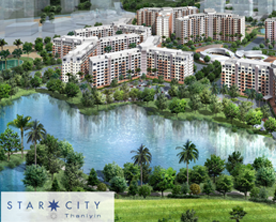
M any will have heard of STAR*C-ITY, in the rapidly growing Yan-gon suburb “Thanlyin” on the shores of Bago River facing downtown and the Shwedagon Pagoda.

Thanlyin and its adjacent Thilawa SEZ (Spe-cial Economic Zone) is a focal point on which the Myanmar business and investor commu-nity as well as the international business community have started to actively invest.

The Myanmar and Foreign Governments, the World Bank, IFC and multinational cor-porations have declared it as one of the most important development areas in the nation.

Star City, only 25 minutes from downtown Yangon is becoming the desired greenbelt location for families and singles alike. Es-pecially for those who wish to exchange the gritty, noisy and congested streets of the city with open space, landscaped avenues, gardens and the green of the golf course on the river shore. All this, coupled with the al-most daily spectacular sunset views of the Shwedagon Pagoda or sunrise views for the early risers.

Leading retailers and restaurateurs are op-erating and open or are set to open shortly. City Mart has a great fully stocked store, 50th Street Restaurant & Bar caters for residents, YOMA Bank have set up a mini branch and delightful Japanese Restaurants like IZA-KAYA REN, EDO ZUSHI and the famous YKKO noodles will be soon established. Why all this growth and interest? Star City is only 15-20 minutes from Thilawa and easily commutable to downtown Yangon.

The Thilawa SEZ was officially opened at end of last year jointly by the Myanmar and Japanese Government in a ceremony with over 500 VIPs attending. Commitments of billions of dollars for manufacturing, ship-ping and industrial plants have been made. Hundreds of millions of dollars have already been advanced for highways, new bridges and infrastructure construction. Four new highways are scheduled along with a new bridge connecting to downtown Yangon with planned completion dates for 2015. Over 40 companies are starting construction this year with completion dates by end of 2015.

When YOMA – SPA chairman Serge Pun be-gan putting his vision of Star City into reality at the beginning of 2011, it was still pioneer or frontier territory. No one could imagine how beautiful this master-plan resort would develop.

Now you have the spectrum of Palm Tree-lined avenues, fountains, garden courtyards and the first 4 of what will be a 9-hole golf course at Pun Hlaing Link.

The first two phases of Star City are a modern assembly of 10 star shaped buildings with 2,000 spacious elegant apartments with airy wide corridors, space and ample parking and views of nature all abound. An Olympic in-spired amenity pool, sports and recreation centre is to open by the end of 2015. There is scheduled elegant shuttle-bus service to downtown locations seven times a day.

The sales success of this very affordable apartment development is nothing but phe-nomenal. The first 1,000 zone A apartments are already sold with the first 2 buildings completed and occupants moving in.

Residents so far are Myanmar home buyers from Yangon to Mandalay or Nay Pyi Taw as well as international executives renting available unfurnished or full service apart-ments.

The professional European managed leasing and 24/7 management program attracts ma-jor multinational corporations and tenants from all corners of the world. Rental rates of available suites range from $1,200 to $4,000 per month, requiring only 3 months rent de-posit, contrary to the customary 1 year up-front fee.

In Zone B, of the 1043 apartments on sales release, over 80% have been sold and are un-der construction for completion by the end of 2015, early 2016. Zone C of this breath-taking project contemplates a sales release in the 4th quarter of this year.

All construction is conducted by the French firm Dragages Singapore Pte. Ltd., a FMI joint venture partner.

To truly appreciate what’s happening in Star City, it is a must see to visit the spectacular million dollar sales gallery in Thanlyin and witness the elegant model suites and actual apartments.

Stop for a coffee at 50th street, or pick up groceries at City Mart whilst you are there. There is even a sales gallery for Myanmar nationals in Singapore at Peninsular Plaza in Singapore.

Is all this affordable in Yangon? To compare with Singapore, a comparable apartment in a comparable location sells for $1,500 per square foot. Star City’s current release rang-es from $115 to $235 per square foot, aver-aging at $150. Suites are starting from as little as kyats 90,000,000 ($93,000). With only 5% down to book, 15% in 30 days, and the balance spread over the construction period of about 18 months, it is attractively affordable!

Many who went to see, believed and were handsomely rewarded with their purchase, it looks to be one of the more promising real estate investments in the future. For details further details, www.starcityyangon.com or call 95-5623150 ext. 118/119/120.

Latest Videos

Interview with Alison Fox Principal of The British School Yangon

Interview with Alison Fox Principal of The British School Yangon

Recent Posts