Home Blog Page 243

Yangon rental prices

Yangon real estate agents report that the condominium rental market is very strong at the beginning of the year. This could be due to the increase in foreign expats relocating to Yangon for business purposes in 2014.

The administrations plan to limit high-rises could send property prices upward throughout the city, the report cited. The zoning plans in Yangon to the downtown area will undoubtedly drive up property prices in the short term. The effect could spread through out-of-town areas as far as Bago Region.

This will almost certainly help to push up land values in Dagon, Thanlyin, Thilawa and even farther out to the boundaries of Yangon. High-rise zones could be worth 20 percent more although prices should stabilise when the zoning comes into effect.

Last August’s tax increases don’t appear to have affected demand and the residential and office rentals are rising fast, particularly the market for condominiums in the downtown area. The reduction in availability of serviced apartment space and high hotel occupancy rates are driving foreign companies to rent condominium space for their expat executives. Amongst the most popular office space and condominiums at the moment are those in Sakura Tower, Seikkanthar Condominium, and Shwe Hin Thar Condominium. Ahlone and Sanchaung townships are the most expensive neighbourhoods in Yangon at the moment.

The city’s development committee, YCDC, has designated Bahan, Dagon, Kamaryut and Mayangone townships as low-density. In Manyangone Township, Parami, 7 mile, Shwe Hnin Si and A1 quarters have been designated as exclusively residential areas.

The report noted that rental prices for Nov to Dec 2013 had risen by over 30% compared to the third quarter of the year, It went on to say that property rentals for a medium sized apartment are now well in excess of K1.4 million per month and expected to still rise.


T he Food Puzzle: How ASEAN integration could help resolve it

While the world focuses on BRIC – Brazil, Russia, India and China – global investors may be missing agribusiness opportunities in ASEAN. Since its launch in 1967, ASEAN is consolidating as a credible, rules based trading bloc.

ASEAN´s relatively low profile is attributed to “mutual ignorance” in its relations with global markets. With the exception of Singapore, which establishes itself as a financial and trading centre, economic activities are broadly local or regional. Media attention on Myanmar’s poor human rights record and, in a number of its member states, the incidence of corruption and calamities downplay its opportunities. Wedged next to China and India’s markets, where 46% of humanity lives, ASEAN is understandably overshadowed.

The forthcoming publication of the book by Dr Rolando Dy2 – “Food for Thought: How agribusiness is feeding the world” – offers to correct this “mutual ignorance”. First, by informing the world about what ASEAN can offer in agribusiness; and second, what ASEAN needs to know about its own opportunities.Dr Dy argues for agribusiness as a motor for growth and as a pillar for ASEAN´s leadership.

Agribusiness – why is the world “missing” its allure?

The success of ASEAN countries in service industries serves as inspiration for its industrial aspirations: Malaysia’s tourism success paints a positive view of ASEAN. The Philippines´ business process off-shoring remains resilient, globally ranking it second only to India – a country fifteen times its size. Thailand and Vietnam are feeding the world with their agricultural exports, while Indonesia is becoming ASEAN´s lynchpin in global geopolitics through its G20 membership.

The importance of agribusiness to ASEAN belies its 13% to 15% GDP contribution in most ASEAN countries, with the exception of Singapore, Malaysia and Brunei. In spite of its fundamental role in nation-building and self sufficiency in food, agriculture suffers from benign neglect by governments and investors. In polite society, ASEAN agribusiness is “Cinderella” waiting to emerge in the ballroom with her prince.

So, why is the world missing its allure? I suspect the reasons are several, among which are: a) agriculture’s perceived status as a marginal activity; b) educational bias for “white collar” jobs; and c) corrupt and inept delivery of government services. Let us take each of these factors in turn.

The caricature of ASEAN agriculture is deeply ingrained. It is depicted as a farmer toiling their land with their bare hands, assisted by a water buffalo. While a tranquil life amidst the rural landscape is a welcome sight, the picture conveys subsistence farming as an accepted industrial model. Without linkages to logistics, technology and markets, agriculture indeed will remain subsistence, killing any hopes of ASEAN becoming the bread basket of the world.

Education is geared towards professional qualifications, rather than vocational skills. Farming families aim to send their children to universities to escape a life of servitude in agriculture. However, with graduates exceeding local demand, labour migrates to seek opportunities outside their home countries. Hence, it is not uncommon for qualified professionals to take on jobs requiring skills below what they were trained for – medical doctors work as nurses, accountants as care-givers, or teachers as domestic help.

How about governments … what roles are they playing in this dismal saga?

Flawed agricultural policies such as land reform in the Philippines, heavy regulation in Malaysia, and outdated tenancy arrangements condemn agriculture to subsistence living. A product of the 1960s agrarian reform, the Philippines distributes land for the landless. Without access to capital and entrepreneurial temperament, new landowners are largely incapable of matching previous agricultural output and productivity. With former landlords deserting agriculture, it was not long before farming fitted perfectly the caricature of a subsistence farmer.

After 44 years of failures, is it time to dump a policy that only produced misery?

Distribution of land resembles arbitrary sequestration, coupled with mob rule, with “beneficiaries” who never tilled the land queuing for the largesse. Inadvertently, in the midst of such chaos, bureaucrats commonly broker land transfers and payments, arguably for their own financial gain. Again, this is not unique to the Philippines. However, the country is unique in persisting with failures – hoping that the future will resolve itself while the present postpones its day of reckoning.


Chinese IPOs

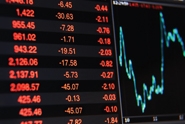
Recently, there has been a lot of chit-chattering, specifically after the Third Plenum, about the pace, scope and direction of reforms in China. Specifically, everybody seems to be debating the pace of the opening up and innovation in local capital markets. If we focus specifically on the Chinese stock market, both the domestic Yuan A shares segment and the overseas depositary receipts (mainly HKD-denominated H shares in Hong-Kong and NYSE/Nasdaq listings) it is no mystery Chinese equities have been, for the most part, horrendous for most of the last 6 years.

In fact, we had the popping of the bubble on the Mainland in early 2008 from which domestic shares never really recovered. Up to that point, China was engulfed in a mega 90’s-style stock-frenzy that, predictably, ended up in tears and anger. Since then, A-shares had had their ups and downs, but for the most part they lagged behind every other exchange on the planet, except maybe the most derelict Southern European Bourses. The Hang Seng China Enterprises Index (CEI from now on), the benchmark for the H shares which traded at a huge discount during the boom years, have fared a bit better but not by a wide margin.

There have been some temporary and localised bubbles, particularly in consumer goods names between 2009 and 2010, but overall Chinese stocks have been largely catastrophic. We all know how the story goes: around 70% of the CEI is made up of state-owned enterprises operating in energy and heavy industries complexes or banks. Notoriously not exactly the best sectors of the Chinese economy in terms of earnings prospects & visibility and quality of management and corporate governance. Basically, the market there has not reflected the rise, symbolised by the explosive Internet revolution of the last 3-4 years, of the Chinese consumption story.

Plus, there is the issue of the sketchy accounting and IPO practices that have led to a recently lifted ban on mainland IPO’s and a derating of the multiples for companies listed in Hong-Kong and elsewhere. For example rarely do HK listings obtain forward P/E higher than 11-12, while for instance, a Taiwan or Malaysian listing can go up to above the 14 threshold.

Still the Chinese stock market is not dead; in fact, instead of a Nikkei generational slump, we might be close to a turning point. Why would it be so? If you think about it, the decision to allow companies to go public again in Shanghai/ Shenzhen might reek of desperation, as state-owned enterprises (SOES) could be stuck with a refinancing mountain to climb. It is calculated that between paper maturing and interest, the Mainland corporate bond market has a 2.9 trillion dollar liquidity problem to solve. We all know how there isn’t a truly liquid secondary market for this kind of securities in China, where basically corporate bonds are another tool for state-owned banks to circumvent their lending limits to SOES.

Therefore, it isn’t strange that it’s mostly SOES apparently jumping on the bandwagon of the new IPO open tap. In a recent article Bloomberg pointed out how there are 760 companies in China with plans to go public, most of them still being SOES.

Is it all a pump and dump scheme? Apparently, the market has decided so far to trust the promises of reforming the state productive apparatus of the country — it isn’t maybe too coincidental that the biggest (and most successful) H shares IPO last year in Hong-Kong, was for Cinda Asset Management Corp., the bad bank created in 1999 to clean up the balance sheets of the major financial institutions of the country. The management of the company expect to bring in a big deal of fresh, new business, thanks to the inevitable clean up of the bank books after their post-2008 Great Keynesian Lending Extravaganza. Basically, China is bracing herself for printing lots of new Yuan to well, fix a mountain of bad debt. American QE taught us how this will be an opportunity for immense profits.

So the market doesn’t appear to be so closed-minded about SOES stocks anymore, despite a very difficult year for emerging markets. On top of that, China is now increasingly recognised as almost a safe haven among emerging nations, due to her enormous manufacturing, political and financial power (and military too, but that’s another story), to the point that China is scarcely a developing nation anymore, it’s more akin to a developing super-power.

During the toughest days of the pre-September FOMC meeting the fairly illiquid Dim Sum market suffered a bit, but the Renminbi (whose bandwidth has been recently expanded) has remained remarkably stable among a rash of emerging FX volatility. With a deeper debt market and a currency fast-approaching world reserve status (China this year will conduct around 17% of her foreign trade in Yuan), it is not so strange that, going down in the capital structure to equities, we are finally finding some firmer ground.

Even more interesting, the situation appears to be outside of the beleaguered SOES complex: in fact it has witnessed a stellar bull run for the most competitive Chinese firms riding the explosion of consumerism in the country: we don’t need to remind our readers how stocks like Baidu, Great Wall Motor or Tencent have sailed through 2013.

True SOES financial difficulties remain, and it’s possible in 2014 that we will see the first corporate bond default in the history of China, which will test investors’ nerves. At the same time, both domestic and international players are not averse to Chinese companies; they’re just averse to bad Chinese companies. They’re even willing to give many competently run SOES the benefit of the doubt. In fact, when it comes to good private enterprises, they can’t get enough of them, sending their stocks to embarrassingly high multiples.

This is slowly but surely creating an environment of confidence: many IPO’s are carried out nowadays with a cheap price tag. This encourages more sector rotation and successful listings on the stock market, which in turn attract more attention over the whole Dragon equity supply. Needless to say, if and when an Ali Baba listing will happen, it could be a watershed in Chinese financial history.

In fact, there’s a good chance in a distant future that we will look at the previous national stock bubble as a proto-capitalist experiment, where authorities tested the mechanisms of modern securities markets with some state companies and some chump change carved out of the enormous endowment of national savings. After a few years, the real history of the Chinese stock market is about to begin.


Weekend Escape to Bangkok

The prestigious Travel+Leisure magazine didn’t recently adjudge Bangkok as being the best city in the world without good reason. While Bangkok is big, fast and crowded it’s also invigorating and full of life. It appeals to those who want to immerse themselves in Thai life and enjoy some delicious food and fabulous shopping.

Like many Asian cities, Bangkok has many façades and, for some, one is that it’s busy, tiring, hot and much too fast. For others, it’s the madness of Bangkok that’s so appealing. Its other magnetic qualities include the delicious food (both local and a smorgasbord of international cuisines), a wide range of accommodation options from budget to super deluxe, a vast array of shopping opportunities, excellent bars, fascinating tourist attractions, vibrant local markets, improving public transport and cheap flights from within the region.

Sleepless In Bangkok With over 12 million residents in Bangkok there’s not too much that Bangkok doesn’t offer tourists. The city never seems to go to sleep so you can cram in a lot in a few days. There are uniquely Thai attractions, such as Buddhist temples or wats as they are known, tuk tuks (covered motorbikes on steroids for quick trips around the city), Muay Thai exhibitions, artistic handicrafts and the famous massage. First time visitors should visit the Grand Palace, Wat Arun and Wat Phra Kaew down near the banks of the Chao Phraya River, but be warned that it can get very crowded, especially on weekends. You could spend a day here seeing many things Thai, as well as Buddhism, in action.

The Chao Phraya River flows through the city and many of the city’s premier hotels line the river’s eastern banks. One of the best ways to discover this part of Bangkok is to catch boats of the Chao Phraya Express that roar up and down the river stopping at strategic locations along the way. From the city, catch the Bangkok Transit System (BTS) train to Saphan Taksin Station and walk down to Central Pier to catch the ferry. Travel on the ferry for as long as you like (30 minutes is probably adequate), get off and catch another ferry back down the river and get off at places of interest, such as the Grand Palace. Here you will notice long-tail boats moored along the riverbank that are available for charter up the klongs (canals) that radiate from the main river. Floating markets still exist along some back klongs but those that you will be taken to are mostly for tourists so expect to pay tourist prices for souvenirs.

Local Fare Naturally, Thai food is found everywhere with the street food being cheap, tasty and healthy. One of the best fine dining restaurants in which to appreciate authentic Thai food is the Blue Elephant (www.blueelephant.com), which is located in a stately residence opposite Surasak BTS Station. Dine on dishes like mee krob boran and tuna carpaccio. Guests can visit the restaurant to dine or to learn how to cook some exciting Thai dishes. The latter provides a new and interesting activity while on your Bangkok holiday. The school has fully equipped facilities and classes normally commence with an early morning visit to the markets with the chef.

The food court in Siam Paragon Shopping Centre is more upmarket than most others in Bangkok with lots of local and western concepts. One of the great things about food in Bangkok is that international cuisines are well represented, so if you have had enough Thai, check out western styles in Rossini’s (Sheraton Grande Sukhumvit), French at Reflexions (Plaza Athénée Hotel) and Red Sky at 55 Restaurant (Centara Grand and Bangkok Convention Centre at CentralWorld) with its Martini Bar and wine angels who swing from trapeze wires to source wines housed in huge glassed cellars.

Out On The Town

While one shouldn’t travel just to drink, it’s nice to know that beer in Bangkok is cheap (try Singha, Chang and Kloster). Wine isn’t so cheap due to high taxes, so seek out some interesting local wines (yes, made in Thailand!), such as those from PB Estate. Bangkok is one of the greatest Asian cities for a night out with several unique outdoor venues high up in skyscrapers. Check out Sirocco, Distel Sky Bar (in the Dome at State Tower), Vertigo and Grill Moon Bar (Banyan Tree Bangkok) and Red Sky on the 55th floor of the Centara Grand at CentralWorld. All are open to the elements and, on a fine tropical night, the atmosphere is without equal. Sunday evenings are best spent in The Living Room of the Sheraton Grande Sukhumvit for some soothing jazz and their buffet brunch.

Stay In Style

Choose from some of the best hotels in Asia like the luxurious Vie Hotel Bangkok (www. viehotelbangkok.com), which is a member of Accor’s exclusive M Gallery collection. Dine at Vie Dining or enjoy poolside cocktails with some of Bangkok’s best views at Vie 39. Some other excellent luxury hotels are Plaza Athénée (www. plazaatheneebangkok.com) where the spa is an essential stop between shopping forays, and the Sofitel Silom Bangkok (www.sofitel.com) with its exciting restaurant and bar concept V9 Wine Bar & Restaurant located on the rooftop and serving well priced wines to pair with innovative French cuisine. Sofitel guests experience contemporary luxury with a distinctly French art de vivre while the Anne Sémonin Spa within the hotel is one of the most relaxing in the city.

Market Mania

Bangkok has become one of the region’s great shopping paradises with prices offering some of the best value in the region. Young Thai designers set the trend while others find it’s easier to rip off overseas labels. Siam Paragon, CentralWorld, MBK, Siam Square, Siam Discovery Centre and Gaysorn Plaza are all excellent shopping malls located along Rama 1 Road. Chatuchak weekend markets (better known to the locals as “JJ” markets) are a must and, while they get hot and crowded, the bargains make up for any discomfort. With over 8,000 stalls, almost anything and everything is for sale. Catch the BTS to Mor Chit Station and follow the crowds, as they’re all heading to the markets.

While most visitors to Bangkok find it intense and invigorating, it’s also interactive and addictive.

My Myanmar Trip

This is what happens when I have a 6-hour layover. I wrote down all of my insider-information from traveling around Myanmar and figured it might be helpful to others if I posted it. So here it is.  Myanmar is changing really quick, which means that guidebooks, blogs, and other sources I referenced before my travels filled my mind with information that is now outdated. The notes I’ve gathered here are accurate as of December 2013 and are geared toward the high-level planning of a trip.

Why you should go right now

You know that picture hanging in your grandma’s kitchen of what your hometown used to look like before WalMart, Mcdonalds, and paved roads came in? Have you ever wanted to travel back in time to see what life was like back then? In Myanmar that “back then” is right now. Before 2010 the country was isolated for nearly 50 years which means it’s still the 1960’s here. It’s not going to last very long though–affordable cell phones were introduced recently leading to many people now having a phone, internet, although slow and unreliable—works, satellite TV is getting more popular with the increasing dependability of the Each issue we deliver 10,000 copies to a Targeted Readership of people who respond to advertising. These readers – your customers – can get their Free Copy in Yangon at: 75 Restaurants 90 Hotels 76 Coffeeshops/Cafes 33 Bars Business and First Class travellers are well educated individuals with high spending capacity. They can read their Free Copy at airport lounges in Bangkok, Kuala Lumpur, Singapore, Hong Kong, Korea, Vietnam and Manila where we distribute 1,000 free copies. www.facebook.com/TheMyanmarInsider www.twitter.com/ MyanmarInsider www.myanmarinsider.com Contact Details: Travis Okar Swe • Thuta (media2@myanmarinsider.com) Office Tel: 01-526165 • Phyo Naing Win (helpdesk@myanmarinsider.com) Unequalled Circulation electric grid, new shopping centers are starting to pop up, foreign investment is pouring in from all quarters, and Western styles are starting to replace traditional wear.

Why you should’t go

If you’re looking for the type of vacation where you relax, hang out at the beach, maybe see a Ping-Pong show and travel comfortably over well-constructed and efficient infrastructure, you’re looking for somewhere less interesting… like neighbouring Thailand. Since tourism was banned for decades in Myanmar, there is a distinct lack of tourist infrastructure. Which means that travel can be inefficient, uncomfortable and confusing. This is the flip side of going to a place where there are very few tourists–if it was comfortable and easy, the place would be overrun by pork-bellied, camera wielding, obnoxious and annoying Gap-Years like Thailand is. The high barrier to entry means that for the most part, you’ll have many tourist-type places all to yourself.

Don’t rely on internet and guidebooks

Myanmar is changing really fast and the internet, blogs, and travel guides can’t keep up. This makes planning especially difficult because there is loads of outdated information out there getting mixed in with the good intel.

A few things that you should know.
  1. Since the lifting of economic sanctions, you can use your foreign bank card to access the local currency, Kyat, from ATM
  2. There is no USD$10 “departure tax” when you are leaving the airport
  3. You don’t have to pay for accommodation with USD, but it does them a favour if you do because of inflation issues. The only situation I came across where I had pay in USD is when you take the train
  4. USD bills do not have to be 2006 notes and newer – just clean and in very good condition
  5. No one pays attention to the serial number on USD notes anymore
  6. The black market exchange rate is not the way to get your Kyat currency anymore. The white market rate at the airport is now just as good as what the black market can give you, but without the notorious mind-games and magic trick maneuvers those black market guys will play on you
  7. Always buy bottled water and never drink water directly from the taps as its not safe
  8. You should be aware that most roads and pavements, as well as public transport are generally in bad condition, so be very careful, especially at night
Enjoying Myanmar

Generally speaking, Myanmar is a very safe place when it comes to personal security. Yangon is widely considered to be one of Asia’s safest bigger cities.

You will see many young boys in monks attire walking around the streets with bowls held out looking for money. A few spare small denomination notes is always a nice gesture to make and goes a long way.

There is also the chance of being approached by money changers and vendors trying to sell you their wares, but this is normally conducted in a good-natured manner. On the whole, the vast majority of people that you come across in Myanmar will be very friendly and genuinely want to be helpful.

Its not advisable for foreigners to eat from the street food stalls as hygiene may not be up to standard. But not too worry. Yangon is now full of good coffee shops, bars, restaurants and hotels.

Hilux ‘line-car’ buses to be replaced on Rangoon streets

The Rangoon divisional government has announced that the Hilux pickup trucks used for public transportation in the former Burmese capital will be taken off the streets at the end of February when they will be replaced by modern mini-buses. The Yangon Division Central Supervisory Committee for Motor Vehicles and Vessels proposed replacing the pickup trucks, popularised in the 1980s, due to their lack of safety and high rate of traffic accidents.

Rice crises looming

Due to last year flooding rice production in Myanmar could be reduced by up to 40 percent in some states. The rice harvests in the states of Mon and Karen are already down by over 40 percent this year compared to 2012-13. Local farmers along the Done-Tha-Mi river report that the rainy season flooding last year is likely to cause severe rice shortages in the region.

Open market rice prices are high this year, but farmers say they cannot take advantage of the prices because of low production, most of which will be used to feed their families.

However, US Department of Agriculture projections for Burmese rice production remains unchanged. According to the USDA, Burma’s rice production in 2013-14 is expected to increase to around 11 million tons, up about 3 percent from around 10.6 million tons in 2012-13.

Consumption in Burma is estimated at around 10.25 million tons in 2013-14, and exports are projected to reach around 750,000 tons.

Blooming in the Face of World Gloom

Its easy looking back, but there are always classic lessons to be learned, 1929 was not a good year for investors and it took a decade for the primitive wheels of commerce to grind back towards profitability. The capitalist cart had just begun rolling smoothly when Mr. Hitler and his gang of filibusters sprang into view, spilled the beans and spoiled the broth, and dumped the world into a dizzy turmoil. In the back woods, Wall Street was a prime victim.

In 2008 it was the turn of Wall Street (the bastion of ‘financial security’) to lead the charge down the dungeon of capitalist make believe, and to upset the shiny apple cart, and dump the world in a credit crunch par excellence. In 2010 the USA and their European allies still flounder in this dirty bathwater. A dark and murky cloud drifts aimlessly in a financial playground, where smoke screens have become all the rage, in an effort to smooth over the turmoil, and disguise the oozing river for near ‘bankruptcy’ that flows as large as the Yangtze Kiang through the financial streets of the old World order. Back upstream the 3 gorges dam seems to do little to stem the flow of financial tears in the West.

But in the East it is a different story. Asia is plainly and mysteriously on another financial planet. Feng Shui; a definitive mindset; a shiny set of financial wheels; and a more respectful rung on the economic ladder, has actually boosted the Asian economies.

At the heart of the matter is that new chestnut, China, somehow symbolized by the gleam and glitz of Pudong’s Pearl Tower, dominating the skyline like a rocket ship about to launch. The fact of the matter is that it has already taken to the skies, through the buzzing airways of commerce, industry, trade and finance, supported by infrastructure and what the West, in their time of despair, might like to class as economic skullduggery.

The proof is in the pudding, and 2009 eventually saw a gigantic turnaround with some remarkable results in Asia. At the beginning of 2009 most investors were bent over and creaking in shock, sourly beaten by hideous falls in equity markets worldwide. While cash was being stored under larger mattresses at home, well away from the collapsed banking system, Asian equity markets took off a pace and flourished in equity outer space.

Those investment funds lumped aptly under the grand title of “Emerging Markets”, or fine tuned under the title of a “BRIC” fund, have been raking in the profits. The question is – how much money came out early enough from under the mattress and was Asian invested?

The Frenchman Voltaire in the 1700s Blooming in the Face of World Gloom said, “Is there anyone so wise as to learn by the experience of others?” Yet in this day and age, and in the case of the Asian financial market boom in 2009, who was there (alongside you) to reap the rewards?

Everyone knows that when things have taken a big dip, that is the time to buy. After all as Ambrose Redmoon succinctly put it “Courage is not the absence of fear, but rather the judgment that something else is more important that fear.” Naturally we all leapt into the Asian markets and took that plunge and made a killing.

This is all backed up by the words of TS Eliot who said, “Only those who will risk going too far can possibly find out how far one can go.” You and I were ready on the sidelines to cash in on the cash cow, because, as George Bernard Shaw said, “The people who get on this world are the people who get up and look for the circumstances they want, and if they can’t find them make them.” At the end of the day William Shakespeare said it all with the simple words, “The readiness is all.”

The investment house Jardine Fleming, have a Fund in Korea that made 66.7% in 2012. Their Thailand Fund made 84% over the same timeline, while in Taiwan their fund creamed in a growth of 64%. They are a British company who delisted on the Hong Kong Stock Exchange around the time of British ‘handover’ of the territory to China, when China spoke of ‘150 years of shame’ while Britain ruled Hong Kong. Jardine Fleming were picked out by the Chinese as example of this shame, amid a flurry of mainland accusations of being linked up with the Opium Wars, in the days when the British rulers issued Government licenses to trade in Opium in another century.

Meanwhile investing in most of Europe and the USA is a bit like pouring tea from a chocolate teapot. South America adds the B to BRIC funds with Brazil, and with South America comes under the lucid umbrella of “Emerging Markets”, and has also managed impressive results recently.

This is all very well, but what of the future? If you still fall in to line and believe in the old world order, then invest in USA and Western Europe, but beware that this investment flame might be getting as much protection for your capital as using a chocolate fire guard. There again shares in Kraft might get you a boost with Cadbury. The buzzwords still have to be “Emerging Markets”, while the downturn in 2009 with the Hedge Fund industry and in Commodity Funds is being talked back up right now, profitability is forecast for 2014 and beyond.

It’s a complicated brew. But for those who made it in 2009 in Asia it is time to sit back on the brand new yacht, and enjoy the new beach cottage.

Perhaps it is also time to take more cash from the stash beneath the mattress and trickle a dollar or three into those “Emerging Markets”, and place a wholesome wad into agricultural Commodities… after all, half of the world lives on rice. Put your money where your mouth is, and invest in this fuel that drives the workers of the “emerging markets” – after all rice is Asia.

But the future signs are still only for the brave at heart. “Is there anyone so wise as to learn by the experience of others?” The advice is simple, don’t fret, take the plunge, for rather the judgment that something else is more important than fear.”

Indeed, its easy looking back, especially after the success of investing last year when the signs were obvious, and the lessons worked well when put the test. Asia is definitively blooming in the face of the world gloom.

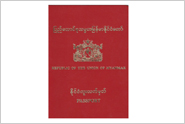
Easier to obtain a passport

Passport issuing centers were opened in 15 regions and states in addition to the existing offices in Yangon and Mandalay. An eligible citizen can get a passport within two weeks instead of 21 days in the past at the cost of 25,000 Kyats ($25).

In the past, obtaining or renewing a passport was a complex procedure and many applications were arbitrarily rejected.

If the purpose of travel is for medical care, a passport will be issued within three to five days

The $1.145 Million Rolex

Luxury timepiece aficionados were shocked late last year when an extremely rare Rolex made in 1950 was sold for more than four times the estimated auction price and in doing so set a new world record. The sale at Christie’s New York on Dec. 17, catalogued a stainless steel Ref. 8171 Rolex and it sold for $1.145 million against a pre-sale estimate of $300,000 – $350,000 and was the subject of a fierce bidding war that spanned across four countries.

The Luxury timepiece, previously nicknamed the “Padellone” (“Big Frying Pan” in Italian), earned itself a new moniker—“Sleeping Beauty”—on account of the surprise result. One of the most complex Rolex watches ever made, its predominant feature is a triple date and moonphase display. Only 1,000 similar watches were ever made, but until the Christie’s sale the model wasn’t in the same league as the Ref. 4113, an oversized stainless steel split seconds chronograph made in 1942 that became the world’s most expensive Rolex ever when it sold at auction for $1.16 million  in Geneva last May.

The auction was “a most memorable grand finale to the most successful year of watch auctions ever orchestrated by any auction house in history,” notes Aurel Bacs, Christie’s’ International Head of Watches. “Savvy bidders from around the world gathered to compete fiercely for a beautifully curated, intelligently estimated, and well researched selection of high-quality collectors watches.” The sale brought in a total of $12,926,175, selling 91 percent by lot and 95 percent by value.

Latest Videos

Interview with Alison Fox Principal of The British School Yangon

Interview with Alison Fox Principal of The British School Yangon

Recent Posts